PairGears Technical Guide
Gear vs Shaft: What's the Difference?
A complete guide to understanding mechanical power transmission - from precision gears to drive shafts, and how they work together.
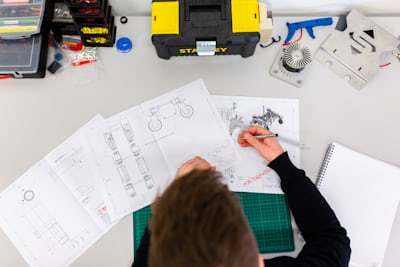
What Is a Gear? - The Heart of Power Transmission
A gear is a rotating mechanical component with teeth that mesh with another toothed component to transmit torque and motion. Gears are the most fundamental elements in mechanical drive systems, found in everything from automotive transmissions to industrial machinery. At PairGears, we specialize in manufacturing high-precision gears designed for durability, efficiency, and seamless power delivery across countless applications.
Gears change the speed, torque, and direction of a power source. Their efficiency, reliability, and versatility make them indispensable in modern engineering. Understanding gear types, materials, and specifications is essential for selecting the right solution for your mechanical system.
What Is a Shaft? - The Backbone of Rotary Motion
A shaft is a rotating machine element used to transmit power from one part of a system to another. Shafts support rotating components such as gears, pulleys, and couplings, and they bear bending and torsional loads. Unlike gears, which engage through meshing teeth, shafts serve as the structural carriers of rotational energy - they connect power sources to driven components.
In gear systems, the shaft provides the rotational axis on which the gear is mounted. Without a properly designed shaft, even the most precision-engineered gear cannot perform its function effectively. This is why shaft selection - material, diameter, length, and surface finish - is just as critical as gear selection in mechanical design.
Gear vs Shaft: 5 Key Differences You Need to Know
Understanding the distinctions between gears and shafts helps engineers choose the right components and avoid costly design mistakes.
Function
Gear: Transmits torque and motion through tooth engagement. Shaft: Carries and supports rotating components, transmitting rotational energy.
Design
Gear: Features precisely cut teeth, specific module, pressure angle, and tooth profile. Shaft: Typically cylindrical, designed for bending and torsional strength.
Engagement
Gear: Meshes with other gears or racks. Shaft: Connects via keys, splines, couplings, or press fits - no toothed engagement.
Speed & Torque
Gear: Changes speed and torque ratios through different gear sizes. Shaft: Transfers existing speed and torque between connected components.
Applications
Gear: Gearboxes, differentials, transmissions, conveyors. Shaft: Drive shafts, axles, spindles, rotor shafts in motors and turbines.
How Gears and Shafts Work Together in Power Transmission
In any mechanical drive system, gears and shafts form an inseparable pair. The gear is mounted onto the shaft, and when the shaft rotates, the gear transfers that motion to the next gear in the train. This gear-shaft-gear chain is the backbone of all power transmission systems - from industrial gearboxes to automotive differentials.
Key factors that determine performance:
- ? Shaft-to-gear fit tolerance - proper keyways and press fits prevent slippage
- ? Gear alignment on shaft - misalignment causes noise, vibration, and premature wear
- ? Material compatibility - matching thermal expansion and hardness between gear and shaft materials
- ? Lubrication and cooling - essential for long-term gear-shaft system reliability
Types of Gears: Spur, Helical, Bevel, and Worm Gears Explained
PairGears manufactures a wide range of gear types to suit different mechanical requirements. Each type offers unique advantages for specific applications.
Spur Gears
The most common gear type, with straight teeth mounted on parallel shafts. Ideal for low-speed, high-torque applications. Simple, efficient, and cost-effective.
Helical Gears
Teeth are cut at an angle to the gear axis, enabling smoother and quieter operation than spur gears. Suitable for high-speed applications with higher load capacity.
Bevel Gears
Designed for transmitting power between intersecting shafts, typically at 90-degree angles. Used in differentials, hand drills, and precision machinery.
Worm Gears
A worm (screw) meshes with a worm wheel to achieve high reduction ratios in a compact space. Self-locking capability makes them ideal for hoists and elevators.
Choosing the Right Gear for Your Mechanical Application
Selecting the optimal gear for your system is a strategic engineering decision. Key considerations include:
Load & Speed
Higher loads require larger module gears with stronger tooth profiles. High-speed applications need precision-ground helical or spiral bevel gears for smooth operation.
Space Constraints
Limited installation space may favor compact worm gear sets or planetary gear systems. Custom gear dimensions can be engineered to fit your unique layout.
Material Selection
From case-hardened alloy steel for heavy industrial gears to brass or plastic for light-duty applications, the right material extends gear life and reduces maintenance.
Environment
Corrosive, high-temperature, or dust-laden environments demand special coatings, sealed housings, or stainless steel gear options. PairGears offers tailored solutions.
Precision Gear Manufacturing - Crafting Gears That Deliver Performance
At PairGears, our gear manufacturing process combines decades of engineering expertise with state-of-the-art CNC machining and gear hobbing technology. Every gear we produce undergoes rigorous quality inspection to ensure dimensional accuracy, surface finish, and heat treatment compliance.
Our capabilities include:
- ? CNC Gear Hobbing & Shaping
- ? Gear Grinding & Lapping
- ? Heat Treatment (Carburizing, Induction Hardening)
- ? Custom Gear Design & Engineering Support
- ? Quality Inspection (Gear Measuring Center, CMM)

Why PairGears Is Your Trusted Gear Manufacturing Partner
We don't just make gears - we engineer solutions. Here's what sets PairGears apart:
? 15+ Years of Expertise
Deep industry knowledge in gear design, material science, and manufacturing processes for mechanical power transmission.
Global Supply Chain
Reliable delivery to clients worldwide with consistent quality standards across every batch of custom gears.
Custom Gear Solutions
Full custom gear design service - from concept drawings to finished product - tailored to your exact specifications.
On-Time Delivery
Efficient production scheduling and logistics management ensure your gear orders arrive when you need them.
Quality Assurance
ISO-compliant quality system with full traceability from raw material to finished gear product.
Engineering Support
Our experienced engineering team provides technical consultation to help you select or design the perfect gear.
Frequently Asked Questions About Gears and Mechanical Drive Systems
What is the difference between a gear and a shaft in simple terms?
A gear has teeth that mesh with other gears to transfer motion, while a shaft is a smooth rod that rotates and carries gears or other components. Think of the gear as the component that changes speed or direction, and the shaft as the component that delivers rotational power.
Can a gear and a shaft be made from the same material?
Yes, but often they are made from different materials optimized for their respective roles. Gears typically use case-hardened alloy steel for wear-resistant tooth surfaces, while shafts prioritize toughness and fatigue resistance. PairGears can advise on the best material combination for your system.
How do I know which gear type is right for my application?
Consider your operating speed, torque requirements, shaft arrangement (parallel, intersecting, or non-parallel), noise constraints, and available space. Our engineering team at PairGears provides free technical consultation to recommend the optimal gear type.
What is the typical lead time for custom gear manufacturing?
Lead times vary depending on gear complexity, size, quantity, and material. Standard custom spur and helical gears typically ship within 15-25 working days. Contact PairGears for a precise timeline for your project.
Get Your Custom Gear Quote - Contact PairGears Today
Ready to discuss your gear requirements? Our team of experienced engineers is here to help you design and manufacture the perfect gear solution for your mechanical system. Whether you need spur gears, helical gears, bevel gears, worm gears, or a custom gear design, PairGears delivers quality, precision, and reliability.