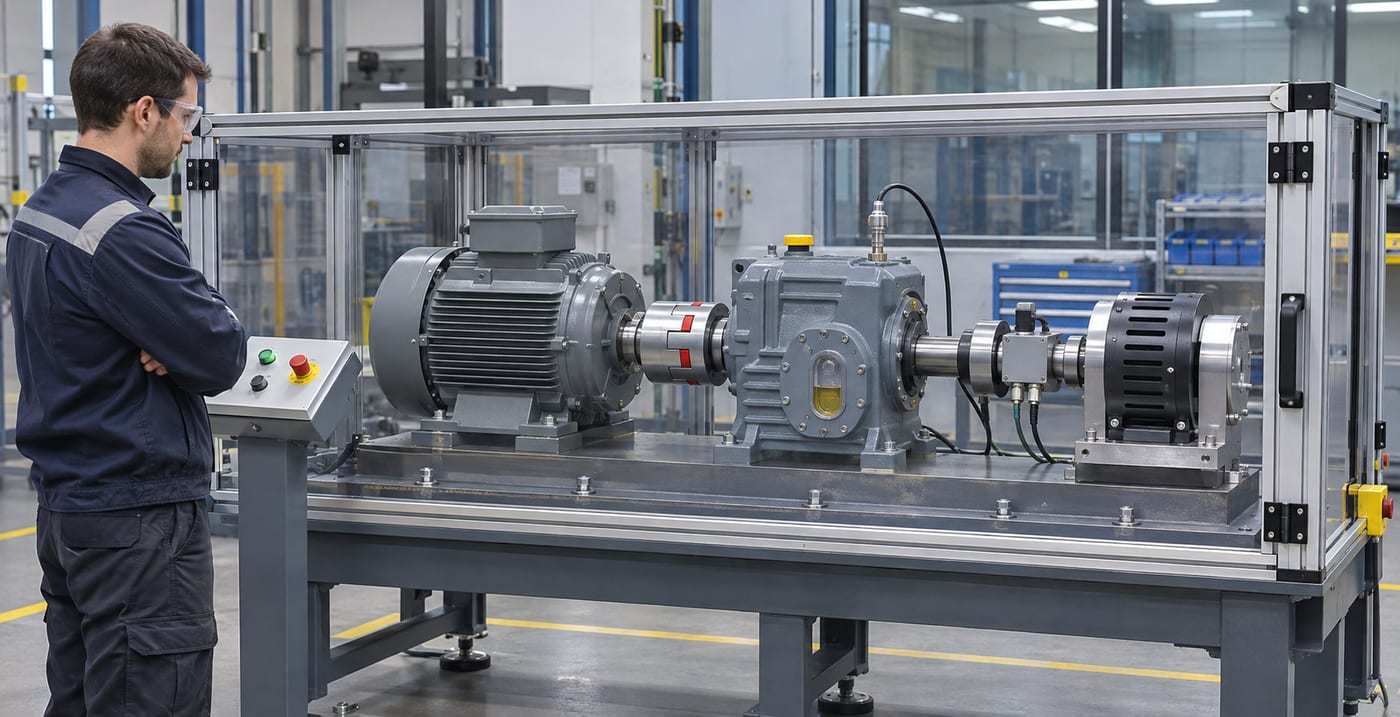
Why does a worm gear lift run poorly in the reverse direction?
- Share
- Issue Time
- Nov 9,2026
Why does a worm gear lift run poorly in the reverse direction?
A worm gear lift that runs smoothly one way but poorly in reverse usually has a directional mechanical problem, not simply “bad gears.” Check whether the load is backdriving a ratio intended to resist reverse motion, then compare axial thrust, bearing endplay, contact pattern, backlash, lubrication, temperature, brake behavior and shaft alignment in both directions under a safe controlled load.
Separate commanded reverse from load-driven backdriving
First identify the operating mode. A motor driving the worm in reverse is not the same as a suspended load trying to drive the wheel and backdrive the worm. Lead angle, friction, ratio, lubricant, temperature and wear all affect backdriving; a worm set must not be assumed to be self-locking in every condition.
Check motor direction, brake release, controller current limits and any one-way clutch or mechanical stop. Never make adjustments beneath a suspended load. Isolate and mechanically support the load, follow the equipment maker’s procedure and use a qualified engineer for lifting-safety decisions.
Compare thrust support, contact and backlash in both directions
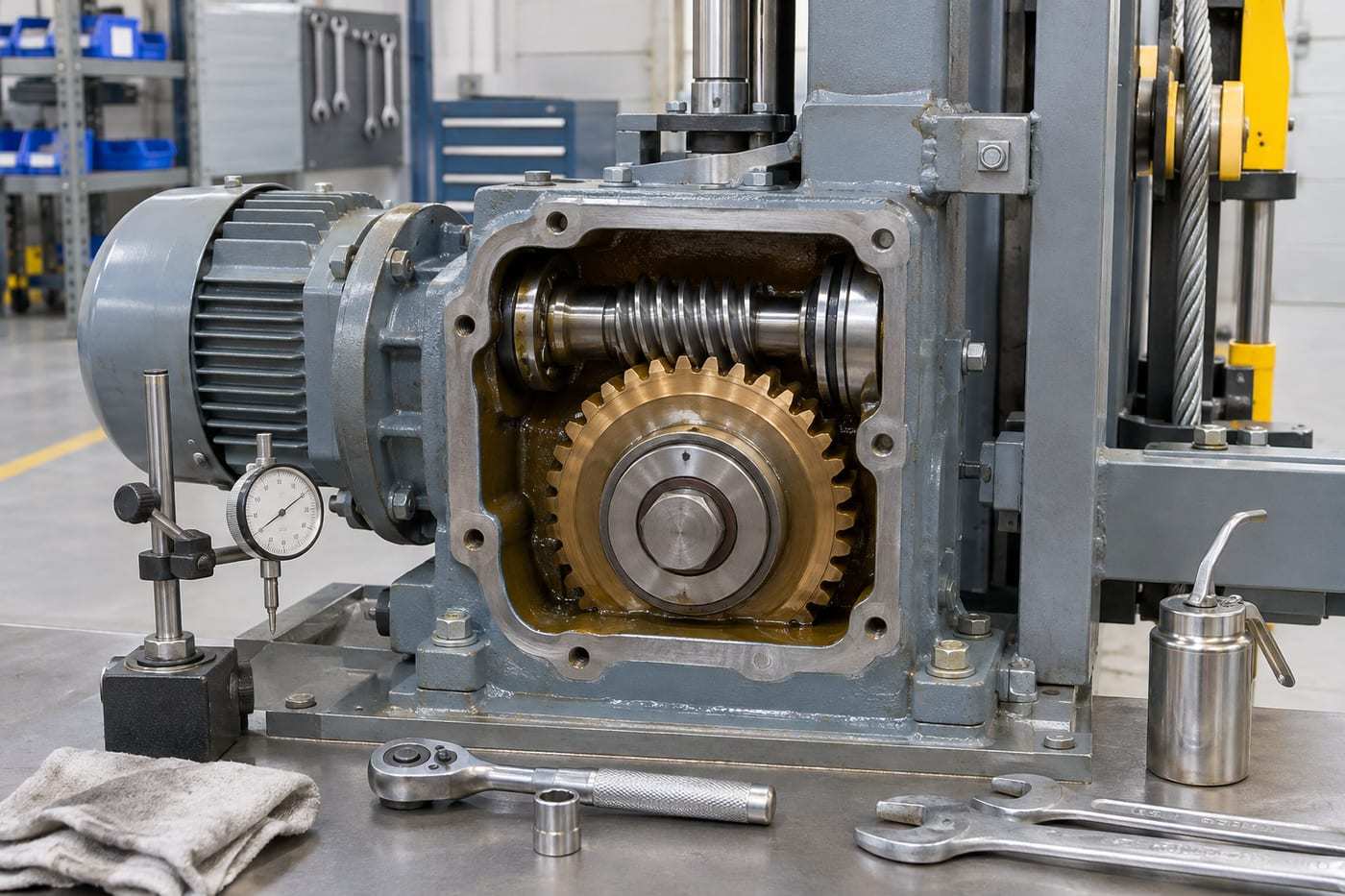
Reversing rotation reverses the direction of worm axial thrust. A bearing shoulder, preload, endplay, shaft retention or housing deflection problem may therefore bind in only one direction. Measure axial movement against the assembly specification and inspect whether the shaft shifts enough to change tooth contact.
Verify shaft angle, center distance, worm-to-wheel axial position, contact pattern and backlash using the approved assembly method. Avoid setting a power-transmitting worm drive to generic zero backlash; thermal growth and the lubricant film require the specified clearance. The PairGears worm gear guide explains the sliding contact and backdriving trade-offs.
Run a controlled A/B test and stop on abnormal heat or load
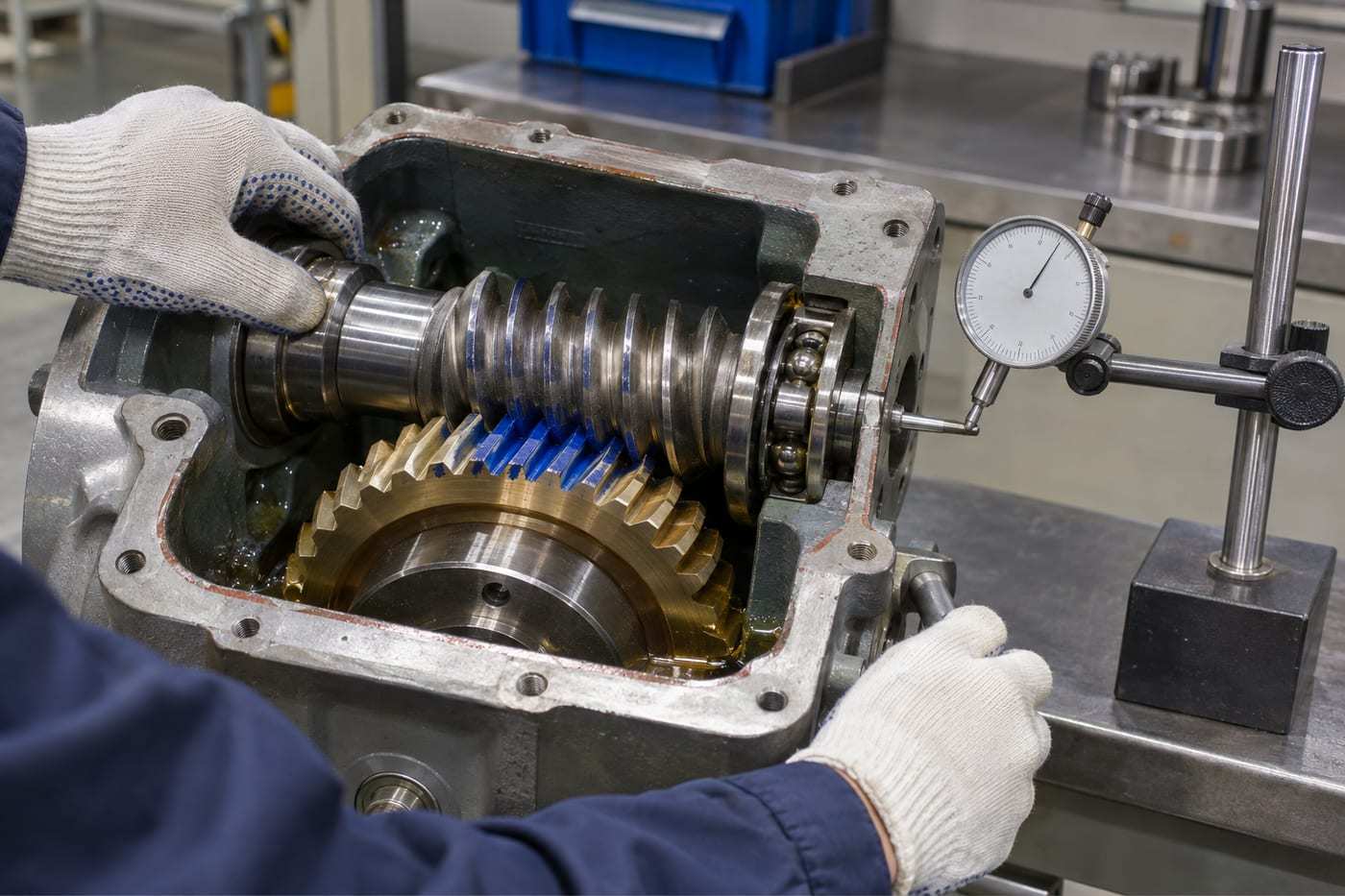
At the same safe speed and applied load, record input current or torque, output speed, oil temperature, noise, vibration and brake behavior in each direction. Inspect oil level, viscosity and condition; too little oil, excessive churning, contamination or a lubricant outside the approved specification can magnify directional problems.
If reverse current, temperature rise or vibration is materially higher, stop the test and trace the difference before returning the lift to service. Do not polish teeth or change oil merely to mask a bearing, alignment, brake or contact-pattern fault. Preserve the original condition and evidence for the equipment or gear supplier.