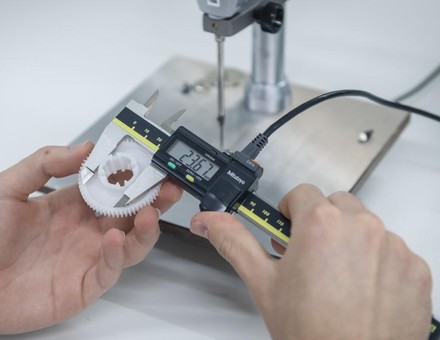
Can PairGears make plastic gears from materials other than MC901 nylon?
- Share
- Issue Time
- Oct 20,2026
Can PairGears make plastic gears from materials other than MC901 nylon?
Yes. PairGears lists POM, PA6/PA66, PBT, PEEK and PPS among its custom plastic gear material options. Specify the exact polymer grade and service conditions for review. Changing from MC901 nylon is a material and gear-design decision: confirm dimensional behavior, tooth loading, wear and the manufacturing process before approving a replacement.
Choose a grade, not only a polymer name
The PairGears custom plastic gear page lists these alternatives for technical review. POM is commonly considered where low moisture uptake and dimensional stability matter. Nylon selection should account for moisture conditioning. PEEK and PPS may be candidates for more demanding thermal or chemical environments, depending on grade and application.
Specify the manufacturer’s grade designation, any fillers or lubricating additives, and the required material documentation. A family name such as “nylon” or “PEEK” does not define every property needed for a gear calculation.
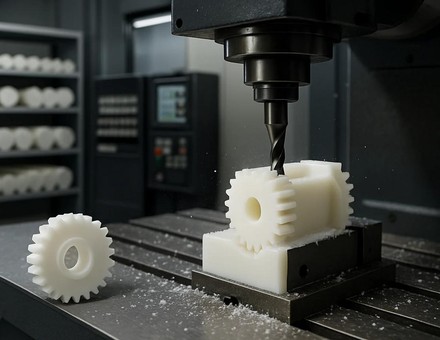
Review dimensions when substituting a material
Provide torque, speed, duty cycle, temperature, humidity, chemical exposure, lubrication and mating-gear details. Have the designer review creep, thermal expansion, moisture-related dimensional change and tooth strength using data for the chosen grade.
For example, a nylon replacement that fits a shaft during a dry room-temperature inspection may behave differently in warm, humid service. Specify the measurement condition and required running clearance. Do not assume that copying the old drawing into another resin preserves backlash or service life.
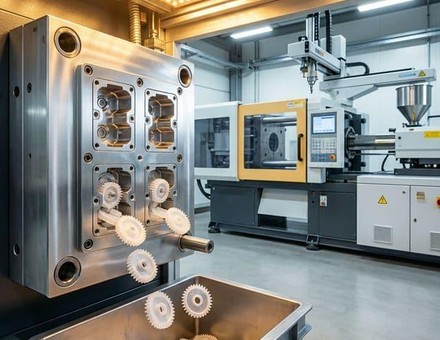
Agree the process and sample checks
PairGears lists CNC machining and injection molding as possible routes, selected for geometry, quantity and feasibility. Confirm the chosen route, tooling requirements and sample acceptance criteria in the quotation.
Check tooth geometry, bore fit, runout and the functional mesh under agreed conditions. If the application has a life or noise target, define a representative test rather than inferring performance from the resin name. A sample approval should identify its material grade and drawing revision so repeat orders use the same specification.