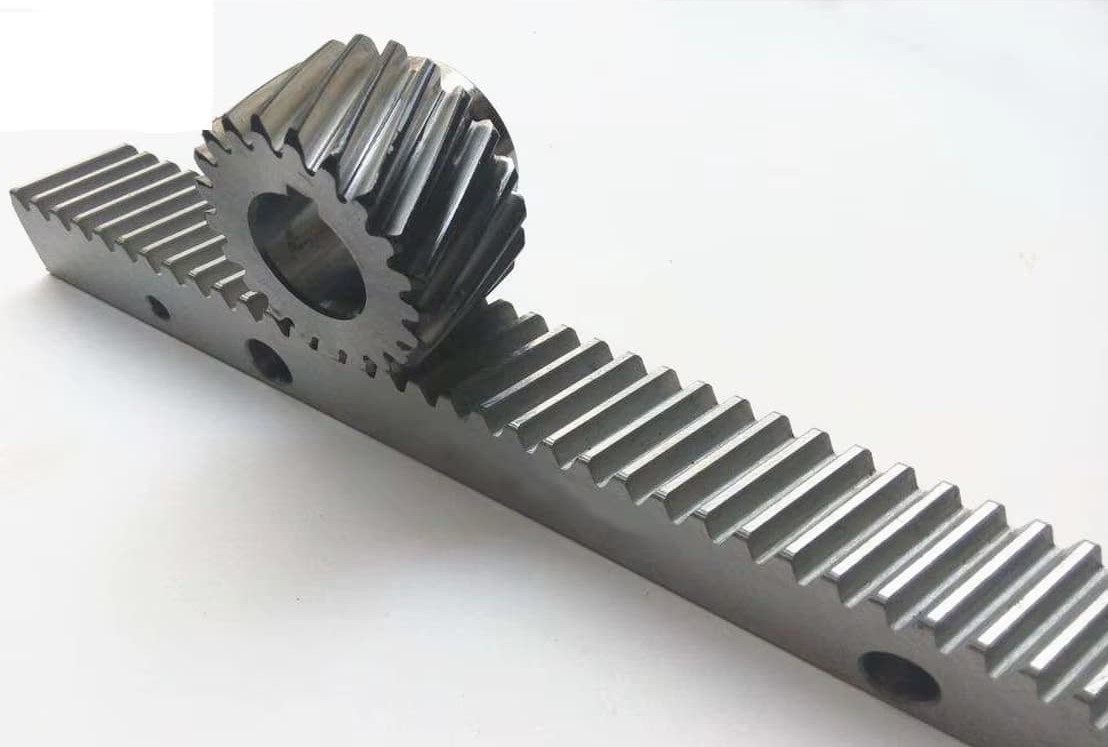
Can several gear rack sections be joined for a longer travel?
- Share
- Issue Time
- Oct 6,2026
Can several gear rack sections be joined for a longer travel?
Yes, rack sections designed for end-to-end assembly can form a longer drive. The joint must preserve tooth pitch as well as alignment to the machine guide. Use compatible tooth geometry and properly prepared ends, then set each joint with the rack supplier's alignment method. Simply pushing two cut ends together can create a pitch error, tight spot or impact as the pinion crosses.
Specify joinable sections and compatible tooth data
Confirm module or DP, pressure angle, tooth direction and, for helical racks, the specified helix geometry. Use a rack family with controlled end preparation for joining. A sawn piece of rack is not automatically suitable for a continuous pitch line.
The pinion encounters the joint as another tooth interval. Its motion should not depend on forcing the section ends into contact. Use the manufacturer's end-gap requirement; there is no universal zero-gap rule.
Align the joint to a stable machine reference
- Clean and inspect the mounting faces, locating shoulder and guide reference.
- Position the first rack according to the installation drawing.
- Align the next section with a compatible mating rack gauge or the supplier's specified joint-measuring fixture.
- Clamp and tighten in the specified sequence, then recheck the joint and guide alignment.
Do not invent tightening torques or modify locating holes to force a fit. Pinning and fastening details belong to the selected rack and machine design.
Verify every transition across the finished travel
Move the pinion slowly across each joint under controlled commissioning conditions. Check backlash, tight spots, contact, joint pitch and position error over the full travel. Repeat the relevant checks after final fastening. Thermal growth and support straightness matter on long axes.
For example, three joinable sections create two joints, and both require verification. The PairGears pinion-selection guide explains why tooth geometry and the mating component must be considered together.