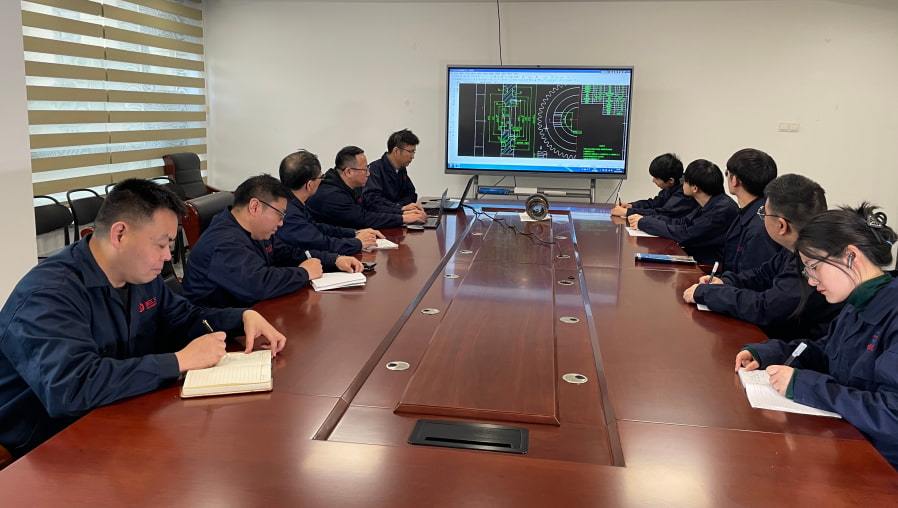
Why can a gear with fewer teeth have lower strength?
- Share
- Issue Time
- Sep 28,2026
Why can a gear with fewer teeth have lower strength?
With other design conditions comparable, a low-tooth-count gear can have less favorable tooth-root geometry and greater undercut risk. At the same module, fewer teeth also mean a smaller pitch diameter, so transmitting the same shaft torque requires greater tangential force. These effects can reduce bending margin. Tooth count alone does not determine strength: profile shift, face width, material, heat treatment and duty must also be checked.
Separate tooth shape from applied load
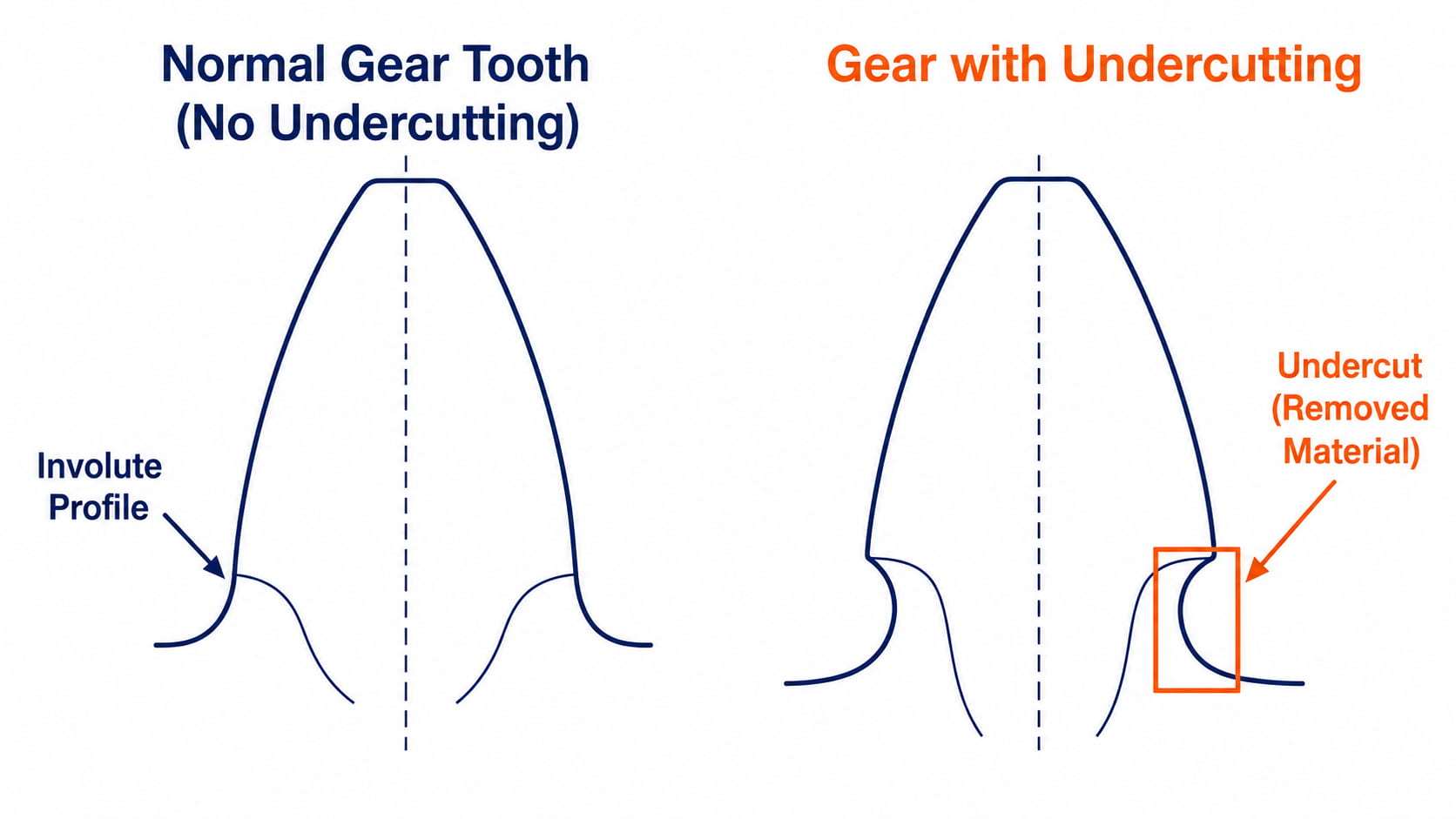
Low tooth counts can produce a less favorable root section in a standard generated involute form. Undercutting can remove additional material near the root, but it is not the only reason a small gear may have less bending margin.
The PairGears undercutting guide explains that specific geometry effect. The broader strength check must include the actual generated root, fillet and load factors.
State what stays constant in the comparison
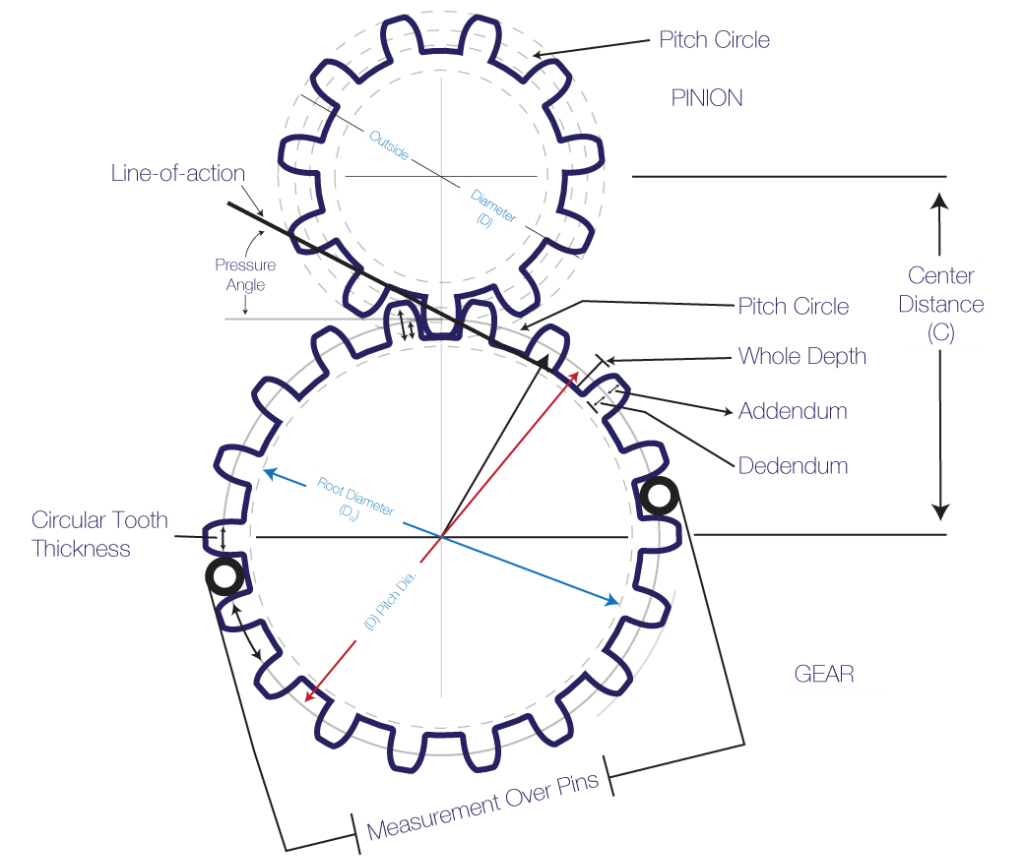
For an unshifted spur gear, d = m × z and tangential force Ft = 2T / d, using consistent units. At module 2 and 10 N·m, a 20-tooth gear has d = 40 mm and Ft = 500 N; a 40-tooth gear has d = 80 mm and Ft = 250 N.
This compares two separate designs at the same shaft torque. In one meshing pair, the gears share the same tangential mesh force; their shaft torques differ with pitch radius. Do not apply the equal-torque comparison to both members of that pair.
Check the pair before changing the pinion
Positive profile shift, a different tooth count, more face width or a different material route may improve a design, but each option changes other requirements. Check contact ratio, tip thickness, interference, centre distance and both bending and contact safety margins before release.
For a continuously rotating external reduction pair, each pinion tooth normally experiences more mesh cycles over the same running time than each tooth of the larger gear. Include the required life and load spectrum; do not declare the pinion weaker from tooth count alone.