What is contact ratio in a gear pair?
- Share
- Issue Time
- Sep 23,2026
What is contact ratio in a gear pair?
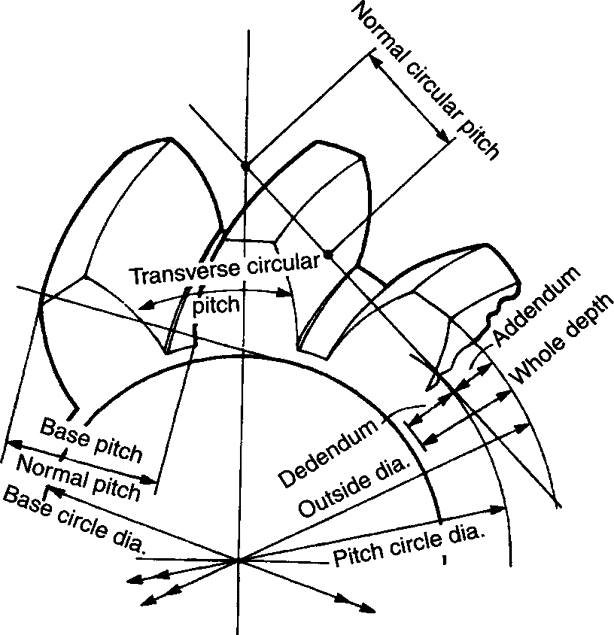
Contact ratio expresses the average number of tooth pairs in contact during a mesh cycle. For spur gears, transverse contact ratio is the active path of contact divided by transverse base pitch. Parallel-axis helical gears also have overlap across the face width. The value describes engagement continuity; it is different from the tooth-count ratio that determines speed reduction.
Interpret a fractional value correctly
In an ideal spur mesh with a transverse contact ratio of 1.6, two pairs engage for about 60 percent of the cycle and one pair for about 40 percent. It does not mean that 1.6 physical teeth remain engaged at every instant.
The base pitch used in this calculation is not the reference-circle circular pitch. Contact-ratio calculations must use consistent geometry and the actual operating center distance.
Account for helical overlap separately
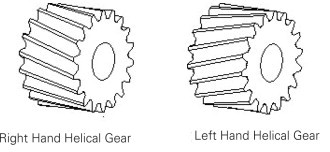
For a parallel-axis helical pair, total contact ratio is the transverse contact ratio plus the overlap ratio. Face width and helix angle influence overlap; tooth hand alone does not specify its value.
The PairGears helical-gear guide gives the matching and layout context. Supply both mating gears' geometry before comparing calculated ratios.
Check the operating mesh, not only the nominal number
Geometric contact ratio assumes ideal teeth and alignment. Deflection, manufacturing deviations and mounting errors change how load is shared. A higher nominal value therefore does not by itself guarantee a quiet gear or sufficient load capacity.
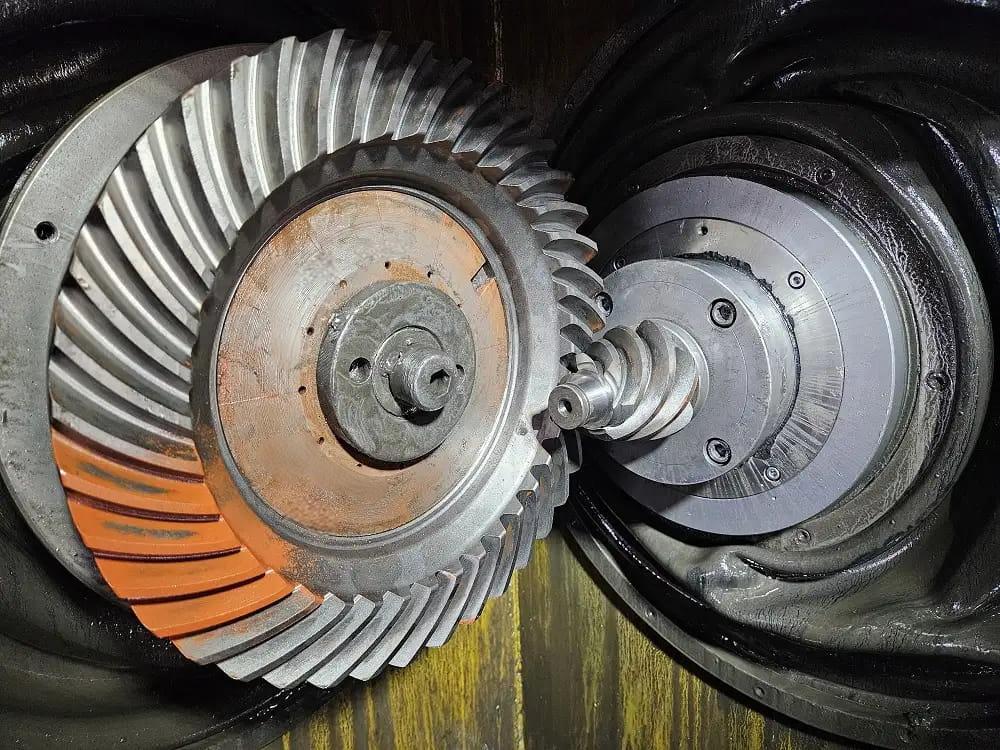
For a design review, provide tooth counts, module, pressure angle, profile shifts, tip diameters, center distance and, for helical gears, helix angle and face width. Include the load and alignment conditions. Bevel gears require their own geometry model; a contact-pattern mark is not a direct measurement of contact ratio.