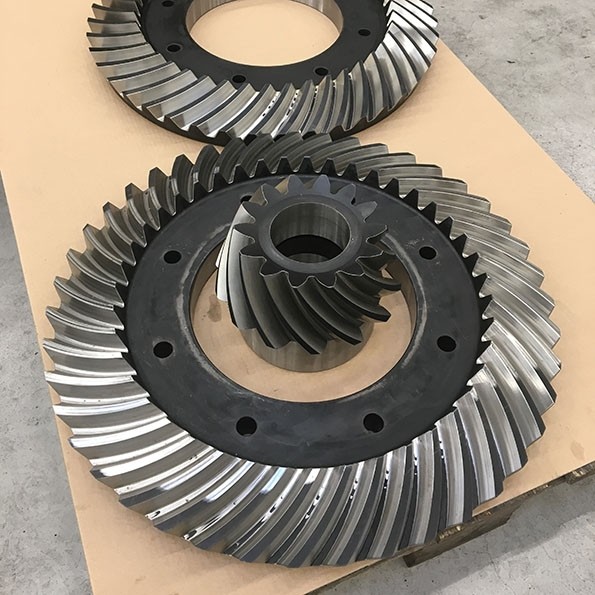
What is a bevel gear, and when is it used?
- Share
- Issue Time
- Sep 7,2026
Bevel gear: direct answer
A bevel gear has teeth formed on a conical surface and usually transfers motion between intersecting shafts, often at a right angle. It is chosen when a machine must redirect power within a compact layout. Straight, spiral, zerol and miter forms are not interchangeable: the required ratio, speed, torque, noise target, mounting arrangement and lubrication determine the suitable pair.
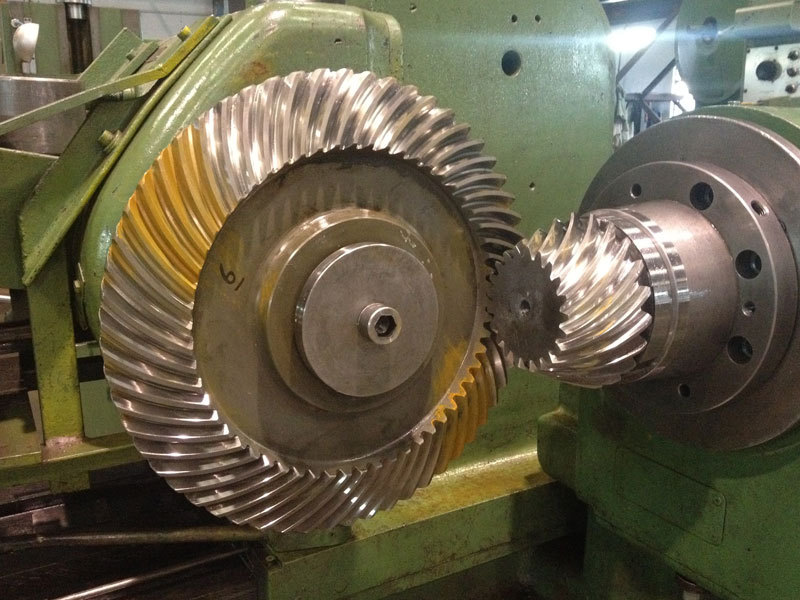
Choose the geometry as a matched system
Straight bevel gears are often used where a simpler tooth form is suitable; spiral bevel gears generally provide a more gradual mesh but require a matched design and controlled mounting. A miter pair is a specific 1:1 bevel arrangement. Hypoid gears are related right-angle gears but have offset shaft axes and different sliding and lubrication considerations. PairGears should receive both members of the set or complete mating data before evaluating replacement geometry.
For drawings and component context, see PairGears product categories. A drawing, the mating component, duty cycle and inspection requirement are needed before a production route can be assessed.
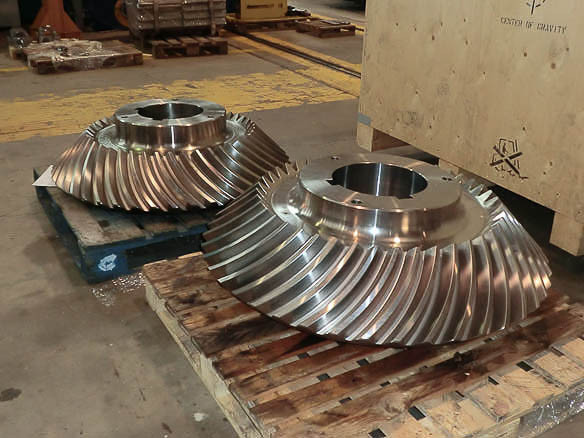
Example and practical check
For a 90-degree drive that must retain input speed, a miter pair may be a candidate. If the drive also needs a speed change, first establish the ratio and shaft layout; then check mounting distance, tooth hand, bearings, backlash, load direction and lubrication rather than selecting by outside diameter alone.