How can a supplier prevent defective gears from reaching shipment?
- Share
- Issue Time
- Aug 3,2026
Preventing defective gears from reaching shipment
No supplier can responsibly promise zero defects. The practical way to reduce risk is to define the approved drawing revision, critical characteristics, inspection method, sampling, release evidence and nonconformance response before production starts. PairGears publicly describes control from raw-material procurement through process inspection and final product inspection, but the exact release plan must fit the gear and its application.
Put prevention controls in the order review
- Freeze requirements: identify the drawing revision, material, heat treatment, datums, tooth data and surface requirements that decide acceptance.
- Control the route: agree checkpoints for operations that can affect the part, including tooth geometry, heat-treatment distortion or runout.
- Define shipment release: state the sampling rule, report format, lot identification, acceptance limits and disposition path for nonconforming parts.
AIAG describes PPAP as a process for showing that engineering-design-record and specification requirements are consistently met. Use that level of evidence only when your programme requires it.
Ask for evidence, not generic reassurance
For a critical custom gear, request a part-specific inspection plan and agreed deliverables. Depending on the drawing, that may include dimensions, runout, profile and lead, hardness, material or heat-treatment records and visual-condition checks. A final pass/fail report does not prove a requirement that was never defined.
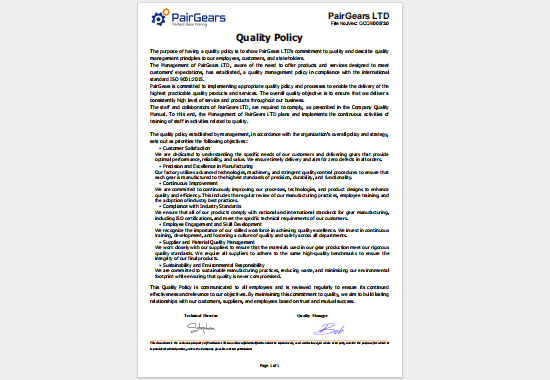
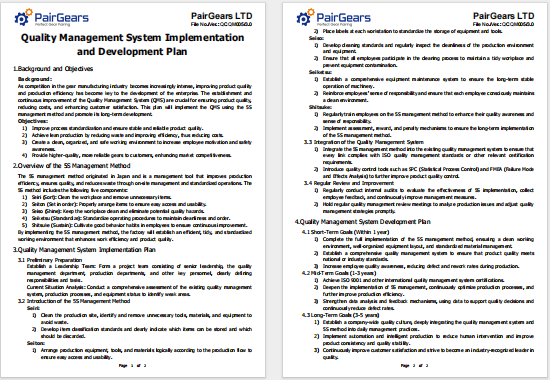
See the PairGears quality-control page for the public capability context.