Why Gear Teeth Break: Load, Material and Heat Treatment
- Share
- publisher
- Jessica
- Issue Time
- Jun 4,2026
Summary
Learn why gear teeth break, how load, material and heat treatment affect failure, and what buyers should check before sourcing replacement gears.
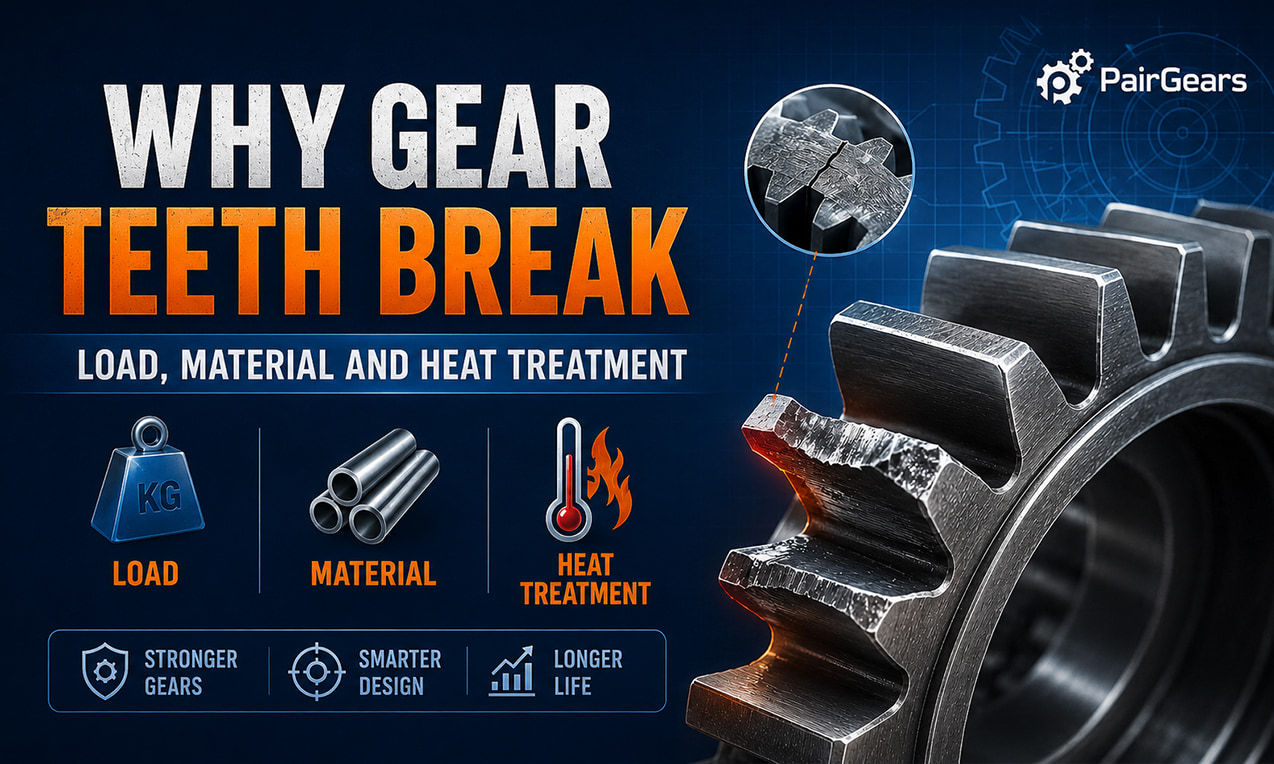
Broken gear teeth are one of the clearest signs of transmission failure. When a tooth breaks, the damage is easy to see, but the real cause is often less obvious. Buyers usually start with simple questions: Was the material too weak? Was the heat treatment wrong? Was the gear overloaded?
At PairGears, we manufacture custom precision gears and gear sets for Agricultural Machinery, Heavy-Duty Trucks, Construction Equipment, and EV drivetrains. In real replacement and custom gear projects, a broken tooth should not be judged from one angle only. Load, material, heat treatment, tooth geometry, contact condition, lubrication, and assembly quality can all influence whether a gear survives in service.
Quick Answer: What Causes Gear Teeth to Break?
Gear teeth usually break when the bending stress at the tooth root or the contact stress on the tooth surface becomes higher than the gear can safely carry.
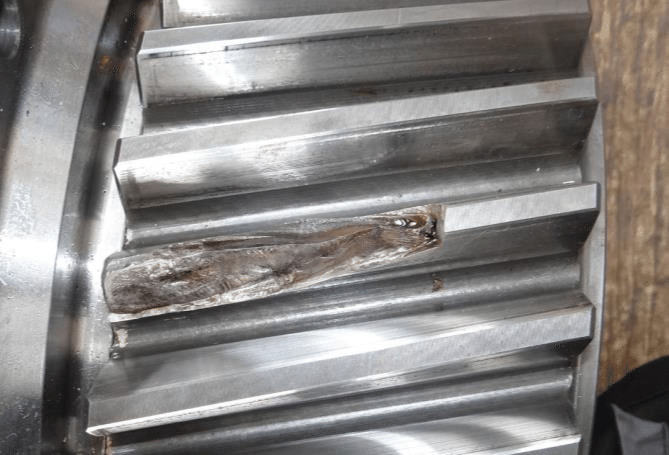
Why Broken Gear Teeth Need a Full Failure Review
It is easy to blame a broken tooth on "bad steel" or "bad heat treatment". Sometimes that is true, but not always. A correctly made gear can still fail if the real load is higher than expected, if the mating condition is poor, or if lubrication and alignment are unstable. In many cases, gear tooth breakage is not caused by one single factor, but by several working conditions acting together.
A gear tooth works under repeated stress. The tooth root carries bending stress, while the flank carries contact stress. If the load becomes too high, or if the load is concentrated in the wrong area, the tooth may crack from the root, chip at the edge, or fail suddenly under shock. A gear may survive high torque when material, heat treatment, and contact are all correct, but fail much earlier when overload, poor lubrication, and misalignment appear at the same time.
Replacement projects make this review more complicated. An old worn gear may no longer represent the original tooth profile, backlash, or contact pattern. If a new part is copied only from visible shape, the replacement may look correct but still fail early because the original design intent was not fully recovered.
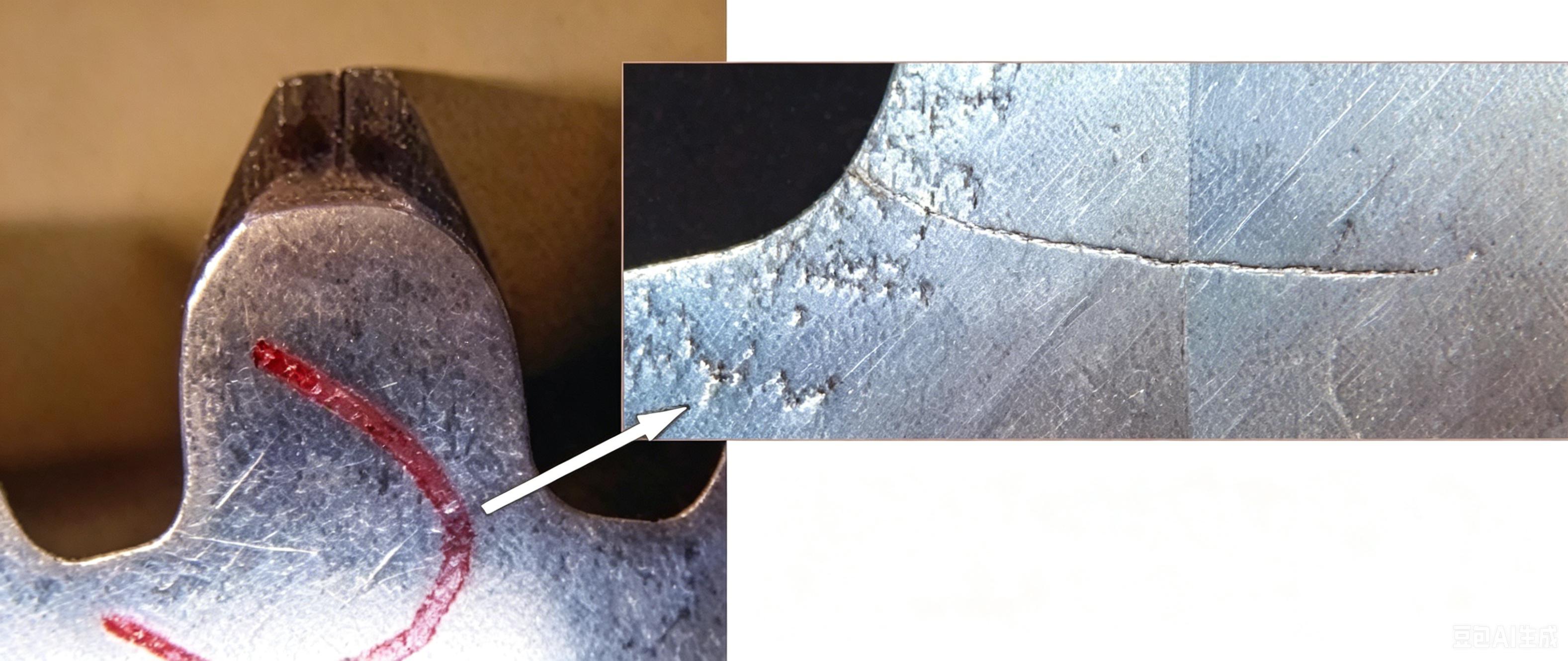
Common Reasons Gear Teeth Break
| Cause | What usually happens | What buyers should check |
| Overload | Teeth crack or break under torque above design level | Real torque, duty cycle, machine usage, overload history |
Shock load | Sudden impact causes root fracture or chipping | Agricultural, construction, or heavy-duty working conditions |
Wrong material | Gear lacks enough strength or toughness | Material grade, equivalent standard, certificate |
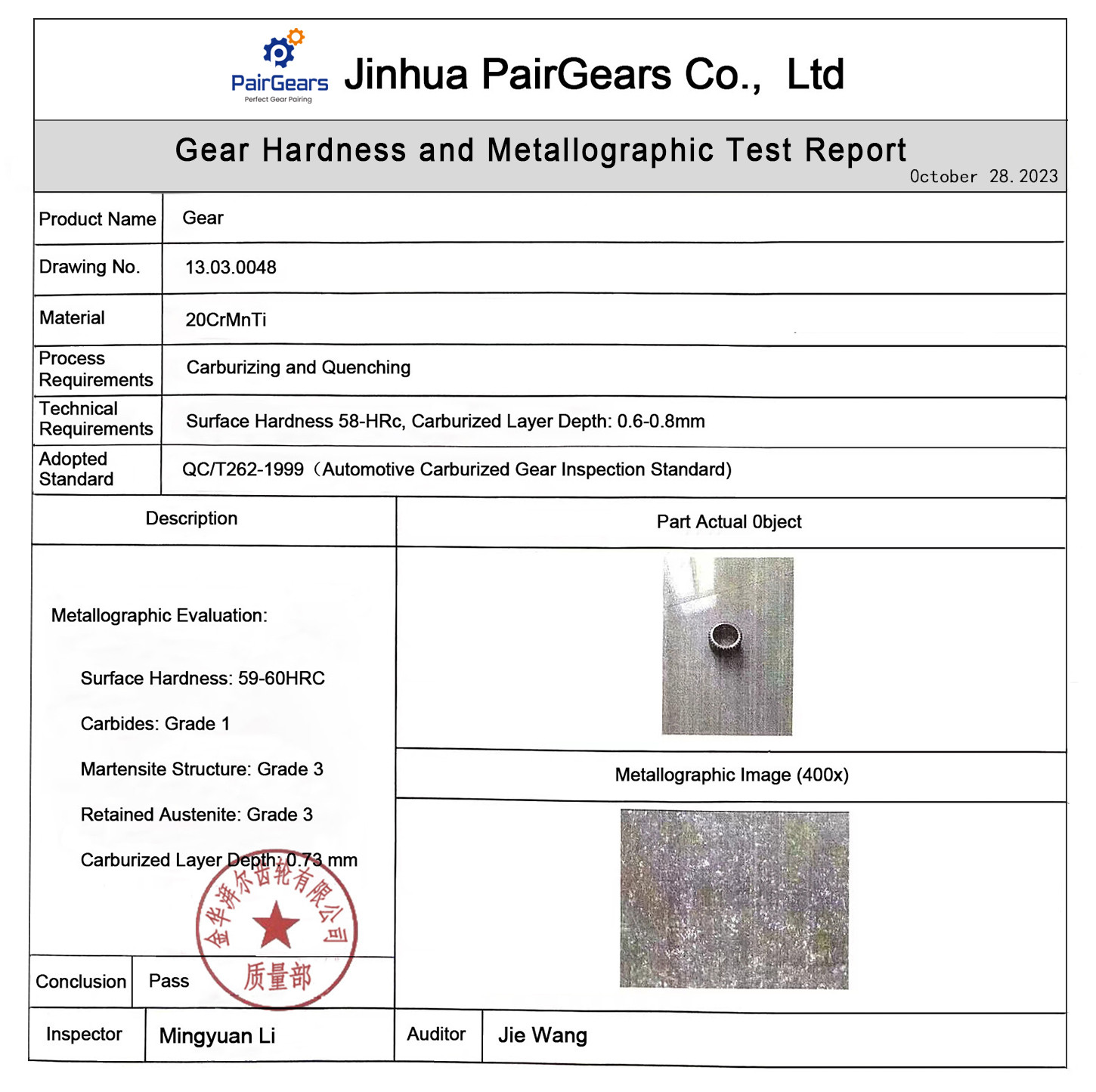
| Poor heat treatment | Surface or core does not reach required performance | Hardness, case depth, core hardness, heat treatment report |
| Insufficient case depth | Surface may wear or crack early under repeated load | Effective case depth and application requirement |
Brittle tooth surface | Teeth chip or crack more easily | Hardness level, quenching route, grinding burn risk |
Poor tooth contact | Load concentrates on one edge or a small area | Contact pattern, alignment, mating gear condition |
Misalignment | One side of the tooth carries too much load | Shaft, bearing, housing, and assembly condition |
Lubrication problem | Wear, pitting, heat, and surface damage increase | Oil type, oil level, contamination, maintenance history |
Wrong replacement data | New gear does not match original meshing condition | Tooth data, mating gear, backlash, worn sample condition |
This table is useful because it shows that "broken teeth" is not one failure mode with one fixed cause. The same visible fracture can come from very different background problems.
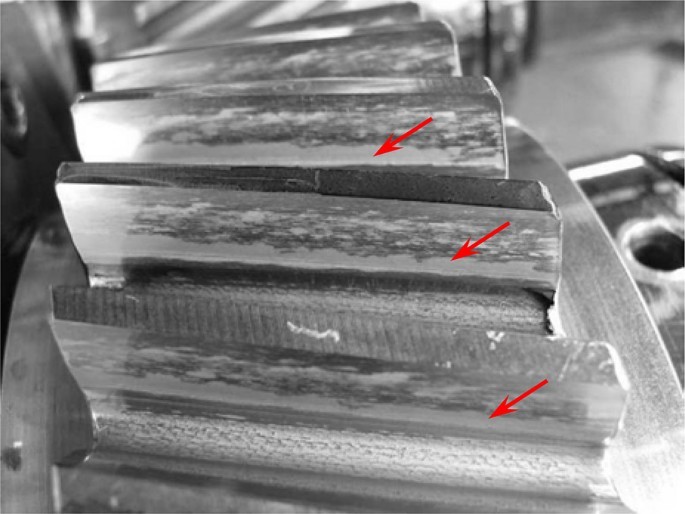
Where Broken Gear Teeth Create the Highest Risk
● Agricultural Machinery
Gears often work under mixed loads, dirt, shock, and long service hours. Sudden impact and poor lubrication control are common risk factors.
● Heavy-Duty Trucks
Transmission gears and differential-related parts face high torque and long-life expectations, so material route, heat treatment, and contact stability matter together.
● Construction Equipment
Gear sets in reducers and travel systems may see repeated shock load, contamination, and harsh operating conditions that quickly expose weak tooth-root strength or poor contact.
● EV Drivetrains
Compact high-speed gears often work with tighter noise and accuracy requirements, so small geometry or heat-treatment problems can lead to larger service issues later.
The risk factors are different in each sector, but the lesson is the same: a broken tooth should be reviewed in the context of the real application, not as an isolated part failure.
What Buyers Should Check When Gear Teeth Break
| Review item | What should be checked | Why it matters |
| Failure location | Root crack, flank breakage, edge chip, or tip damage | Helps separate bending failure from contact-related damage |
| Tooth contact condition | Contact pattern and load area | Shows whether load was carried in the correct region |
Tooth data | Module or DP, pressure angle, helix angle, tooth count | Confirms whether the part was matched correctly |
Material grade | Steel type and equivalent standard | Controls basic strength and toughness |
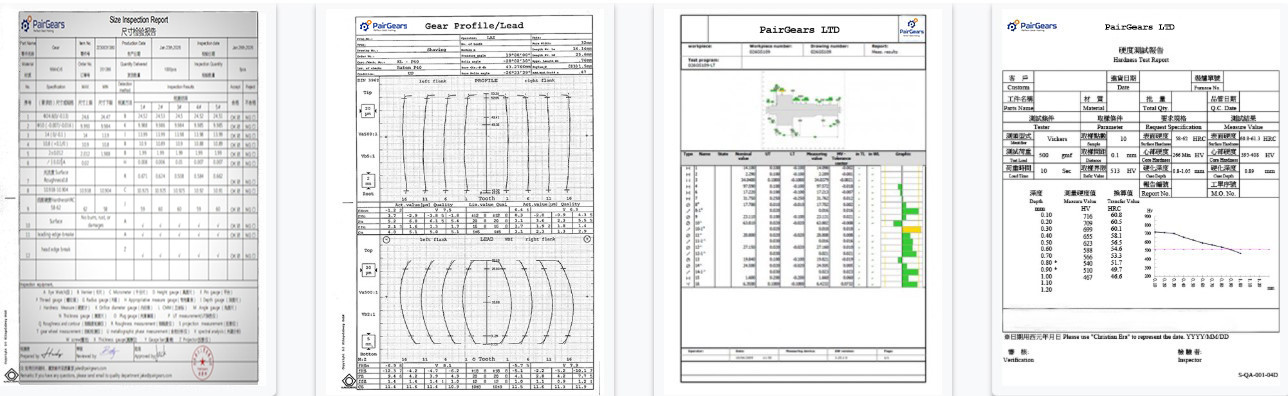
Heat treatment | Surface hardness, core hardness, case depth | Strongly affects wear resistance and tooth-root life |
| Runout and alignment | Shaft, bearing, housing, and mounting condition | Poor alignment can overload one side of the tooth |
Lubrication | Oil type, oil level, contamination, maintenance history | Affects heat, wear, and surface durability |
Mating part condition | Old gear, shaft, spline, bearing, housing | A new gear may fail early if the mate is already worn |
Service history | Overload, impact event, noise, or previous repairs | Helps reveal whether failure is design-related or field-related |
What Photos to Send for a Broken Gear Review
●the full gear
●the damaged area close up
●the mating gear
●the shaft or bore area
●any visible wear pattern, discoloration, or chipped edges
These details often reveal whether the failure may be related to overload, poor contact, wear, or heat. Photos can help start the review, but they cannot confirm the full root cause alone. For serious failure cases, the sample, mating parts, working condition, and inspection data should be reviewed together.
How a Better Failure Review Improves Replacement Gears
How a Better Failure Review Improves Replacement Gears
| Benefit | What improves | Practical result |
| Better root-cause judgment | The real failure mode is identified earlier | Less guesswork and fewer repeated problems |
| Better replacement accuracy | New gear is reviewed as part of the system | Lower risk of early repeat failure |
| Better process planning | Material and heat treatment fit the real duty cycle | More reliable production route |
Better sample approval | Inspection focuses on the right risk points | Fewer avoidable revisions |
Better service life | Contact, hardness, and alignment are reviewed together | More stable field performance |
A good failure review does more than explain the old problem. It improves the next part. That is what buyers actually need from a replacement or custom project.
Practical Tips Before Asking for a Replacement Gear Quote
● Send the broken sample if possible.
A physical sample helps with geometry review, but it should be supported by photos and application details.
● Include the mating part information.
A new gear cannot be reviewed correctly if the mating gear, shaft, or housing condition is ignored.
● Do not separate material from heat treatment.
These two should always be judged together because they define how the tooth really works in service.
● Describe the working condition honestly.
Shock load, overload, poor lubrication, and contamination all change the correct engineering route.
● Ask for the right inspection scope.
Hardness, case depth, runout, tooth data, and contact-related checks matter more than appearance alone in many failure-related projects.
Why Choose PairGears for Broken Gear Review
PairGears supports custom precision gears and replacement gear projects for Agricultural Machinery, Heavy-Duty Trucks, Construction Equipment, and EV drivetrains. For broken-tooth cases, we review more than the damaged area. We check the working condition, tooth data, material route, heat treatment, mating condition, and application load together.
We focus on:
● review of broken or worn gear samples
● replacement projects based on drawings, samples, OEM numbers, or photos
● material and heat-treatment planning for real service conditions
● inspection logic covering hardness, tooth geometry, and fit
● practical routes from failure review to sample approval and repeat production
This early review is useful when a new gear must match an existing mating part, or when the visible fracture does not fully explain the failure.
FAQ
Q1: Do broken gear teeth always mean the material was bad?
No. Wrong material is one possible cause, but overload, shock load, poor contact, misalignment, and lubrication problems can also break gear teeth.
Q2: What is the difference between tooth-root failure and flank-related failure?
Tooth-root failure is usually linked to bending stress, while flank-related failure often involves contact stress, wear, pitting, or poor lubrication.
Q3: Can heat treatment cause gear teeth to break?
Yes. If hardness is wrong, case depth is insufficient, or the surface becomes too brittle, the gear may fail earlier.
Q4: Should buyers send only the broken gear for review?
If possible, no. It is better to provide the mating gear, shaft, housing, or at least photos of them as well.
Q5: Can PairGears review broken gear projects from samples or OEM numbers?
Yes. Projects can start from drawings, samples, OEM numbers, photos, and working-condition details.
Conclusion
Broken gear teeth are easy to see, but the real reason behind the failure is often more complex than one damaged edge or one cracked root. Load, material, heat treatment, tooth contact, lubrication, and assembly condition all influence whether a gear survives in service.
If you are reviewing a broken gear, planning a replacement, or trying to understand whether the old part failed because of load, material, or heat treatment, you are welcome to Contact Us with your drawings, samples, OEM numbers, mating gear data, photos, and working conditions so PairGears can help review the failure and discuss a practical production and inspection plan.