Why Are Internal Gears More Difficult to Machine?
- Share
- publisher
- Jessica
- Issue Time
- Aug 11,2026
Summary
Learn why internal gears are more difficult to machine and what buyers should check, including tool access, interference, rigidity and inspection.
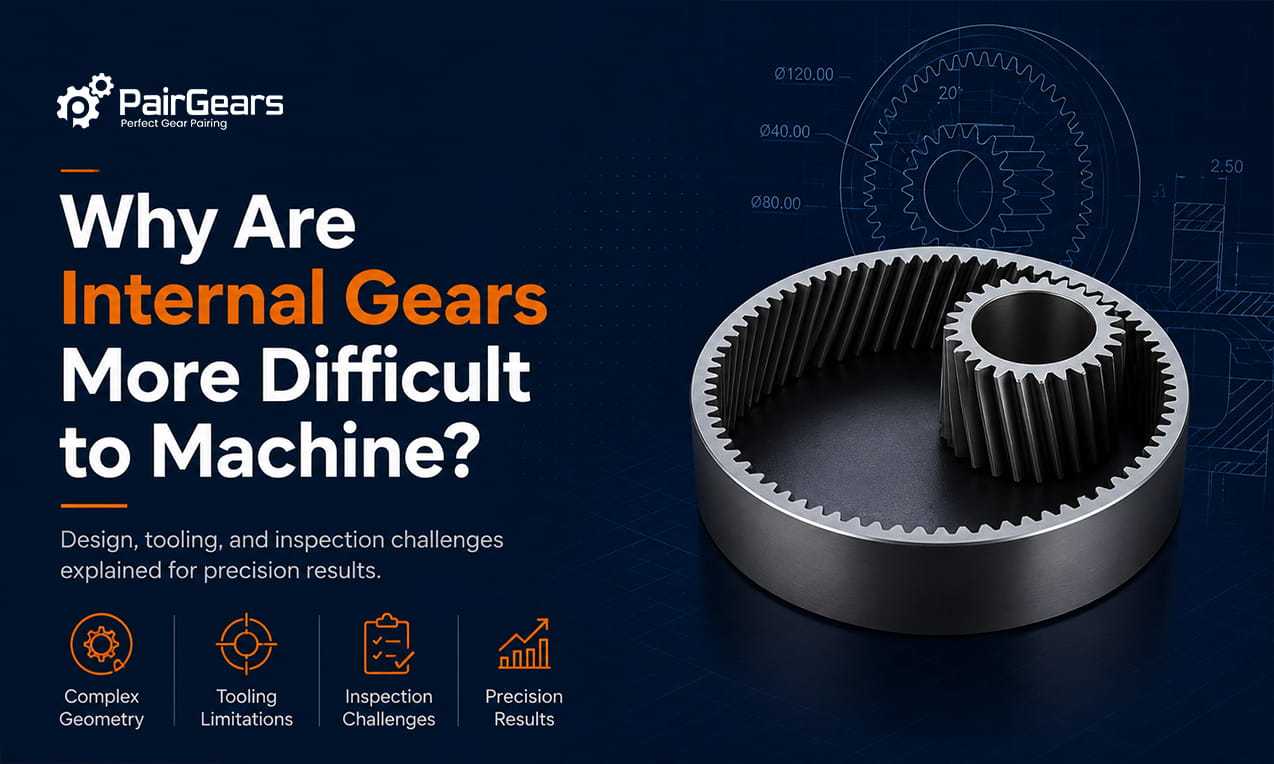
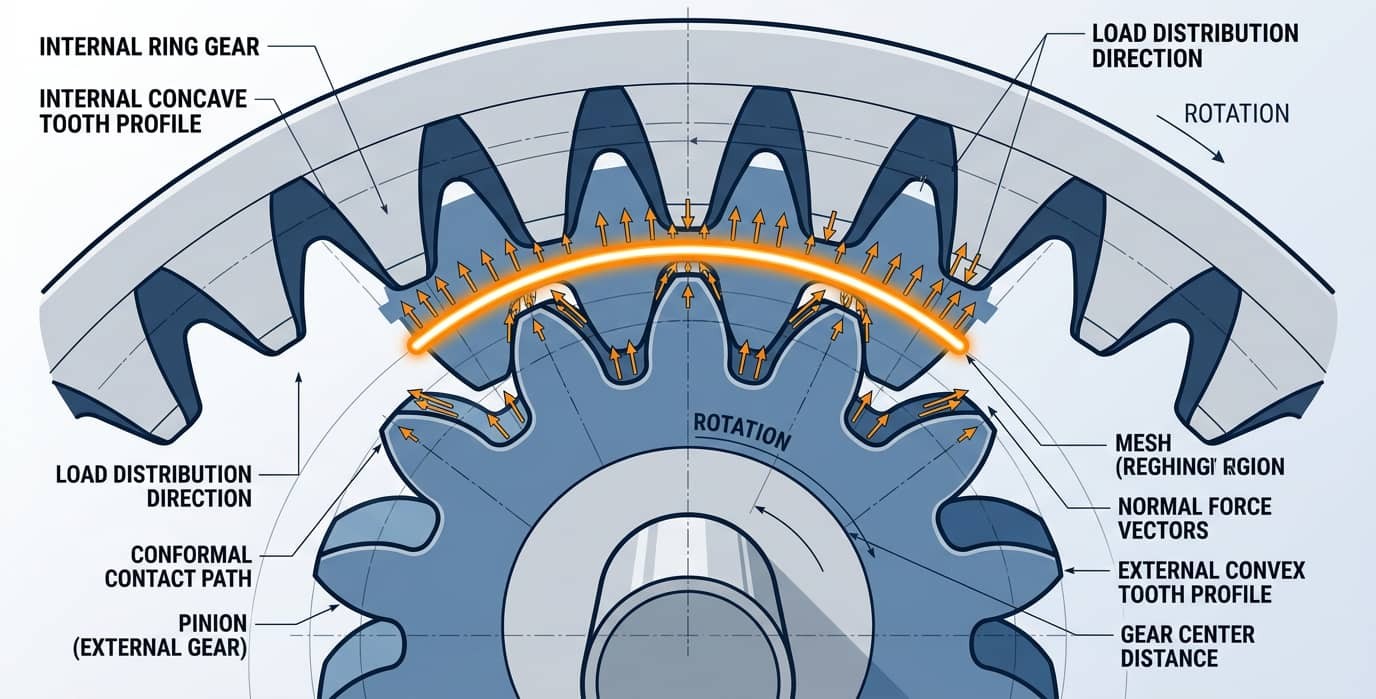
Two gears may share the same module, tooth count, material, and accuracy requirement, but an external gear and an internal gear may still need very different machining routes. The main difficulty is not only the tooth form. It is that the cutting tool has to work inside the gear ring, where tool access, movement space, and cutting conditions are much more limited.
This machining position directly affects tool size, movement space, rigidity, chip evacuation, and the available machining methods. For a precision gear manufacturer, an internal gear project usually needs to be reviewed not only by gear parameters, but also by tool access, surrounding structure, heat-treatment distortion, inspection access, and production quantity.
Quick Answer
Internal gears are harder to machine mainly because the cutter must enter the gear bore and complete the full tooth width without interfering with the surrounding structure. Small internal diameters, wide face widths, nearby shoulders, thin ring sections, and post-heat-treatment accuracy requirements can further limit the available machining and finishing routes.
Why Does Tool Access Make Internal Gear Machining Different?
When machining external gears, the cutting tool can usually approach the workpiece from the outside, with relatively sufficient tool diameter and movement space.
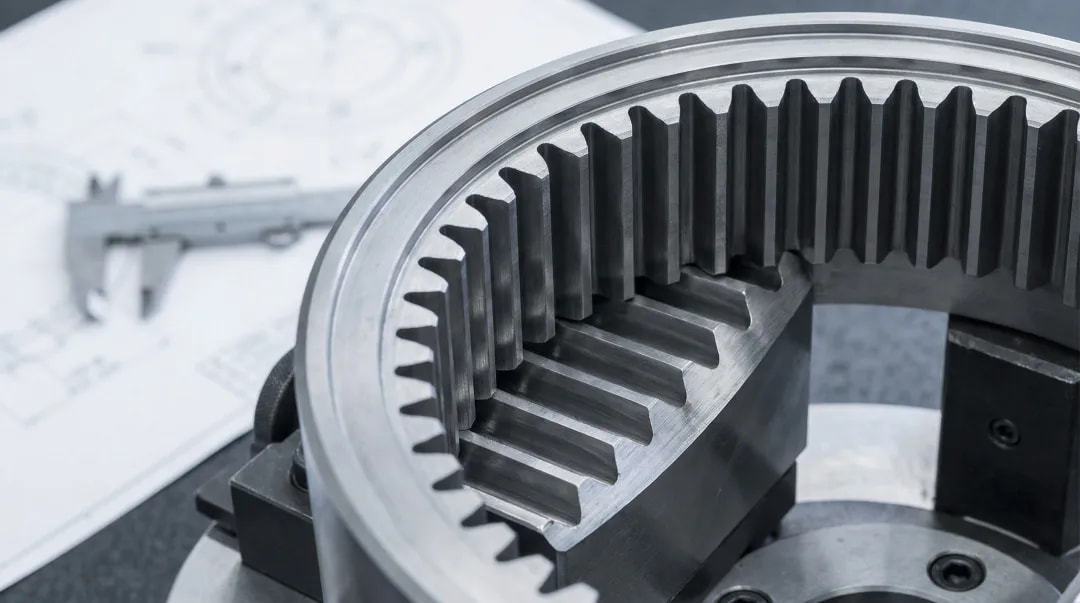
Internal gears are different. The tool must enter the inner bore and complete the cutting within limited space. Therefore, the following points usually need to be confirmed before machining:
Even if the gear parameters themselves are not complicated, the internal structure may still determine whether a certain machining process is feasible.
6 Main Challenges in Internal Gear Machining
| Machining Challenge | Why It Matters |
|---|---|
| Restricted tool access | Limits available machining methods and tool size |
| Cutter interference | The cutter and internal gear geometry must provide sufficient clearance |
| Tool and setup rigidity | Deflection may affect tooth profile, lead, and dimensional stability |
| Difficult chip evacuation | Cutting takes place inside the gear, making chips more difficult to remove |
| Heat-treatment distortion | Thin ring geometry may change in dimension and roundness after hardening |
| Limited inspection access | Internal tooth measurement places higher requirements on probes, equipment, and inspection methods |
These problems do not necessarily appear at the same time in every internal gear project. The actual machining difficulty depends on the combination of gear geometry, material, heat treatment, accuracy, and production quantity.
Which Internal Gear Features Increase Machining Difficulty?
1. Smaller Internal Diameter
The smaller the internal diameter, the more limited the space usually available for tool entry and movement. If the cutter diameter, tool holder, or machine structure cannot obtain enough clearance, the machining route needs to be reassessed.
2. Larger Face Width
A larger face width may increase tool overhang and cutting length, placing higher requirements on tool rigidity, vibration control, and chip evacuation.
3. Shoulders or Steps Close to the Teeth
If there is a shoulder, flange, or other structure near the internal teeth, it may limit cutter overrun and withdrawal space. These non-tooth dimensions may sometimes directly determine the machining method.
4. Internal Helical Teeth
Internal helical gears not only require consideration of tooth geometry, but also require confirmation of the helix angle, tool movement, and machine capability. Process evaluation is generally more complicated than for ordinary internal spur gears.
5. Thin Ring Sections
Thin-wall structures are more likely to deform during clamping, cutting, and heat treatment, so greater attention needs to be paid to the clamping method and machining sequence.
6. Higher Accuracy and Heat-Treatment Requirements
When a project requires carburizing, hardening, or higher final accuracy, it may not be enough to ensure that the dimensions are qualified before heat treatment. Distortion after heat treatment and whether a suitable subsequent finishing process is available also need to be considered.
Why Is Hobbing Often Unsuitable for Internal Gears?
Conventional gear hobbing normally requires the hob to approach the tooth form from outside the workpiece, making it well suited to many external gears. For an internal gear, however, the cutter must operate inside the bore, where the gear body itself restricts cutter diameter and movement.
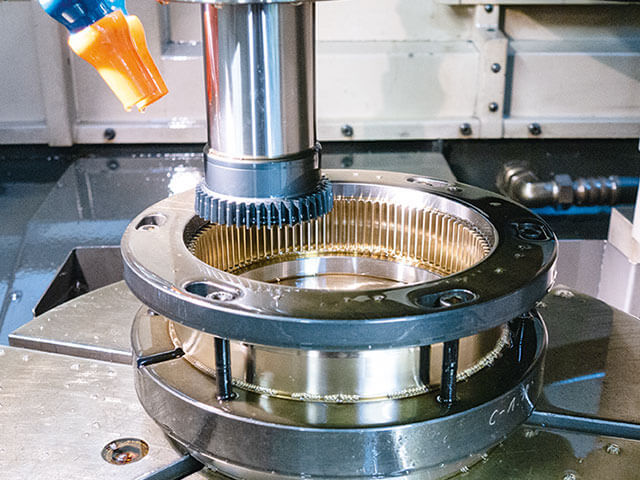
Internal gears therefore usually require a process specifically suited to internal tooth cutting. The final choice depends on internal diameter, tooth geometry, surrounding structures, accuracy, and production quantity.
For a closer look at one of these processes, See What Is Gear Skiving and How Does It Work?
Gear Shaping vs Skiving vs Broaching: Why Does Process Choice Matter?
Different internal gear machining methods affect cycle time, tooling investment, accuracy control, and the economics of batch production.
| Process | Often Considered When | Main Buyer Consideration |
|---|---|---|
| Gear shaping | Flexible internal gear machining requirements | Cycle time and tool access |
| Gear skiving | Geometry and production volume are suitable for efficient continuous cutting | Machine and tooling capability |
| Broaching | Stable, relatively high-volume production | Dedicated tooling investment |
| Hard finishing | Higher accuracy is still required after heat treatment | Machining accessibility and additional cost |
For the same internal gear drawing, the most economical machining route may be different under different production quantities.
For example, a dedicated tooling solution suitable for batch production may not provide a cost advantage for small-volume projects, while a more flexible machining route may require a longer unit machining time.
How Does Internal Gear Machining Difficulty Affect Cost and Lead Time?
Internal gears do not necessarily mean higher cost than external gears. The actual cost mainly depends on the following factors:
A more accurate statement is that the cost of an internal gear depends on whether its geometry matches a suitable machining process, as well as the amount of dedicated tooling, post-heat-treatment accuracy control, inspection work, and production quantity required.
Confirming this information early in the quotation stage can reduce situations where suppliers quote based on different technical assumptions. It also helps make the sample and mass-production lead times clearer. Buyers preparing an early custom gear quote should try to confirm these details before comparing prices.
Need to review an internal gear before quotation?
Send the available drawing, gear data, material, heat treatment, quantity, and inspection requirements so the machining basis can be reviewed first.
What Information Helps Evaluate an Internal Gear Project?
To evaluate the machining route, buyers should provide as much project information as possible before quotation. A 2D drawing is helpful, but the surrounding structure, mating gear, heat treatment, and inspection requirements may also affect the process choice.
Among these details, the internal diameter, surrounding steps, cutter overrun space, and mating gear information are especially worth confirming in advance. These dimensions may directly affect whether the gear can be shaped, skived, broached, finished after heat treatment, or inspected as required.
FAQ About Internal Gear Machining
Are Internal Gears Always More Expensive Than External Gears?
Not necessarily. Cost depends on geometry, machining method, tooling, heat treatment, accuracy, inspection requirements, and production quantity. It should not be judged only by whether the gear is an internal or external gear.
Can Internal Gears Be Hobbed?
Conventional hobbing methods used for external gears are generally unsuitable for internal gears because tool access and geometric interference are restricted. In actual projects, gear shaping, skiving, or other processes are usually selected according to the structure.
Is Gear Shaping or Skiving Better for Internal Gears?
No single process is suitable for every project. The internal diameter, tooth count, face width, accuracy, material, and production quantity all need to be considered.
Does Heat Treatment Make Internal Gears More Difficult to Manufacture?
It can. Especially for thin ring sections, heat treatment may change roundness, dimensions, or tooth geometry. High-accuracy projects need to consider post-heat-treatment machining and inspection in advance.
What Information Is Needed to Quote an Internal Gear?
It is recommended to provide the drawing, gear parameters, material, heat treatment, accuracy, mating gear information, quantity, and inspection requirements. Complete information can help the supplier select a more suitable process and evaluate the quotation more accurately.
Conclusion
Internal gear machining is more difficult because the cutting tool must work inside the gear ring, where space is limited. As a result, tool access, interference, rigidity, chip evacuation, heat-treatment distortion, and inspection access all need to be considered when planning the machining route.
For a custom internal gear project, buyers should prepare the drawing, mating gear information, material, heat treatment, accuracy requirement, and expected quantity before quotation.
Send Your Internal Gear Project for Review
If you need support with process review, sample planning, inspection scope, or quotation basis, you can contact PairGears with the available project information.