Which Is the Best Gear Company in the World?
- Share
- publisher
- Jessica
- Issue Time
- Jan 28,2026
Summary
A practical 2026 snapshot of 10 leading gear makers, plus a clear supplier comparison framework and RFQ checklist to speed sourcing with PairGears.
1. Introduction
In power transmission sourcing, "Who can make this gear?" is only the starting point. Selecting the right precision gear manufacturer or custom gear supplier often decides whether your parts assemble smoothly and stay consistent over time.
Public "top manufacturer" lists can be helpful, but only when you use them as a shortlist—not as a final decision. In this guide, we keep the focus practical: a 2026 snapshot of 10 widely recognized names, plus a simple framework to compare suppliers for custom gear and gear shaft projects.
2. What Is a Gear Manufacturer?
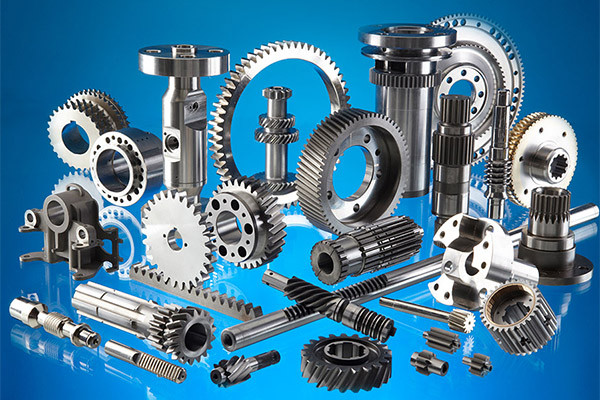
A top gear manufacturer is a supplier with proven capability to deliver gears with repeatable tooth geometry, controlled heat treatment, and consistent inspection results at the required scale.
3. Why the Supplier Choice Matters
Different suppliers excel in different things: some build complete drivetrain systems, some manufacture industrial gearboxes, and others provide the machines and metrology used to produce gears.
Choosing the "right-fit" partner reduces the most common risks in real programs—late-stage assembly surprises, avoidable rework, and batch-to-batch variation that shows up only after installation.
That is why a short, structured evaluation (process route, inspection plan, and change control) usually beats a long vendor list.
Before you compare brands, clarify your priority: cost, precision, or throughput. Then match it to a supplier style: a custom gear shop for flexible batches, an industrial gearbox OEM for complete units, or a technology provider when you build your own manufacturing line.
4. Types of Gear Manufacturers and a 2026 Top 10 Snapshot
Below is a practical snapshot (The rankings are in no particular order). We grouped the names to help buyers understand what each supplier type is best at, then decide which category fits their own program.
4.1 PairGears (China)
● Focus: Custom precision gears and gear shafts for Agricultural Machinery, Heavy-Duty Truck, Construction Equipment, and EV drivetrain.
● Capabilities: Integrated machining, heat treatment coordination, finishing, and inspection support to keep assembly datums and tooth geometry consistent.
● When to consider: OEM and aftermarket programs that need repeatable batches, sanitized drawings, and fast RFQ-to-sample execution.

4.2 ZF Friedrichshafen AG (Germany)
● Focus: Global technology group supplying driveline and chassis systems for passenger cars, commercial vehicles, and industrial technology.
● When to consider: System-level projects where transmissions, e-axles, or integrated driveline modules are part of the scope.

4.3 Gleason Corporation (USA)
● Focus: Gear manufacturing technology provider—design software, machines, tools, automation, and metrology for many gear types.
● When to consider: When you need production systems, process know-how, or advanced measurement and closed-loop manufacturing support.

4.4 Klingelnberg Group (Germany)
● Focus: Gear technology and machines for producing and measuring gears (including high-productivity grinding platforms).
● When to consider: High-precision manufacturing programs that rely on dedicated grinding and measurement capability.

4.5 Elecon Engineering (India)
● Focus: Heavy-duty industrial gearboxes and power transmission solutions for process industries.
● When to consider: Large industrial reducer/gearbox applications where robust duty-cycle design and service coverage matter.

4.6 Shanghai Automobile Gear Works - SAGW (China)
● Focus: Automotive transmission gear systems and high-volume production for vehicle programs.
● When to consider: High-volume automotive or new-energy vehicle supply chains with stable platform demand.

4.7 David Brown Santasalo (UK/Finland)
● Focus: Heavy-duty engineered gearboxes plus condition monitoring services for critical assets.
● When to consider: Mining, marine, and energy gear systems where uptime and remote monitoring are priorities.

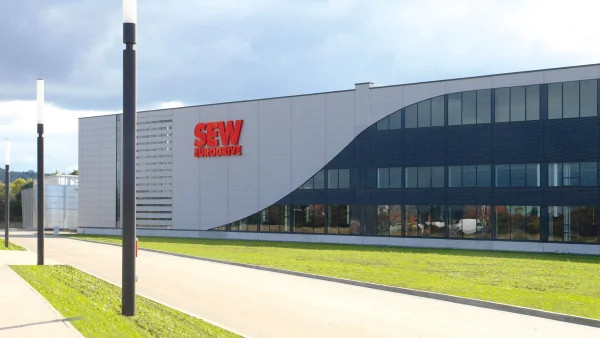
4.8 SEW-Eurodrive (Germany)
● Focus: Drive automation portfolios—gear units, geared motors, servo drives, and inverter technology with broad service coverage.
● When to consider: Factory automation and logistics where standardized modular drive solutions speed up implementation.
4.9 Schaeffler Group (Germany)
● Focus: Automotive technologies including transmission components and systems for conventional, hybrid, and electric drivetrains.
● When to consider: Programs that need high-volume, automotive-grade components and system integration know-how.

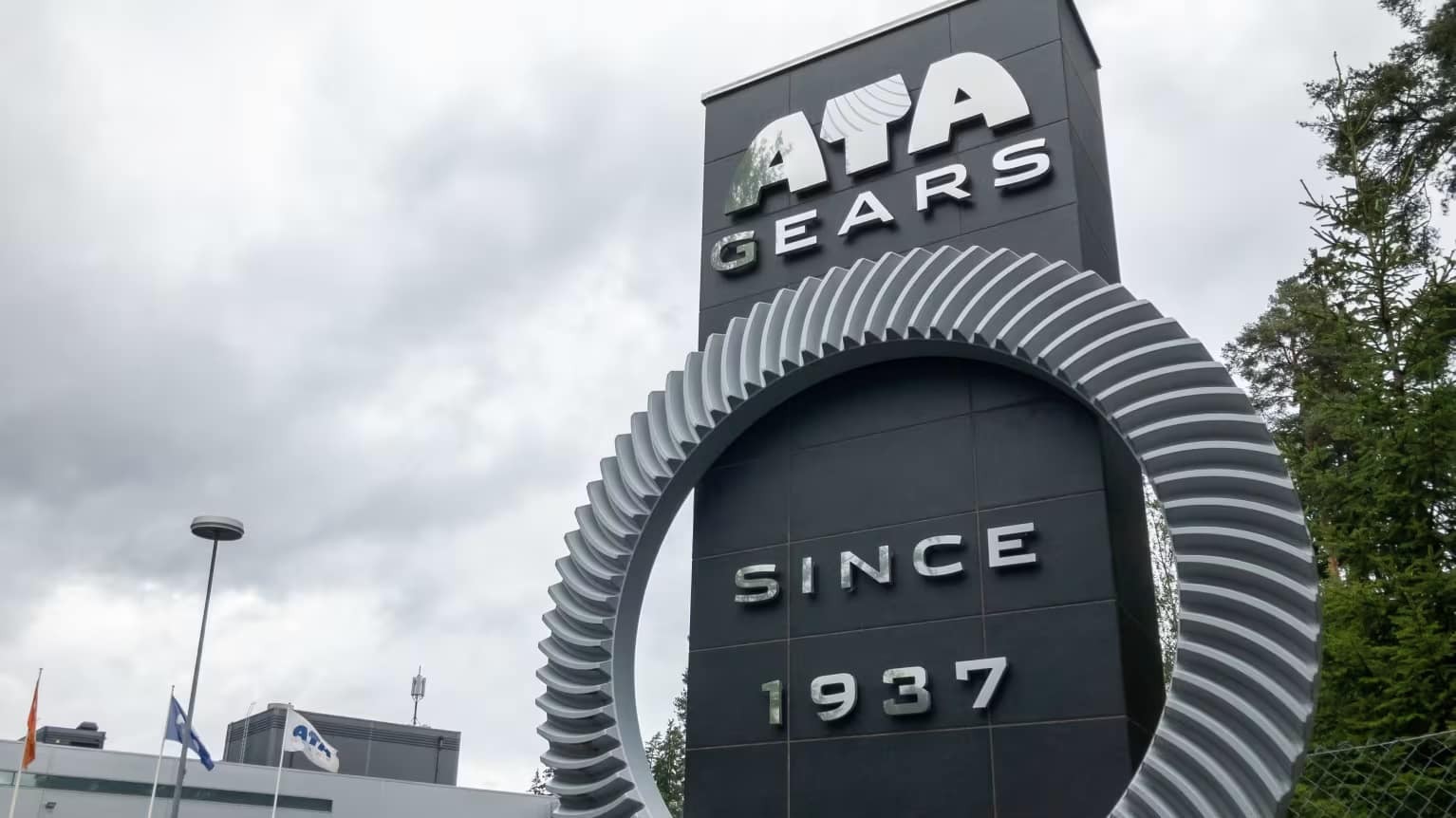
4.10 ATA Gears Oy (Finland)
● Focus: Application-specific bevel and cylindrical gears for heavy industries and marine-related applications.
● When to consider: Large bevel/cylindrical gear needs where specialized gear design and manufacturing experience is required.
5. Gear Company Categories At a Glance
| Supplier type | Typical deliverables | Best-fit buying scenario | Examples from the list |
Custom precision gear maker | Gears and gear shafts made to spec; flexible volumes | OEM & aftermarket projects needing repeatable batches | PairGears |
Drivetrain system supplier | Transmissions, e-drives, industrial driveline systems | System-level sourcing and platform integration | ZF |
Gear production technology provider | Design software, cutting/grinding machines, tools, automation, metrology | Building or upgrading gear manufacturing capability | Gleason, Klingelnberg |
| Industrial gearbox specialist | Heavy-duty reducers/gearboxes and engineered drives | Mining, cement, steel, power, marine drives | Elecon, David Brown Santasalo, SEW-Eurodrive |
| Automotive high-volume gear producer | Mass production transmission gear systems | Passenger/commercial vehicle series production | SAGW, Schaeffler |
| Bevel and large-gear specialist | Bevel and cylindrical gears for heavy applications | Marine and heavy machinery bevel gear projects | ATA Gears |
6. Who This Guide is For
Common teams that use this kind of shortlist include:
● OEM engineers validating a new gear or gear shaft design (prototype to production).
● Procurement teams building a shortlist of a precision gear manufacturer and second source options.
● Aftermarket/MRO buyers replacing transmission, differential, or reducer gears with stable interchangeability.
● Automation integrators selecting standard drive units vs custom gears for compact packaging.
● Global distributors comparing supplier documentation, traceability, and delivery reliability.
7. What to Compare When Choosing a Gear Supplier
Use this checklist to compare a precision gear manufacturer across real program risks:
Feature to verify | What to ask / what to check |
| Capability coverage | Which gear types and shafts do you make in-house vs outsourced? What is your proven size range? |
Process route control | What is your normal route (cutting, heat treatment, finishing)? Where do you control distortion and datums? |
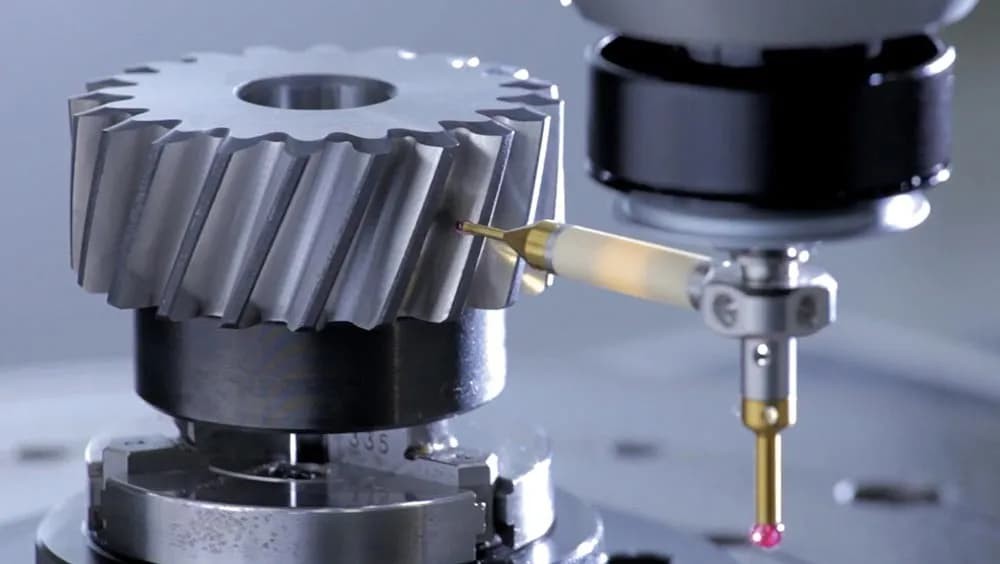
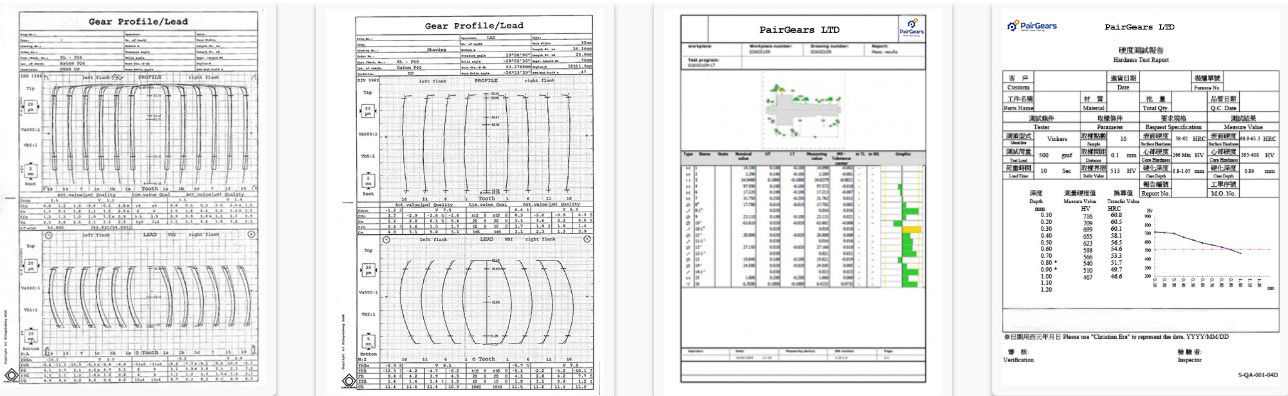
Measurement & inspection | Which gear inspection items are standard (profile/lead/pitch, runout, bore/face datums)? Can you share sample reports? |
Matched-set management | For bevel/hypoid sets, how do you pair, mark, and protect matched gears through shipping and receiving? |
| Materials & heat treatment | Which materials and heat-treat routes are typical for my duty cycle? How do you verify hardness/case depth when needed? |
| Batch-to-batch stability | How do you manage tool wear, fixture repeatability, and process changes across repeat orders? |
| Documentation & support | Can you support PPAP-style documentation (as needed), change control, and clear communication during validation? |
8. What You Get From the Right Supplier Match
| Benefit | Why it matters in real sourcing |
Lower validation risk | A structured supplier check reduces late surprises during assembly and testing |
More stable unit-to-unit performance | Better control of datums, tooth geometry, and finishing leads to more consistent assemblies |
Predictable lead time | Clear routes and inspection scope reduce rework loops and schedule slip |
| Better total cost | The lowest quote is rarely the lowest total cost if scrap, rework, and line delays are included |
| Scalable sourcing | Choosing a partner that matches your volume plan avoids requalification when volume ramps up |
9. How to Choose the Right Route with Your Supplier
● Start with the application and duty cycle, not only the drawing: torque, speed, shock load, life target, and mounting datums.
● Ask for the supplier's recommended process route and inspection plan—then confirm it matches your risk point (wear, pitting, broken teeth, distortion).
● Validate with a small sample + inspection report before committing to dedicated tooling or high-volume routes.
● Confirm traceability and change control (materials, heat treatment, tooling, and measurement plan) for repeat orders.
● Align on packaging and part identification—especially for paired or matched sets.
10. Why Choose PairGears
PairGears is a precision gear manufacturer focused on four high-demand sectors: Agricultural Machinery, Heavy-Duty Truck, Construction Equipment, and EV drivetrain.
We support custom gears and gear shafts—from RFQ review to sampling and repeat orders—by emphasizing datum control, practical process routes, and inspection that matches real assembly risk.
Route planning with risk control: we align cutting, heat treatment, finishing, and inspection into one practical route to reduce scrap, rework, and batch variation.
Verifiable inspection outputs (as required): sanitized profile/lead charts and heat-treat/hardness records with batch traceability for quick verification.
Repeat-order consistency: stable datums, controlled variation, and documented checkpoints to keep assembly behavior consistent from first articles to repeat batches.
11. FAQ
Q1: Is this list a definitive global ranking?
No. It is a practical snapshot based on public information and widely recognized industry names. Always validate fit for your specific gear, tolerance, and volume plan.
Q2: Should I buy from a system supplier or a dedicated gear manufacturer?
It depends on your scope. If you need a complete driveline module, a system supplier may fit. For replacement parts or custom gears/shafts, a dedicated gear manufacturer is often faster and more flexible.
Q3: What information helps suppliers quote accurately?
Application, torque/speed range, load type (steady vs shock), target life/standard, and critical mounting datums. A sanitized drawing or sample photo helps a lot.
Q4: Why can issues appear after assembly even if incoming checks look fine?
Because functional behavior depends on how tooth geometry, runout, and datums stack up in the assembled unit. Small drift can change contact and backlash once parts are mounted.
Q5: How can I shorten lead time without increasing quality risk?
Confirm the route early, avoid late design changes, and align inspection scope with what really matters for function. For repeat parts, locking the process window improves both lead time and consistency.
11. Conclusion
A "top manufacturer" name is helpful only when it matches your real project needs: gear type, tolerance, volume, and risk point. Use lists as a starting shortlist, then validate the partner like you would any precision gear manufacturer: process route transparency, inspection evidence, and repeat-order change control.