What Should Buyers Ask About Gear Inspection Before Shipment
- Share
- publisher
- Jessica
- Issue Time
- Jun 12,2026
Summary
Learn what buyers should ask about gear inspection before shipment, including dimensions, hardness, material reports, surface checks and packaging.
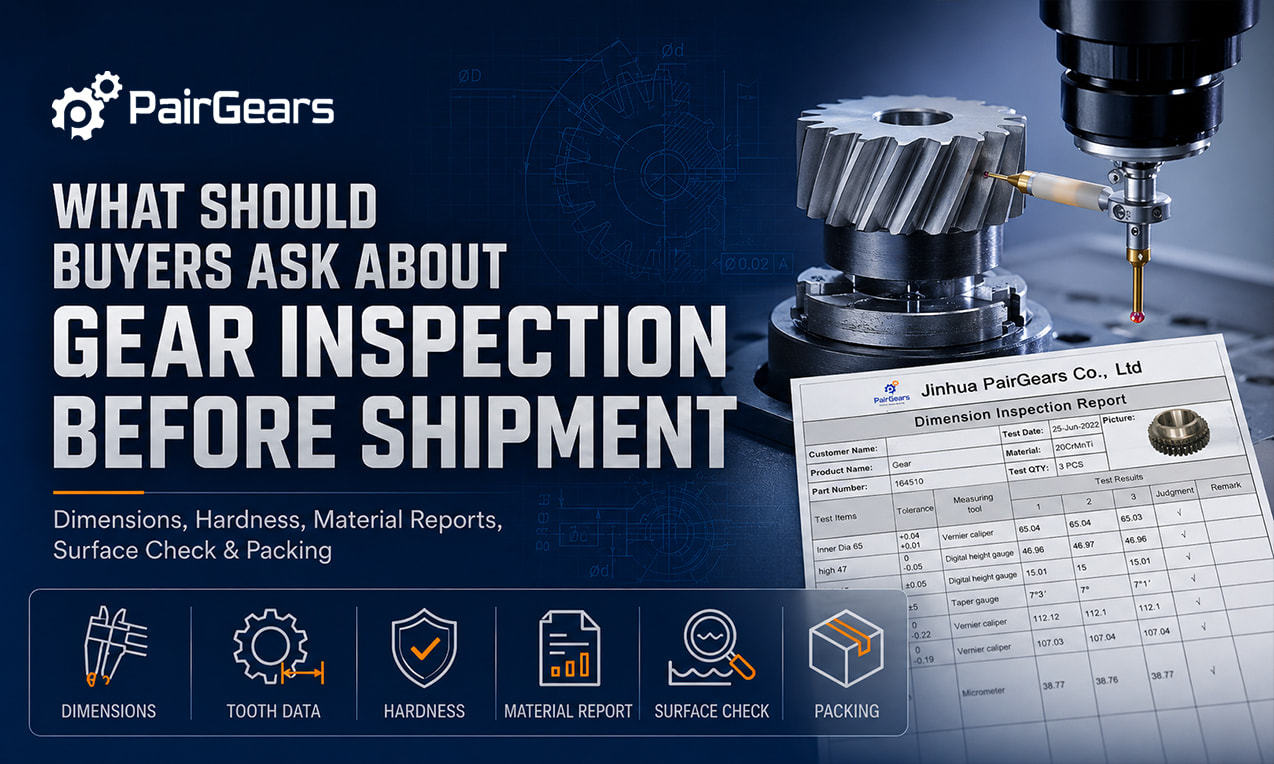
Introduction
Before shipment, many buyers focus on lead time, packing, and freight arrangements. Those points matter, but they should not come before inspection clarity. A gear that arrives on time but does not match the drawing, hardness target, fit condition, or report requirement can still delay assembly and create extra cost after delivery.
At PairGears, we support custom precision gears and replacement gear projects for Agricultural Machinery, Heavy-Duty Trucks, Construction Equipment, and EV drivetrains. In these projects, pre-shipment gear inspection is not only about checking size. It is also about confirming whether the part matches the agreed geometry, material route, heat treatment target, visible surface condition, and shipment expectations before it leaves the factory.
Quick Answer for Buyers
Before shipment, buyers should ask what will be checked, which reports will be provided, what standards or drawing notes the inspection follows, and whether the packing condition will also be confirmed.
The most useful questions usually cover dimensions, tooth data, hardness, material reports, visible surface condition, quantity, labeling, and export packing.Clear inspection points make shipment approval easier and reduce later disputes.
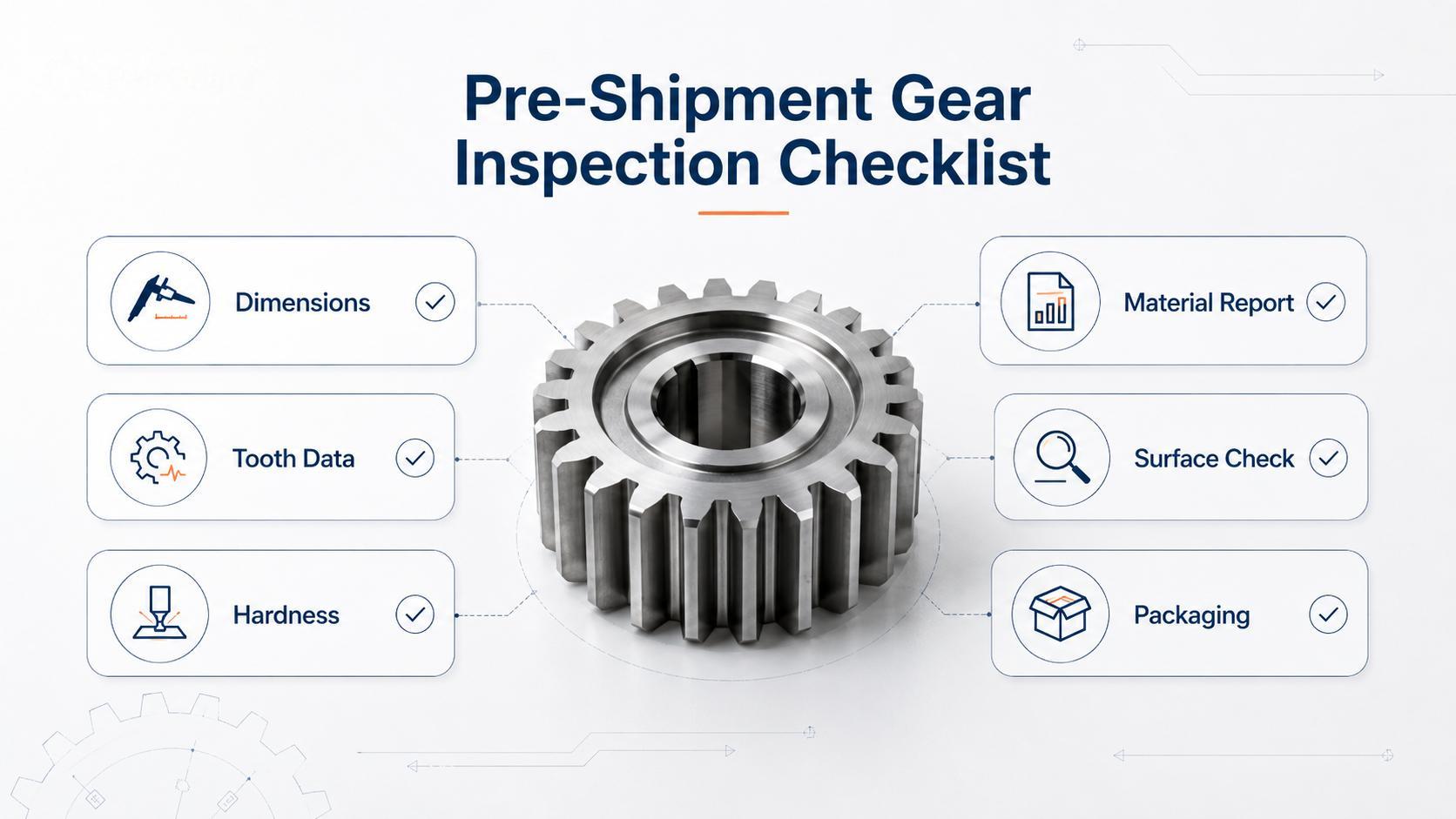
Why Pre-Shipment Inspection Matters for Gear Buyers
A pre-shipment check does more than confirm that the gear exists. It confirms whether the delivered part still matches the order after machining, heat treatment, cleaning, anti-rust protection, and packing. This is especially important for custom gears, replacement gears, shaft gears, splined parts, and mating components that must fit into an existing assembly.
In many projects, the gear is not completely wrong, but one key detail was not confirmed before shipment. Bore size, spline fit, hardness, surface condition, rust protection, or labeling may all create avoidable problems if they are reviewed too late.
Key Gear Inspection Questions Buyers Should Ask Before Shipment
| Inspection Topic | What Buyers Should Ask | Why It Matters |
| Dimensional inspection | Which key dimensions will be checked and reported? | Confirms fit before assembly |
| Tooth data | Will tooth count, module or DP, pressure angle, helix angle, and related geometry be checked if required? | Helps confirm meshing compatibility |
| Bore, spline, and keyway | Will bore size, spline details, keyway size, and shaft fit be inspected? | Prevents mounting problems |
Hardness | Will surface hardness, core hardness, or the required hardness range be verified? | Helps confirm service durability |
Material report | Can a material certificate or related raw material record be provided if required? | Supports traceability and material confirmation |
Heat treatment | Will the heat treatment route and required values be confirmed before shipment? | Helps avoid performance mismatch |
Surface condition | Will burrs, damage, rust risk, sharp edges, and visible defects be checked? | Reduces installation and appearance issues |
Gear inspection reports | What specific reports can be provided if the drawing or order requires them? | Defines the acceptance scope clearly |
Will the shipment quantity and part identification be double-checked? | Prevents shortage or mixed packing | |
Packing | Will anti-rust treatment, part separation, labeling, and export packing be checked before dispatch? | Protects parts during transport |
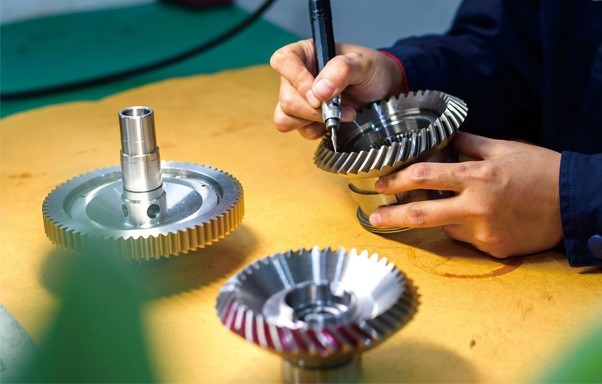
The Most Important Gear Inspection Points Buyers Should Clarify
Dimensions and fit
Buyers should confirm which dimensions are critical for approval, such as OD, bore, face width, total length, spline dimensions, keyway size, and other mounting features. If a report is required, the report items should be defined before shipment.
Hardness and heat treatment
If the project includes carburizing, nitriding, induction hardening, quenching and tempering, or another heat treatment route, buyers should ask what hardness values will be checked and how those values will be confirmed before shipment. For some projects, the issue is not only surface hardness. Core hardness, case-depth expectations, or general heat-treatment consistency may also matter.
Material confirmation
For replacement gears and custom projects, material misunderstandings can create long-term service problems. Buyers should ask whether a material certificate, heat number record, or related material reference can be supplied when required. If the material is specified on the drawing, this point should be confirmed before shipment instead of after arrival.
Surface condition and visible defects
A gear can be dimensionally correct and still create problems if the tooth edges have burrs, the bore has damage, the surface shows rust risk, or the anti-rust condition is poor before packing. Buyers should ask whether the factory checks visible defects, sharp edges, handling marks, and surface cleanliness before the parts are packed.
Packing and shipment readiness
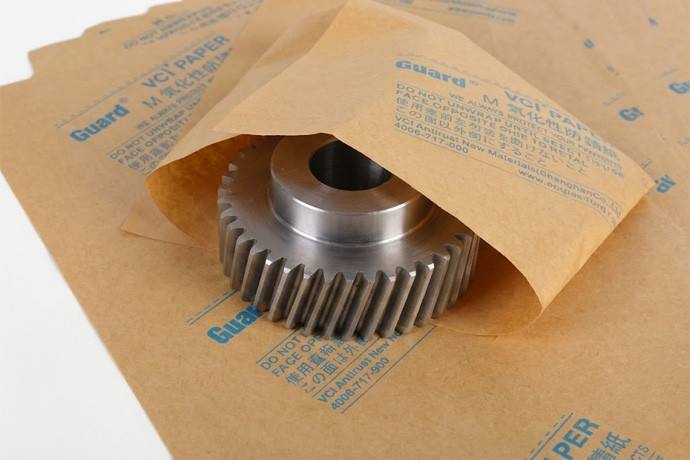
Inspection before shipment should not stop at the part itself. Buyers should ask how the parts will be cleaned, protected, labeled, separated, and packed. This is especially important for finished gears, matched sets, splined shafts, and export shipments where handling damage or poor anti-rust protection can create avoidable issues in transit.
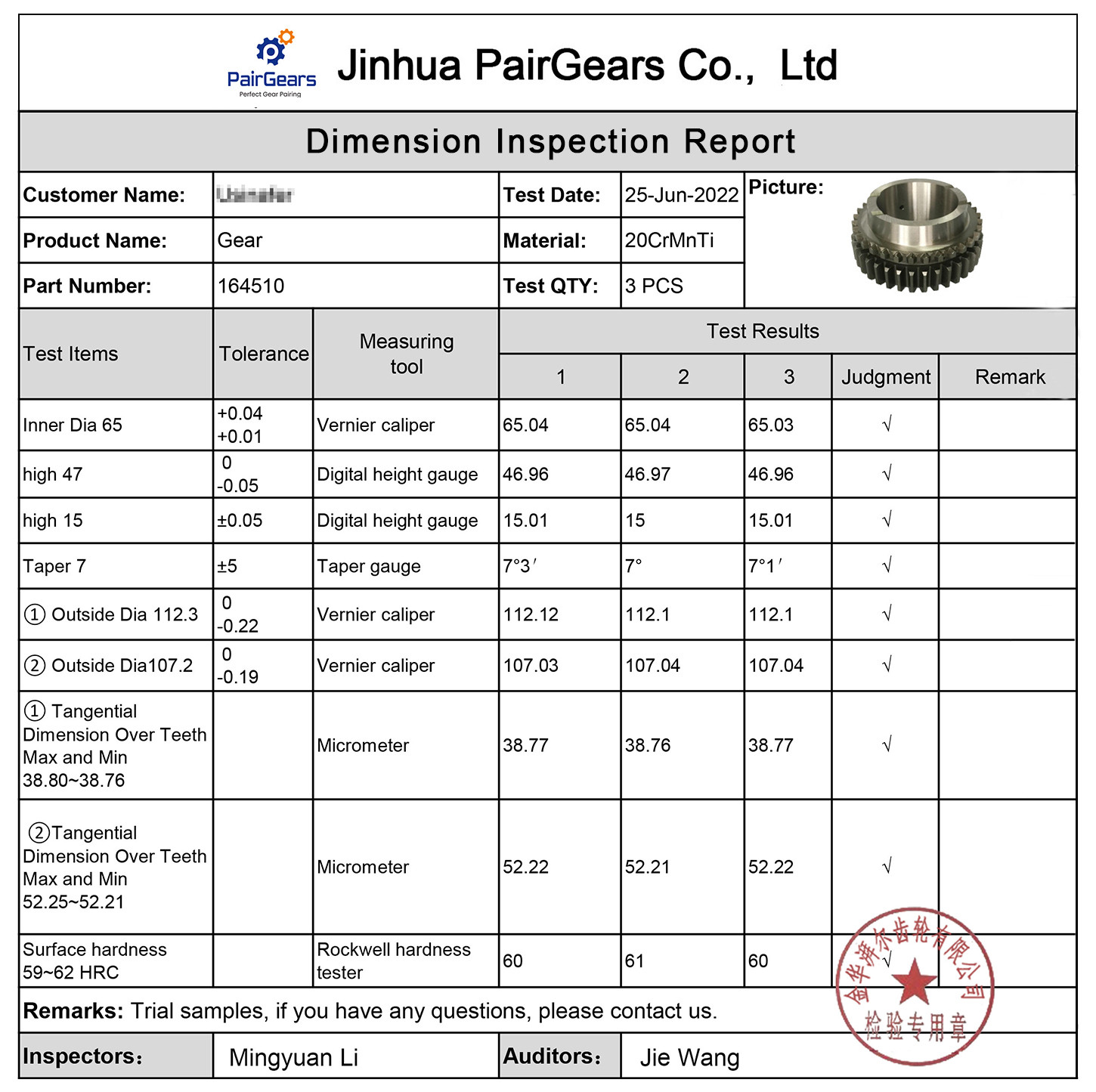
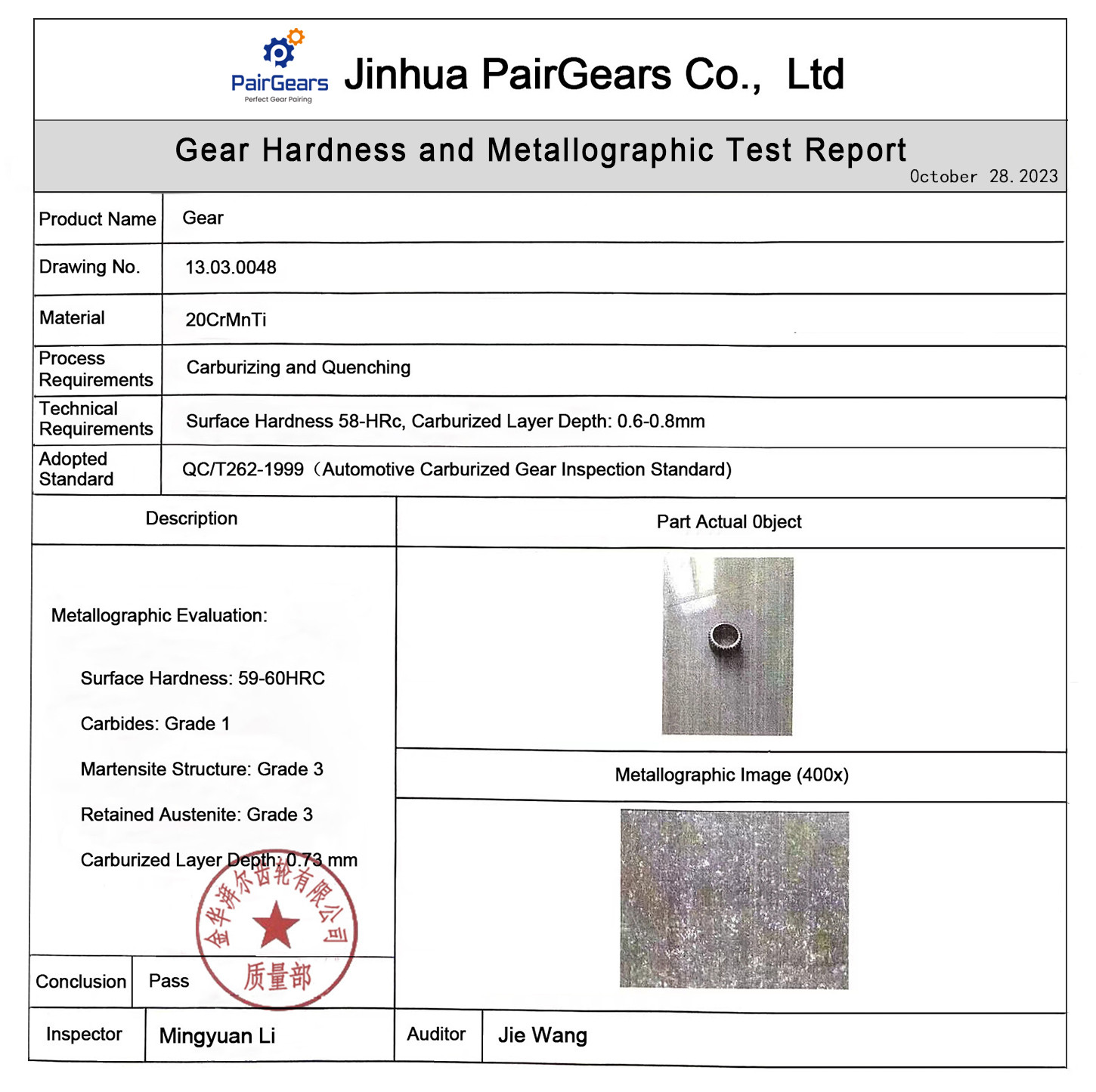
What Reports Buyers Commonly Ask for Before Gear Shipment
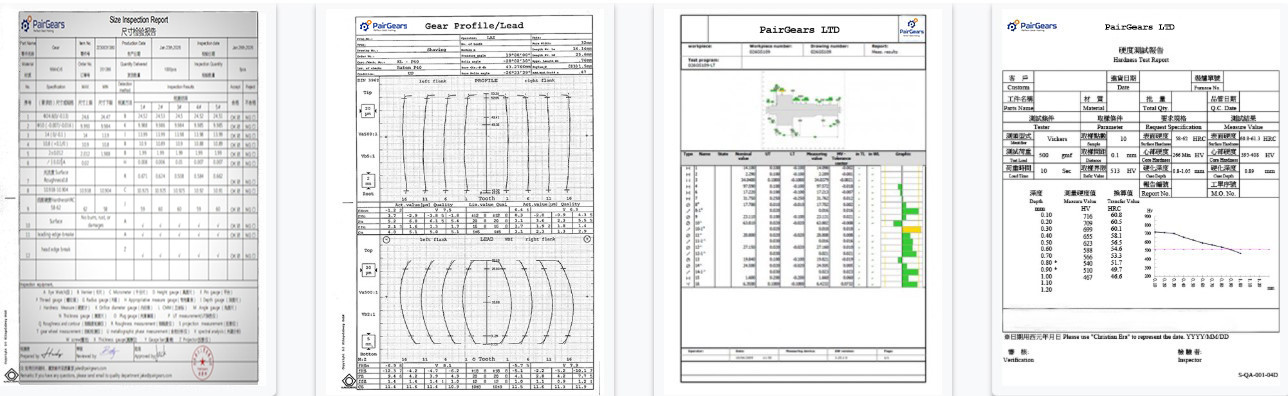
| Report Type | What It Usually Supports | When It Is Useful |
| Dimensional inspection report | Key dimensions and tolerances | General shipment approval |
| Hardness report | Surface or required hardness values | Heat-treated gears and wear-sensitive applications |
| Material certificate | Material traceability and specified grade | Custom and replacement gear projects |
Gear inspection report | Selected gear-geometry items if required | Projects with tooth-geometry-related acceptance needs |
Visual inspection confirmation | Surface, burr, damage, and rust-condition review | Finished parts before packing |
Packing list and label confirmation | Quantity, item marking, and shipment identification | Multi-item or export shipments |
Not every project needs every report. Buyers should ask which reports are included by default and which reports should be defined in the quotation or order stage. This avoids a situation where the buyer expects full documentation but the supplier planned only a basic shipment check.
What Buyers Should Send When Requesting Inspection Before Shipment
If buyers want a meaningful pre-shipment inspection, they should not wait until the parts are ready to ask for it. The inspection scope should be connected to the RFQ, drawing, or order confirmation.
● Drawing with critical dimensions or inspection notes
● Purchase order with report requirements
● Gear type and application description
● Hardness or material requirement if applicable
● Mating-part or fit-related notes if the gear works in an existing assembly
● Packing instructions if anti-rust protection or individual separation is important
● Labeling or part-marking requirements
● Shipment quantity and packing-unit expectations
If your shipment requirements are still not fully defined, you can still start with the available drawing notes, PO comments, and application details. PairGears can review the key inspection points first and advise what should be confirmed before shipment.
Common Mistakes Buyers Should Avoid
Asking for reports only after production is finished
Inspection expectations should be defined before or during quotation, not only at the final packing stage. Late requests can create delays or misunderstanding.
Treating all gears as if they need the same inspection scope
A basic replacement gear, a heat-treated shaft gear, and a matched gear set may each need a different level of inspection focus.
Checking dimensions but ignoring hardness or material
For many service applications, correct size alone is not enough. Material route and heat treatment can affect whether the gear actually performs in service.
Ignoring packing as part of shipment quality
A gear that passes inspection can still arrive in poor condition if anti-rust protection, part separation, and labeling are not controlled before dispatch.
Leaving acceptance criteria too general
If the order says only "inspect before shipment", the buyer and supplier may understand that phrase differently. Clear inspection points reduce that risk.
Why Choose PairGears
PairGears supports custom precision gears and replacement gear projects from drawings, samples, OEM numbers, photos, and application details. For pre-shipment inspection, we review agreed dimensions, fit features, hardness-related requirements, material references, surface condition, and packing readiness when required.
● Pre-shipment gear inspection review for Agricultural Machinery, Heavy-Duty Trucks, Construction Equipment, and EV drivetrains
● Inspection planning connected to drawings, order notes, and real application needs
● Review of dimensions, fit features, hardness-related requirements, and visible surface condition
● Practical report support for shipment approval when required
● Packing and handling checks to reduce shipment-related issues
● Workable routes from quotation, production, inspection, and final dispatch
This is especially useful when the project involves custom gears, replacement parts, mating components, heat-treated parts, or export shipments where documentation and packing quality matter together.
FAQ
Q1: What should buyers ask about gear inspection before shipment?
Buyers should ask what dimensions, fit features, hardness values, material references, surface checks, quantity checks, and packing points will be confirmed before dispatch.
Q2: Do all gear shipments need the same inspection reports?
No. The report scope depends on the drawing, order requirements, application, and whether special checks are needed for shipment approval.
Q3: Is hardness checking important before shipment?
Yes, especially for heat-treated gears or wear-sensitive applications. Correct size alone does not confirm service performance.
Q4: Should packing be part of pre-shipment inspection?
Yes. Anti-rust protection, labeling, quantity control, and part separation can all affect whether the shipment arrives in usable condition.
Q5: When should buyers define inspection requirements?
The best time is during quotation or order confirmation, not after the parts are already finished and packed.
Conclusion
Before shipment, buyers should ask more than whether the gears are finished. They should ask what dimensions were checked, whether hardness and material requirements were confirmed, what surface condition and handling checks were completed, and how the parts were packed for dispatch.
If you are preparing a custom gear or replacement gear order, Contact us to your drawings, order notes, report requirements, and application details. Our team can help confirm a practical gear inspection and shipment review plan before dispatch.