What Is a Spline Shaft and How to Choose One
- Share
- publisher
- Jessica
- Issue Time
- Mar 11,2026
Summary
A spline shaft transfers torque through multiple teeth for accurate engagement. Learn spline types, fit control, inspection, and supplier checks.
1. Introduction
A spline shaft is one of the most practical ways to transfer torque between parts that must stay accurately aligned. Compared with a simple keyed connection, splines can distribute load across multiple teeth, improve centering, and in many designs allow axial sliding without losing torque transmission.
At PairGears, we manufacture custom precision gears, shafts, and transmission components for Agricultural Machinery, Heavy-Duty Trucks, Construction Equipment, and EV drivetrains. This guide explains what a spline shaft is, how it works, the main spline types, and what to check when selecting a supplier for repeatable production.
2. What is a spline shaft?
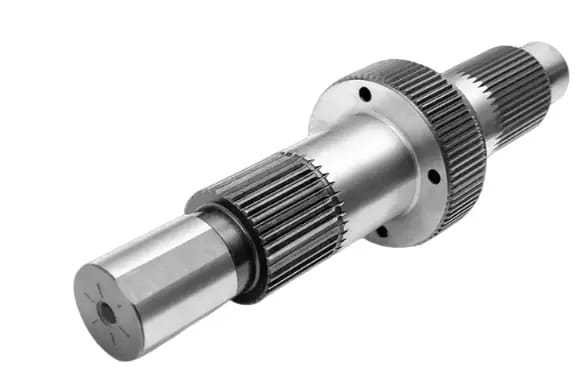
A spline shaft is a shaft with external teeth or grooves that mate with a matching internal spline to transmit torque while maintaining angular alignment between connected parts.
3. Why spline shafts matter in real applications
Spline shafts are chosen when a design needs more than basic torque transfer. Besides carrying torque, the interface often must stay centered, survive repeated assembly, resist wear, and sometimes allow controlled axial movement. So while a keyway can work for simple drives, splines usually suit higher loads and tighter assembly requirements.
The core advantage is load sharing: multiple spline teeth carry torque at the same time, which spreads contact stress over a larger area. As a result, splines help reduce the local overload that often triggers fretting, backlash growth, surface damage, or early tooth failure in heavy-duty service.
Therefore, spline selection is a system decision—not just tooth shape. It needs to match torque level and fit class, material and heat treatment, lubrication and contamination exposure, and how the mating parts are supported in service. Finally, splines also improve serviceability by making disassembly/reassembly more repeatable, especially when angular positioning and alignment must stay consistent.
4. Common types of spline shafts
| Spline type | Main feature | Best fit | Watch-outs |
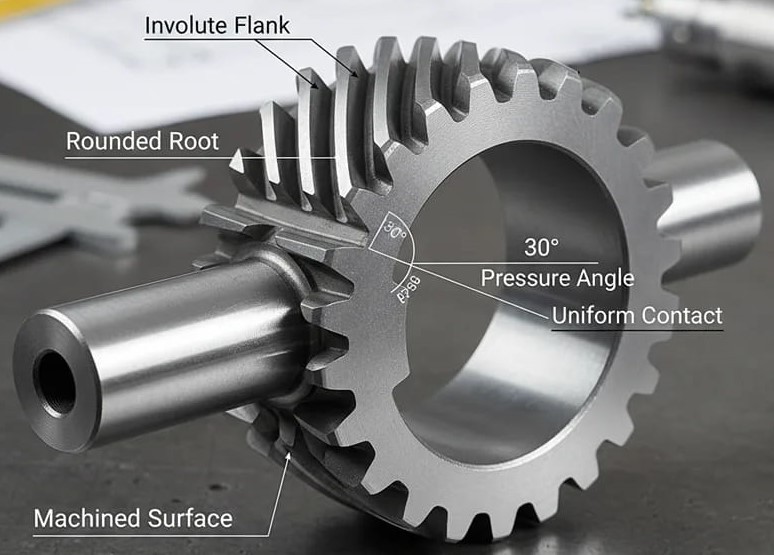
Involute spline | Tooth flank based on involute profile | High torque, repeatable positioning, broad industrial use | Fit class and flank contact must be controlled |
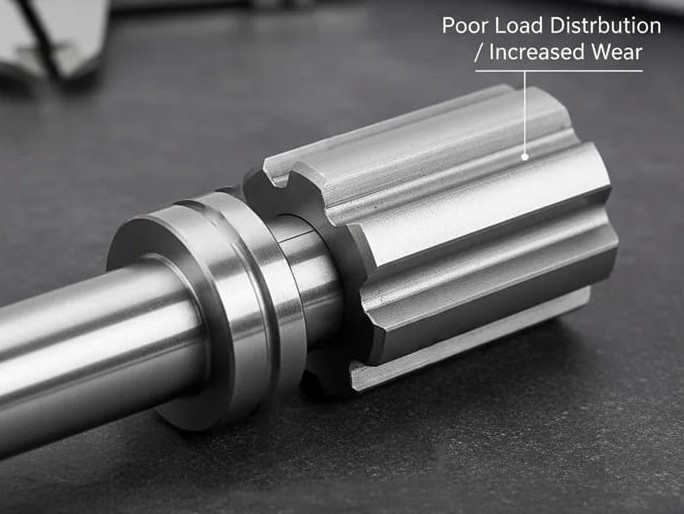
Straight-sided spline | Parallel tooth flanks | Simpler forms, moderate torque applications | Less tolerant of slight misalignment than involute splines |
| Serration / saw-tooth spline | Fine triangular or serrated teeth | Compact locking and positioning interfaces | Usually not intended for the highest torque duty |
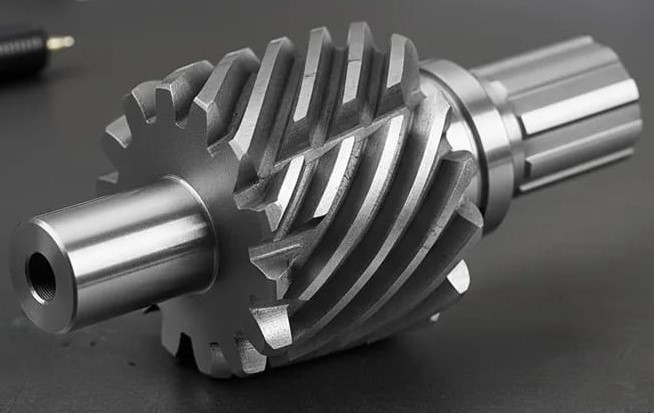
| Helical spline | Teeth follow a helical path | Smoother engagement in special applications | More complex manufacturing and inspection |
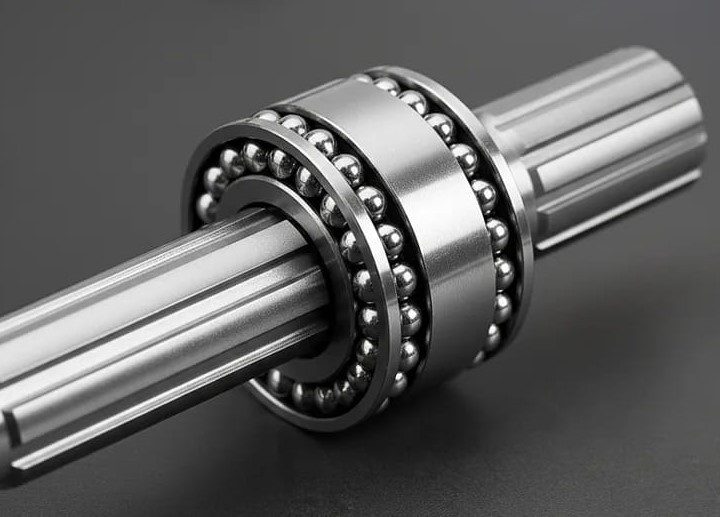
| Ball spline (special case) | Rolling elements between shaft and nut | Linear motion plus torque transfer | Different from standard power-drive spline interfaces |
Involute splines are the default in many demanding systems because they balance strength, repeatability, and manufacturability. Straight-sided splines still fit simpler or legacy layouts, while serrations work well for tight packaging and fine angular location—but they don't automatically replace heavy-duty torque splines.
So choose the form by function: for high torque and long life, start with involute; for primarily positioning or compact assemblies, another form may be more practical.
5. Where spline shafts are commonly used
5.1 Agricultural Machinery
●Used in PTO-related drives, gearbox outputs, and couplings where torque transfer, serviceability, and durability matter under mixed loads, dirt, and moisture exposure.
●In these systems, stable fit and wear resistance are especially important because maintenance intervals can be long and operating conditions are often inconsistent.
5.2 Heavy-Duty Trucks
●Common in transmission shafts, clutch hubs, differential-related interfaces, and driveline components that require stable torque transfer and repeatable fit.
●Because truck applications combine high torque with long-life targets, spline wear, backlash growth, and fretting control are major design concerns.
5.3 Construction Equipment
●Applied in reduction stages and heavy-duty interfaces where shock loads, contamination, and high torque are common.
●Here, material choice, heat treatment, and fit control often matter as much as the spline geometry itself.
5.4 EV Drivetrains
●Used in compact transmission interfaces, motor-to-reducer connections, and other assemblies where alignment accuracy and controlled fit influence efficiency and repeatability.
●In EV systems, packaging, precision, and consistent assembly across batches are often more critical than in traditional low-speed machinery.
6. What to check in spline shaft design and production
| Feature item | What to confirm | Why it matters |
Tooth form | Involute, straight-sided, serration, or special form | Determines load sharing and fit behavior |
Major/minor diameters | Shaft and mating hub dimensions | Controls assembly fit and strength margin |
Fit class / backlash | How tight the spline engages | Affects repeatability, wear, and assembly force |
Effective tooth length | Functional contact length under load | Drives torque capacity and wear life |
| Material and heat treatment | Steel grade, hardness route, core toughness | Balances wear resistance and shock tolerance |
| Runout to datums | Spline relation to bearing seats/faces | Critical for smooth assembly and rotation |
| Surface condition and lubrication | Finish, coating, grease/oil condition | Helps reduce fretting and wear |
Tooth profile, over-pins, GO/NO-GO, CMM (as required) | Confirms the interface will work in real builds |
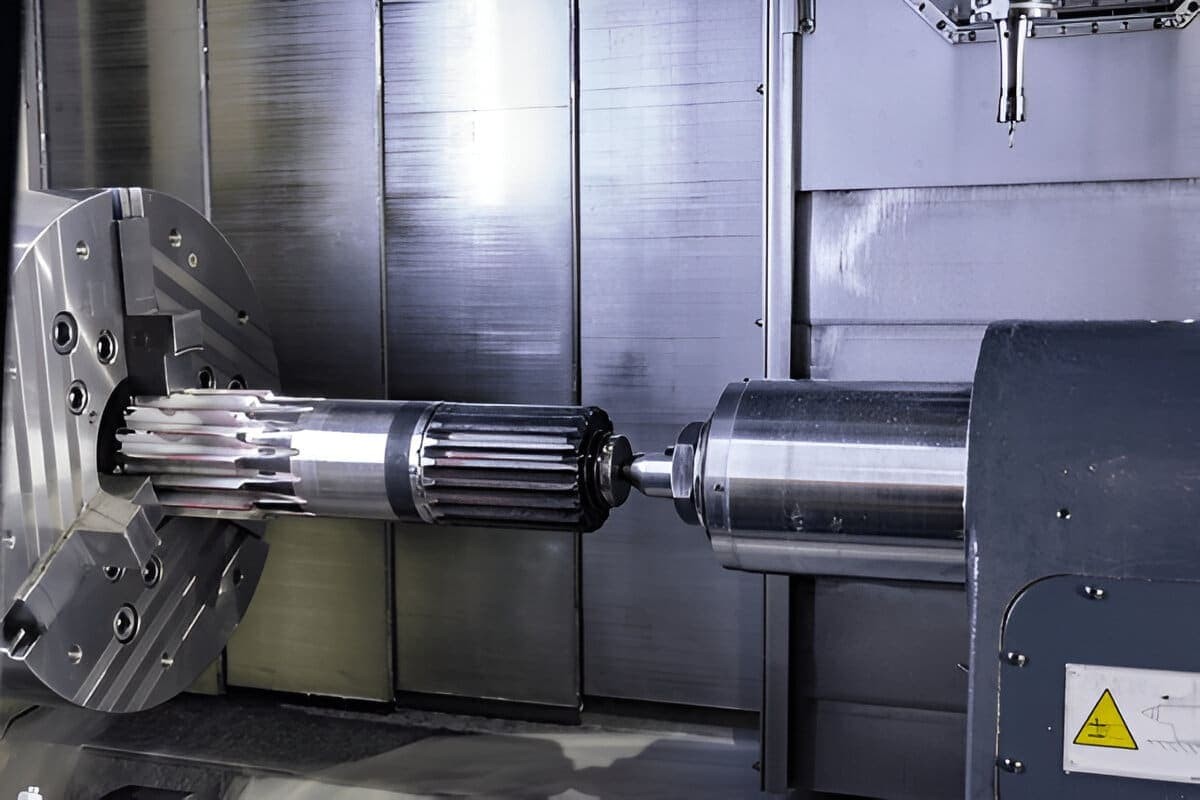
Beyond tooth-size requirements, ask how the spline is referenced in machining and inspection. A spline can be "in size" yet cause issues if it isn't aligned to the bearing seat, shaft shoulder, or mounting face—and that relationship often drives smoothness, heat, and early wear.
So don't stop at nominal dimensions: focus on functional fit in the assembled condition. That's why fit verification, datum control, and the inspection method should be reviewed as one package.
7. Benefits of choosing the right spline shaft
| Benefit | What improves | Practical result |
Better torque distribution | Multiple teeth share load | Higher durability than single-point connections |
More accurate positioning | Controlled angular alignment | Better repeatability in assembled systems |
| Improved serviceability | Easier assembly/disassembly in many designs | Faster maintenance and replacement |
| Lower local stress concentration | Broader contact area | Reduced risk of overload at one point |
| Design flexibility | Can be fixed or sliding depending on fit | Suitable for many transmission layouts |
In sourcing terms, the right spline shaft reduces more than just failure risk. It also reduces assembly uncertainty. That means less variation from one unit to the next, fewer unexpected fit issues during line builds, and a clearer inspection plan for both samples and repeat orders. For many buyers, that is where the real value appears.
8. How to select a reliable spline shaft supplier
● Start with the application, not just the spline name
Share torque, speed, shock load, axial movement needs, lubrication condition, and assembly constraints before locking the spline type.
● Ask how fit and datums are controlled
A spline may look acceptable, but if runout to mounting faces or bearing seats is unstable, the full assembly can still fail.
● Confirm inspection capability
The supplier should explain how spline dimensions, fit, and functional contact are verified, not just how the teeth are cut.
● Check material and heat-treatment logic
For high-load service, the supplier should discuss both surface durability and core toughness, not only one hardness number.
● Review repeat-order control
Tool wear, fixture consistency, traceability, and revision control are essential when the same spline interface must work across multiple batches.
A good spline supplier is not simply a machine shop that can cut teeth. It is a supplier that understands how the spline works inside the whole transmission system and can align manufacturing, inspection, and fit assumptions with your real use case.
9. Why Choose PairGears
PairGears supports custom spline shafts and related transmission components for four core sectors: Agricultural Machinery, Heavy-Duty Trucks, Construction Equipment, and EV drivetrains.
We focus on:
● Practical DFM review before production
● Spline-to-datum relationship control for better assembly repeatability
● Material and heat-treatment matching to the duty cycle
● Stable process planning from prototype to repeat batches
● Quality checks aligned to functional risk points, not only nominal dimensions
Our approach is not limited to "making the spline". We focus on making sure the spline works in the final assembly and remains stable across repeat production.
10. FAQ
Q1: What Is The Main Advantage Of A Spline Shaft Over A Keyed Shaft?
A spline shaft usually distributes torque across multiple teeth, which can improve load sharing, alignment, and durability.
Q2: What Is The Most Common Spline Type In Industrial Applications?
Involute splines are among the most common because they combine strength, repeatability, and broad manufacturing familiarity.
Q3: Can A Spline Shaft Slide Axially While Still Transmitting Torque?
Yes. Many spline designs allow controlled axial movement while maintaining torque transmission, depending on fit and application requirements.
Q4: What Are Common Spline Shaft Failure Modes?
Typical issues include wear, fretting, backlash growth, tooth shear, tooth breakage, and fatigue cracking.
Q5: What Information Helps A Supplier Quote A Spline Shaft Correctly?
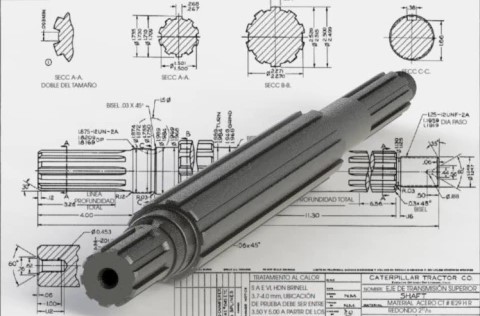
A drawing or sample, torque/speed range, material target, heat-treatment intent, fit requirement, and whether axial sliding is required.
11. Conclusion
A spline shaft is not just a connection feature. It is a critical transmission interface that influences torque capacity, alignment, assembly behavior, and service life. Choosing the right spline type and fit means looking at the full application, not only the tooth form.
If you are preparing an RFQ, validating a spline fit, or troubleshooting fretting, wear, or looseness in a driveline, you are welcome to Contact Us with your drawings, mating internal spline details, and operating conditions so we can align spline type and fit assumptions with a practical manufacturing and inspection plan.