What Is a Pinion Gear and How to Choose One
- Share
- publisher
- Jessica
- Issue Time
- Feb 2,2026
Summary
A guide to pinion gears: what "pinion" means, how pinions work in gear and rack systems, common types, key specs, and a fast RFQ checklist from PairGears.
1. Introduction
In power transmission, "pinion gear" is a term you'll see in drawings and OEM part lists—but it is often misunderstood. Many buyers assume a pinion is a unique gear style, like a spur or bevel gear. In reality, pinion is usually a relative name: it describes the smaller mating gear in a pair, or the gear that drives a rack. That difference matters because "pinion" tells you how the gear is used, not just what it looks like. Once the role is clear, it becomes easier to define tooth form, mounting method, inspection items, and delivery scope.
At PairGears, we support gear programs for Agricultural Machinery, Heavy-Duty Truck, Construction Equipment, and EV drivetrain. As a precision gear manufacturer, we see the same pattern across these sectors: the pinion's role and datums drive the real risk—not the label on the drawing. This guide explains what a pinion gear is, how it works, the common pinion types, and what to check when selecting a supplier.
2. What is a pinion gear
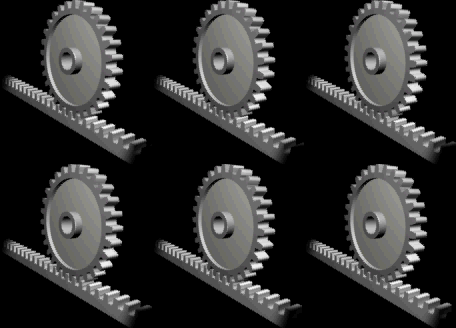
A pinion gear is typically the smaller mating gear—often the input (driving) gear—that meshes with a larger gear wheel or ring gear, or engages a rack.
3. Why the pinion definition matters
Pinion is a functional name, and it affects your project in practical ways.
First, the pinion often carries higher speed and sees different load cycles than its mating gear. That changes how you think about material, heat treatment, and finishing.
Second, many pinions are integrated with a shaft (a pinion shaft). That means mounting datums—bearing seats, faces, fits, and runout—are part of the gear requirement. If datums drift, the system may assemble inconsistently even when tooth form is acceptable.
Third, a pinion is frequently delivered as part of a set. If pairing rules are not defined early (single pinion vs matched set), suppliers may quote different routes and inspection scope. Clear definitions reduce back-and-forth, rework, and schedule surprises.
4. Common pinion setups
Pinions appear in a few common system layouts. The table below summarizes typical combinations and what to review when specifying a pinion.
| Setup | What the pinion does | Output effect | Practical notes |
| Gear pair (pinion + gear wheel) | Pinion drives a larger gear | Speed reduction; torque increase (typical) | Tooth count ratio defines the stage behavior |
| Pinion as driven gear | Pinion is driven by a larger gear | Speed increase; torque reduction | Less common; confirm direction and load case |
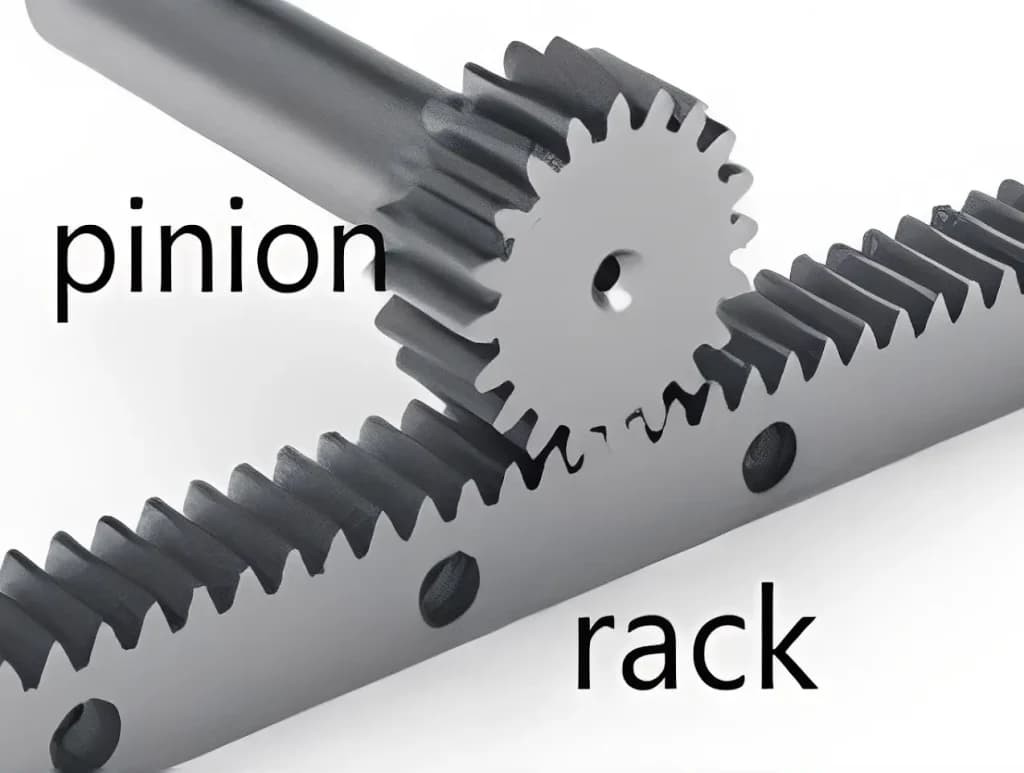
| Pinion converts rotation to linear motion | Rotation ↔ linear motion | Travel accuracy depends on pitch and mounting | |
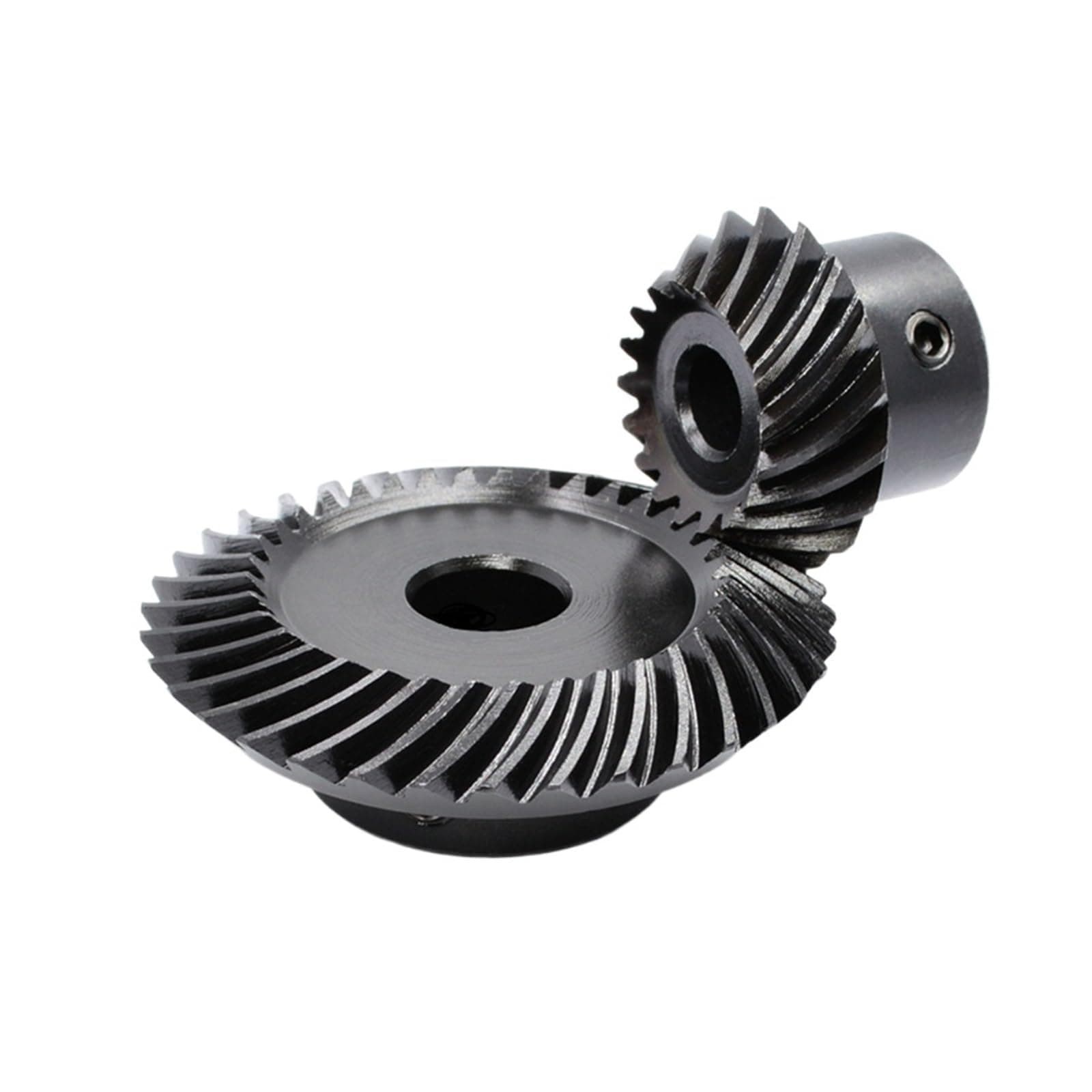
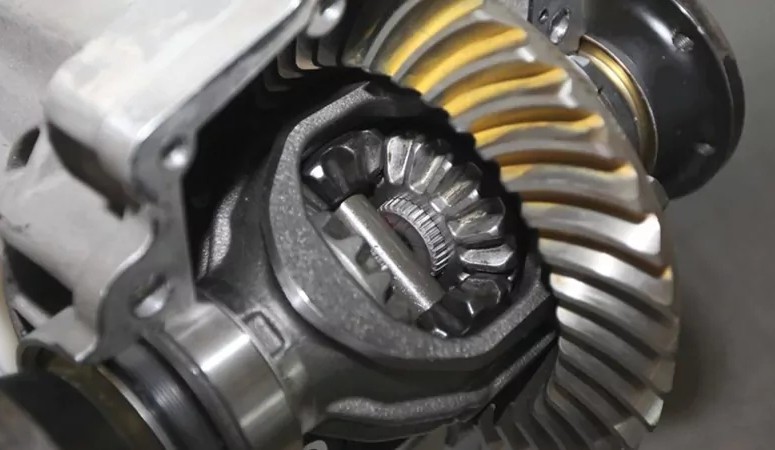
Bevel/hypoid set (pinion + ring gear) | Pinion drives ring gear in angle-change layout | Direction change plus ratio change | Pairing and contact pattern control are critical |
Worm set (worm + worm wheel) | Worm drives worm wheel with high ratio | Large reduction in compact space | Review efficiency, duty cycle, and heat management |
Note: "pinion" is a role, not a tooth form—spur, helical, bevel, or hypoid can all be pinions if they mate and drive the set.
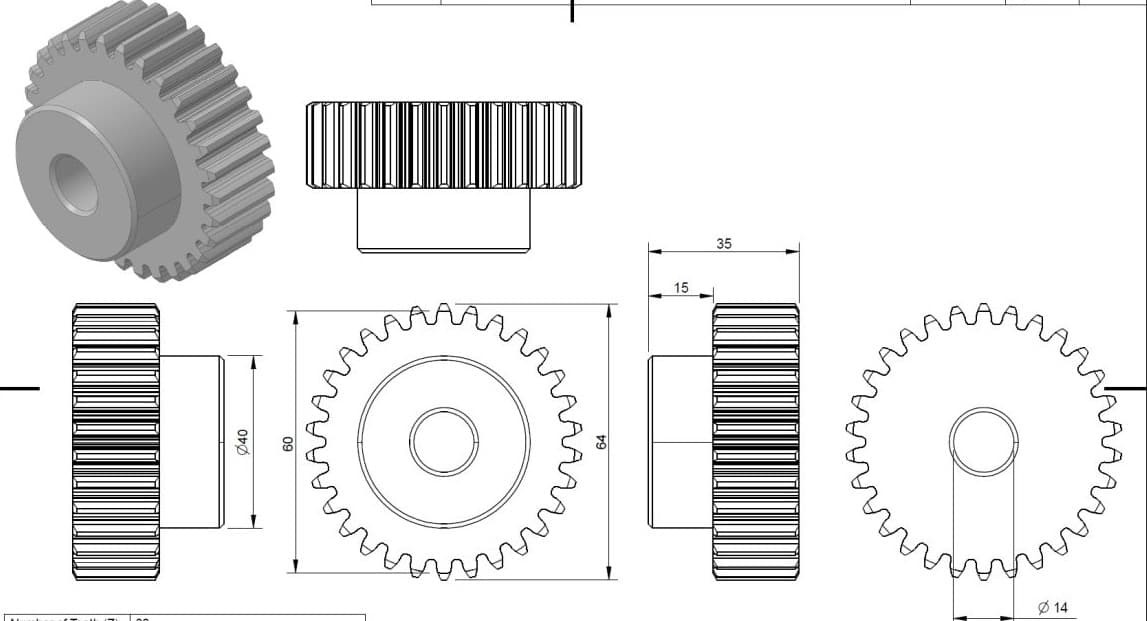
Quick selection: for parallel shafts, spur is simple and efficient, while helical handles higher loads more smoothly. For axle-style direction changes, bevel or hypoid is common and should be specified with the ring gear and pairing rules. Worm sets suit compact high ratios but need early duty-cycle and heat checks. For linear motion, rack and pinion is usually the most direct option.
5. Where pinion gears are commonly used
Pinion gears show up across PairGears' four focus sectors. Typical examples include:
●Agricultural machinery: final drives, compact reducers, steering and implement drives
●Heavy-duty trucks: axle and differential sets, auxiliary drives, power transfer units
●Construction equipment: swing drives, travel drives, reducers, feed mechanisms
●EV drivetrains: e-axle stages, compact reducers, parking and actuation mechanisms
In these applications, pinions help transmit power, set speed ratio, change direction in axle layouts, or convert rotation to linear motion in rack systems—depending on the mechanism.
6. Pinion gear types in practice
Below is a practical view of common pinion types based on tooth form and system role.
| Pinion type | Key characteristics | Why it's chosen | Common pairing |
Straight teeth; simple geometry | Cost-effective and straightforward to manufacture | Spur gear wheel | |
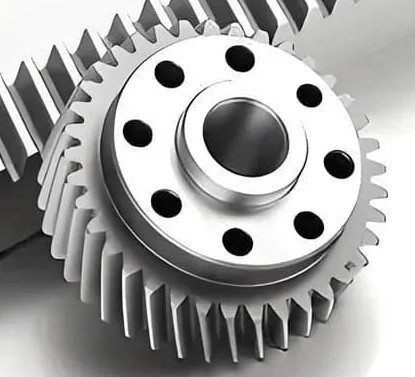
Helical pinion | Angled teeth; gradual engagement | Supports higher loads with stable transfer | Helical gear wheel |
Conical gear; intersecting axes | Changes force direction | Bevel ring gear | |
Hypoid pinion | Offset axes; sliding component | Compact axle layouts and packaging flexibility | Hypoid ring gear |
| Worm (worm pinion) | Screw-like form | Large ratio in compact space; self-locking can be useful | Worm wheel |
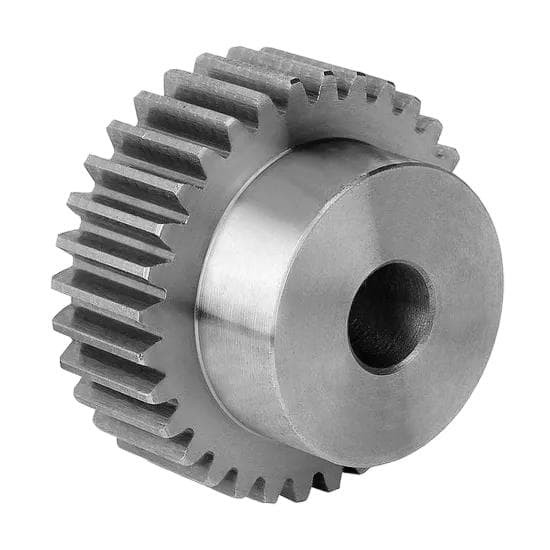
| Engages rack teeth (straight or helical) | Converts rotation to linear motion and back | Rack |
7. What you gain when the pinion is specified correctly
| Benefit | What improves | Why it matters |
Right ratio behavior | Speed and torque match the target | Reduces redesign loops and field adjustments |
Cleaner assembly | Fits, runout, and faces are planned | Fewer rework cycles and better interchangeability |
| Repeatable mating | Geometry and pairing rules are controlled | Reduces unit-to-unit variation in production |
| Predictable production route | Tooling and inspection scope are clear | More stable lead time planning |
| Easier supplier alignment | Role and acceptance checks are agreed early | Less miscommunication and fewer surprises |
In many programs, the biggest cost is not the tooth cutting itself—it is scrap, rework, and assembly variation. A correct pinion definition helps you focus on the real risk point: datums, pairing, and inspection scope that keep the system consistent from first articles to repeat orders.
8. How to help a supplier recommend the right pinion route
To help a custom gear supplier recommend the right route, you don't need a long report—just share the essentials:
● Application: gear pair, differential/ring gear set, rack system, reducer stage
● Approximate torque and speed range; steady load or shocks/frequent start-stop
● What you need the pinion to do: ratio target, direction change, or linear travel
● Mounting datums and critical fits: bore/shaft seats, faces, runout limits
● Inspection scope: tooth geometry items, traceability level, and any life target
For pinion shafts, add a simple datum checklist to your RFQ: bearing seats, the axial control face, and the primary reference for tooth-to-datum alignment. Many assembly issues come from datum drift (runout or face wobble), not tooth form alone. State acceptance targets clearly—runout, concentricity, fits, and any tooth geometry checks—so the supplier can propose an inspection pack that matches real assembly risk.
9. Why Choose PairGears
When you compare suppliers, the best choice is the one that meets your functional targets with repeatable risk control.
Here is how PairGears supports that process:
● Role-first review: we confirm how the pinion works in your assembly, then align tooth form, ratio, and acceptance checks.
● Route planning with risk control: we connect cutting, heat treatment, finishing, and inspection into one practical plan to reduce scrap and rework.
● Verifiable inspection outputs (as required): sanitized tooth geometry outputs and heat-treat/hardness records with batch traceability for quick review.
● Four-sector experience: agriculture, heavy trucks, construction equipment, and EV drivetrains—different duty cycles, one consistent delivery discipline.
● Communication that speeds sourcing: as a precision gear manufacturer, we translate duty cycle and datums into a quoteable, buildable specification.
10. FAQ
Q: Is A Pinion Gear A Separate Gear Type?
A: Not usually. "Pinion" is commonly a role name for the smaller mating gear, not a unique tooth form.
Q: What Is The Difference Between A Pinion And A Ring Gear?
A: In many sets, the pinion is the smaller/input gear, while the ring gear is the larger/output gear (often in axle layouts).
Q: Can A Pinion Be Spur, Helical, Bevel, Or Hypoid?
A: Yes. "Pinion" describes the role in the set. The tooth form depends on the layout and performance needs.
Q: Why Does A Pinion Often Come As A Shaft?
A: Because it connects to a motor or upstream stage. That makes faces, bearing seats, fits, and runout part of the functional requirement.
Q: What Should I Send For An Accurate Quote?
A: A drawing/sample/OEM number plus application, duty cycle (torque/speed), mating part info, mounting datums, and inspection scope.
11. Conclusion
A pinion gear is best understood as a role in a mating system, not a standalone gear category. Once you define what the pinion mates with (gear wheel, ring gear, rack, or worm wheel) and how it mounts in your assembly, it becomes much easier to choose tooth form, ratio, and inspection scope. If you're sourcing a pinion from a custom gear supplier, the fastest path is to share application, duty cycle, datums, and mating part details up front. That lets the supplier recommend a practical route and quote with fewer assumptions.
If you have a drawing, sample, or OEM number, Contact Us, and we can review your application and recommend a practical manufacturing route for pinion gears and matched sets, helping you keep assembly behavior consistent across batches.