What Is Gear Shaving and When Should It Be Used?
- Share
- publisher
- PairGears
- Issue Time
- Sep 14,2026
Summary
Learn what gear shaving is, how it works, when it should be used, and how it compares with hobbing and grinding in custom precision gear manufacturing.
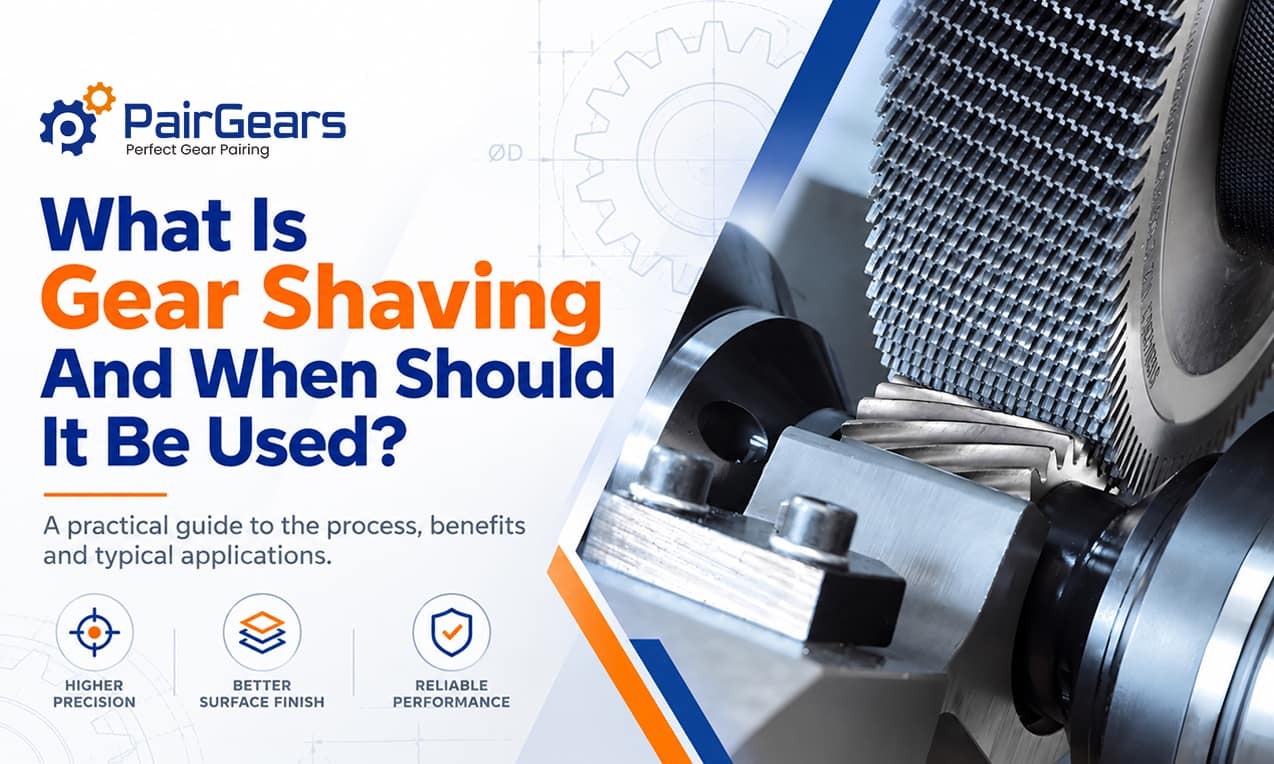
Gear cutting does not always end after hobbing or shaping. For gears that need better control of tooth profile, lead, and surface condition, an additional finishing operation may be used before heat treatment. One common option is gear shaving.
At PairGears, the manufacturing route is selected according to gear geometry, material, heat treatment, and final accuracy. In some cases, hobbing alone is enough. In others, shaving can refine the tooth surface before hardening, while higher final accuracy may require grinding after heat treatment.
What Is Gear Shaving?
Gear shaving is a finishing process that removes a small amount of material from an already generated tooth surface to improve tooth profile, lead, indexing, and surface condition.
Unlike hobbing or shaping, shaving does not normally create the complete tooth form. It is carried out after the main cutting operation to refine the existing tooth surface.
Traditional gear shaving is mainly applied before hardening, so it is generally considered a soft gear finishing process.
A typical route may be:
Whether shaving is necessary depends on the drawing requirements and the final condition expected from the gear.
How Does the Gear Shaving Process Work?
Shaving Cutter and Workpiece
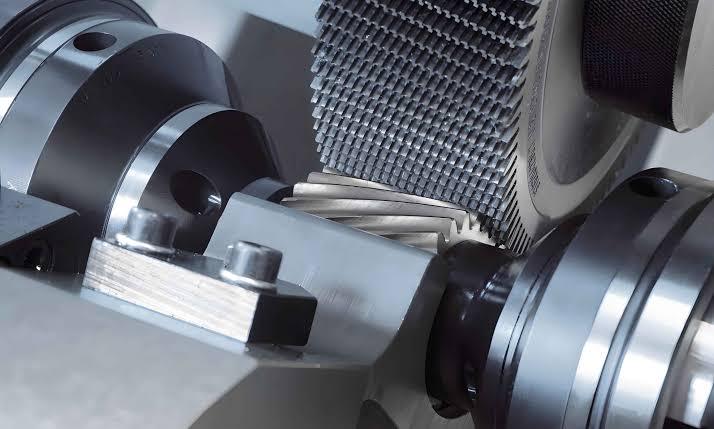
Gear shaving uses a specially designed shaving cutter that meshes with the workpiece gear. The cutter and gear rotate with crossed axes, creating relative sliding between the tooth surfaces. The cutting edges remove a very thin layer of material from the gear teeth.
Small Stock Removal, Fine Correction
Compared with hobbing, the stock removal is small. The purpose is to refine minor geometric errors and improve the surface left by the previous cutting process.
Gear shaving is a finishing process, not a repair method for major machining errors. If the hobbed gear already has large profile deviations or excessive runout, shaving alone cannot correct everything. Effective gear accuracy control must cover the full manufacturing route.
What Can Gear Shaving Improve?
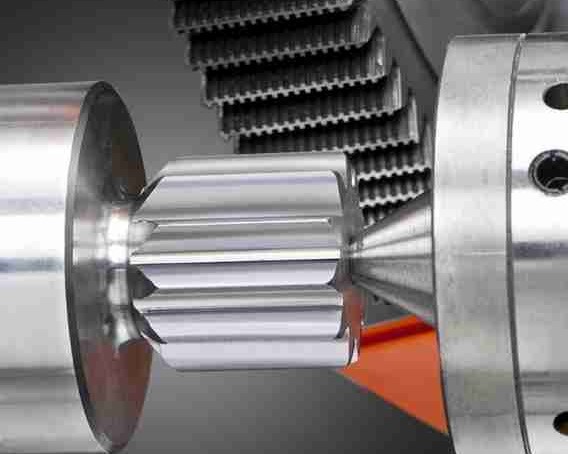
When used correctly, gear shaving can improve several aspects of tooth geometry and surface condition.
| Item | Typical Effect |
|---|---|
| Tooth profile | Improves minor profile deviations |
| Lead / helix | Refines lead or helix condition |
| Indexing | Can improve certain pitch errors |
| Tooth surface | Improves the surface left by cutting |
| Tooth modification | Can support controlled modifications |
| Meshing condition | Can help produce more consistent contact |
The key word is improve. Shaving does not automatically make a gear quieter or guarantee longer service life. Performance also depends on material, heat treatment, lubrication, load, gearbox rigidity, and assembly accuracy.
When Should Gear Shaving Be Used?
Gear shaving is most suitable when the basic tooth geometry has already been generated but further improvement is needed before heat treatment.
Hobbing efficiently generates cylindrical gear teeth, and for many industrial gears it already meets the drawing requirements. Shaving becomes relevant when further control of tooth profile, lead, indexing, surface condition, or specified tooth modifications is needed.
The question is not which process is more advanced, but how hobbing and grinding, together with shaving, fit into the overall manufacturing route.
Traditional gear shaving is normally carried out before hardening. If a gear has already been carburized, quenched, or otherwise hardened and still needs correction of tooth profile or lead, hard finishing methods such as gear grinding are usually more appropriate.
That is why shaving should be evaluated as part of a complete sequence:
Material → Tooth Cutting → Shaving → Heat Treatment → Final Inspection
The final accuracy requirement should always be considered together with the heat-treatment route.
For suitable cylindrical gears, shaving can provide an efficient and repeatable finishing route before heat treatment. However, quantity alone is not enough to justify the process.
Gear geometry, cutter access, pre-shaving accuracy, heat treatment, and final inspection requirements still determine whether shaving is technically suitable.
Gear Shaving vs Hobbing vs Grinding
Hobbing, shaving, and grinding normally perform different jobs at different stages of manufacturing.
| Comparison | Hobbing | Shaving | Grinding |
|---|---|---|---|
| Main purpose | Generate gear teeth | Soft tooth finishing | Precision tooth finishing |
| Typical stage | Before heat treatment | Usually before heat treatment | Commonly after heat treatment |
| Material removal | Relatively high | Small | Depends on finishing allowance |
| Heat-treatment distortion | Not its main purpose | Generally no | Can correct certain distortion within grinding allowance |
| Accuracy role | Establishes basic tooth geometry | Improves pre-hardening condition | Controls final tooth geometry |
Gear shaving should therefore not be viewed simply as a lower-cost version of gear grinding.
Shaving generally improves tooth geometry before heat treatment. Grinding can be used after heat treatment to control final tooth profile, lead, and surface condition. For gears requiring higher accuracy after hardening, shaving alone may not eliminate the need for grinding.
Why Does Heat Treatment Matter After Gear Shaving?
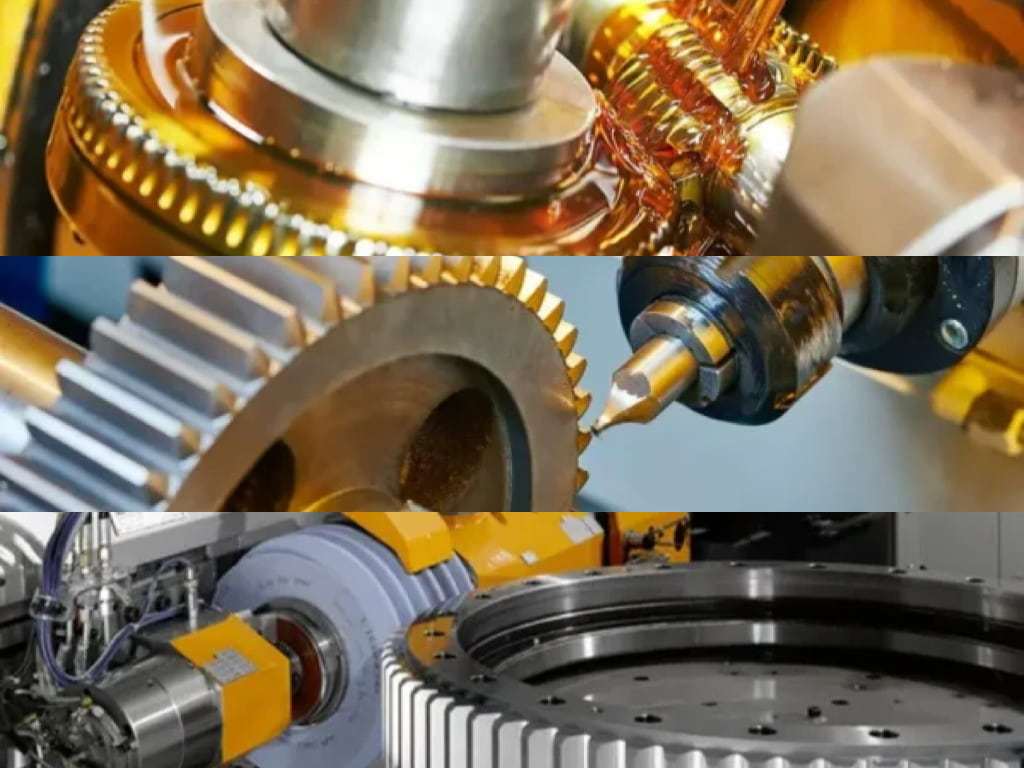
A gear that meets its required geometry immediately after shaving may not retain exactly the same geometry after heat treatment.
Carburizing, quenching, and other heat-treatment processes can introduce changes in bore size, face condition, radial runout, tooth profile, lead, and tooth thickness.
This matters especially when the drawing specifies final accuracy after heat treatment.
Some heat-treatment changes can be managed through process control, compensation, or finishing allowances. For more demanding final accuracy requirements, additional hard finishing may still be necessary. For this reason, shaving should not be evaluated separately from gear distortion after heat treatment.
When Should Gear Shaving Not Be the First Choice?
Gear shaving is not the right choice for every gear.
The manufacturing route should therefore be selected from the final gear requirements backward, rather than adding shaving simply because a higher-quality gear is required.
What Should Buyers Check Before Specifying Gear Shaving?
Buyers do not need to define detailed shaving parameters, but they should provide enough information for the manufacturer to select the correct process route.
Important information usually includes:
One question is especially important:
Is the specified gear accuracy required immediately after shaving, or after final heat treatment?
These two conditions can lead to different manufacturing routes, inspection plans, and costs.
If tooth profile, lead, runout, hardness, or other inspection data are required, the expected gear inspection report should be confirmed during quotation rather than added after production.
How Should the Manufacturing Route Be Selected?
There is no single best process route for every custom gear.
The real question is what must be controlled in the finished gear. If hobbing already satisfies the final requirements, extra finishing may not be necessary. If tooth geometry needs refinement before hardening, shaving may be worth considering. If final geometry after heat treatment is the main requirement, grinding will often be more appropriate.
More manufacturing steps do not automatically produce a better gear. A good process route uses only the operations needed to meet the actual technical requirements.
FAQ About Gear Shaving
What is gear shaving?
Gear shaving is a finishing process that removes a small amount of material from an already generated tooth surface to improve tooth profile, lead, indexing, and surface condition.
Is gear shaving done before or after heat treatment?
Traditional gear shaving is usually carried out before hardening, so it is considered a soft-finishing process. Hardened gears that need further correction are more commonly evaluated for grinding or other hard finishing methods.
Can gear shaving replace gear grinding?
Not directly. Shaving is mainly used before heat treatment, while grinding can control final tooth geometry after heat treatment. They serve different purposes.
Does every precision gear need gear shaving?
No. If the existing tooth-cutting process already meets the drawing requirements, or if the gear will be ground after heat treatment, shaving may provide little additional value.
What information is needed to decide whether gear shaving is suitable?
The manufacturer normally needs the drawing, gear parameters, material, heat treatment, required final accuracy, tooth modification requirements, production quantity, and application conditions.
Conclusion
Gear shaving is most useful when a gear needs additional tooth-surface refinement before heat treatment. It can improve tooth profile, lead, and surface condition after hobbing or shaping, but it should not be treated as a substitute for good upstream machining or as a way to eliminate heat-treatment distortion. The right process still depends on gear geometry, material, heat treatment, final accuracy, and application requirements.
Need a Custom Gear Manufacturing Review?
If you are evaluating whether shaving, grinding, or another finishing process is more suitable, you can send your drawing, material, heat treatment, quantity, and final accuracy requirements to us for a manufacturing process review and quotation.