What Information Is Needed for a Custom Gear Quote?
- Share
- publisher
- Jessica
- Issue Time
- Jun 1,2026
Summary
Learn what buyers should send for a custom gear quote, including drawings, samples, tooth data, materials, heat treatment, quantity and inspection needs.
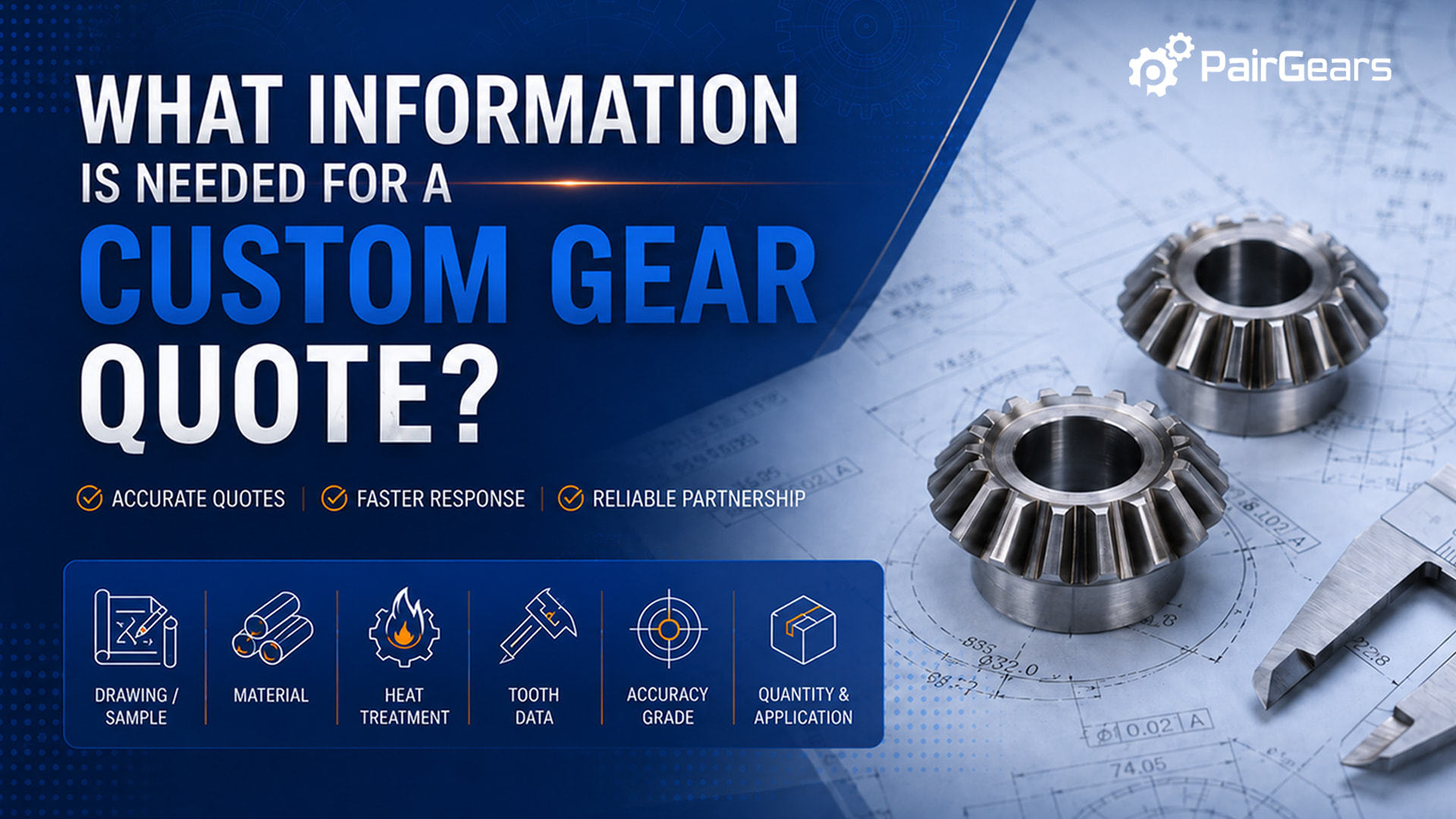
A custom gear quote usually needs more than a photo and a part name. Buyers often start with a simple question such as "Can you make this gear?" or "Please quote this part." That is enough to begin a conversation, but it is usually not enough for an accurate price, realistic lead time, or correct process review.
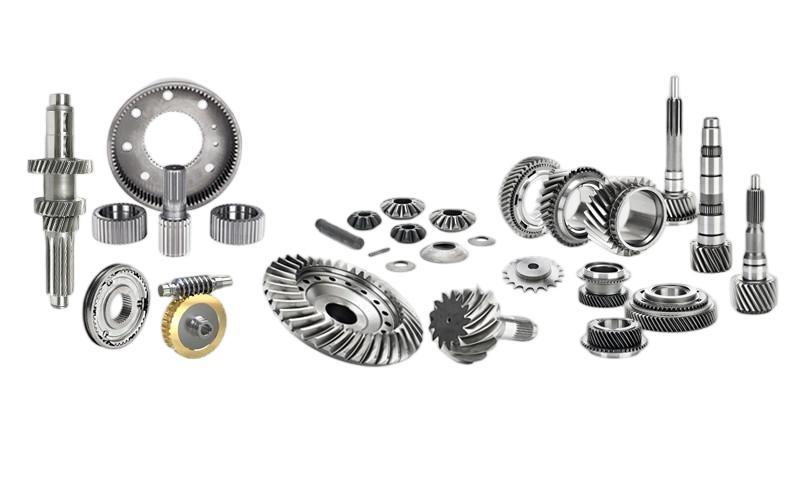
At PairGears, we manufacture custom precision gears and gear sets for Agricultural Machinery, Heavy-Duty Trucks, Construction Equipment, and EV drivetrains. For custom gear projects, the real goal is not only to get a price. It is to make sure the supplier can judge the part correctly, choose the right manufacturing route, confirm the inspection scope, and reduce the risk of wrong samples or repeated revisions later.
Quick Answer for Buyers
A custom gear quote usually needs clear drawing data, gear parameters, material and heat treatment requirements, quantity, application details, and expected inspection or delivery conditions. If no drawing is available, sample photos, OEM numbers, and machine model information can help PairGears start the review.
Why RFQ Details Matter Before Quotation
A gear cannot be judged by its outside shape alone. Two gears may look similar in photos, but they can still need very different manufacturing methods, costs, and inspections. Things like tooth shape, material, hardness, bore tolerance, spline or keyway details, and working load all affect how the gear should be made.
That is why a reliable gear supplier asks technical questions before quoting. This is not a delay. It helps confirm the right cutting process, heat treatment, and inspection method. Without that review, the quote may come faster, but the risk of wrong assumptions is much higher.
This matters even more for replacement gears. An old sample or OEM number can help start the review, but it does not always show the full design requirements. If the new gear must match an existing mate, shaft, housing, or backlash setting, missing information can later cause fit, noise, or service-life problems.
What Buyers Should Prepare for a Gear Quote
| Information needed | What to send | Why it matters |
| Gear drawing | PDF, DWG, DXF, STEP, or IGES | Confirms size, tooth data, tolerances, and structure |
| Gear type | Spur, helical, bevel, worm, shaft gear, spline, ring gear, etc. | Helps choose the right manufacturing route |
Quantity | Prototype quantity, trial order, annual demand | Affects tooling, unit cost, and production planning |
Material | 20CrMnTi, 20MnCr5, 42CrMo, 8620, 4140, 45 steel, or equivalent | Affects strength, heat treatment, and cost |
Heat treatment | Carburizing, nitriding, induction hardening, quenching and tempering | Controls hardness, wear resistance, and fatigue life |
Accuracy requirement | ISO, DIN, AGMA, or internal standard | Determines machining and inspection level |
Surface treatment | Phosphating, black oxide, plating, anti-rust oil, or none | Affects corrosion protection and final condition |
| Application | Tractor, truck, reducer, EV motor, construction machine, etc. | Helps judge load, speed, duty cycle, and risk |
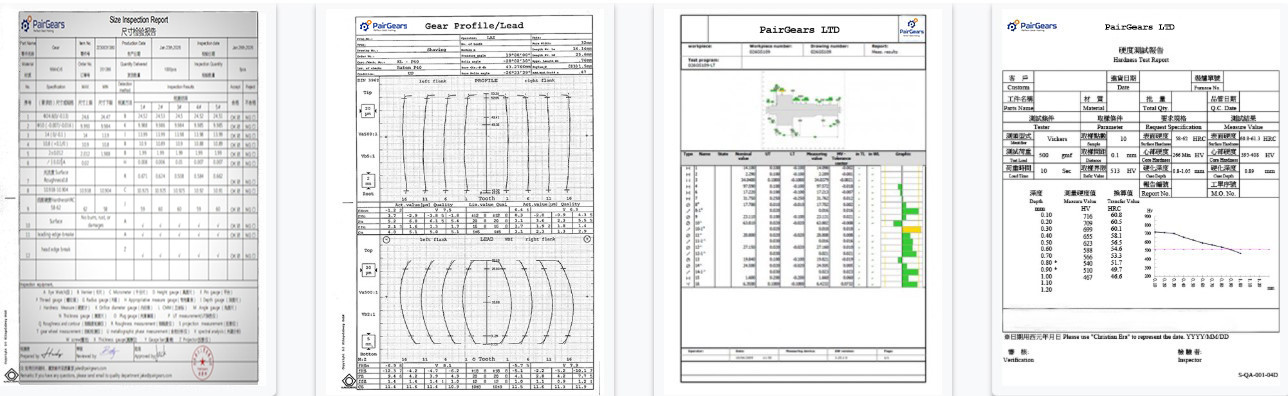
Inspection reports | Material cert, hardness report, gear inspection report, CMM report | Confirms what quality evidence may be needed before shipment, depending on project requirements |
Delivery requirement | Target lead time, shipping country, packaging need | Helps plan production and export packing |
If you do not have all of this information, you can still start with what you have. A drawing, sample, OEM number, product photo, or even an old worn part can help begin the review.
If your RFQ is still incomplete, you are welcome to send the available information to PairGears first. Our team can review the missing points and advise what should be confirmed before quotation.
Who Needs More Detailed RFQ Information?
●Agricultural Machinery buyers
Replacement fit, long duty cycles, and mixed working loads make complete quote data especially important.
●Heavy-Duty Truck projects
Transmission parts often require tighter control of hardness, spline fit, and matching conditions.
●Construction Equipment teams
Shock load, dirt, and wear make material, heat treatment, and inspection scope more important than appearance alone.
●EV drivetrain projects
Compact drive gears usually require better control of accuracy, wear resistance, and batch consistency.
●Repair and aftermarket buyers
Sample-based or OEM-number-based projects often need more confirmation because visible wear may hide the original geometry.
What PairGears Checks During Technical Review
| Review item | What should be checked | Why it matters |
| Tooth data | Tooth count, module or DP, pressure angle, helix angle | Basic compatibility starts here |
| Main dimensions | OD, bore, face width, total length, shaft details | Affects fit and assembly |
| Material route | Steel grade and equivalent standards | Controls strength and heat treatment choice |
Heat treatment target | Hardness, case depth, or surface condition | Directly affects durability |
Accuracy level | Required grade or inspection method | Decides whether grinding or advanced inspection is needed |
Mating logic | Whether the part must match an existing mate | Prevents mismatch in replacement work |
Application load | Torque, speed, shock, environment | Helps separate light-duty from heavy-duty routes |
Quality evidence | Which reports must be supplied | Prevents later dispute over acceptance criteria |
What Should a Gear Drawing Include?
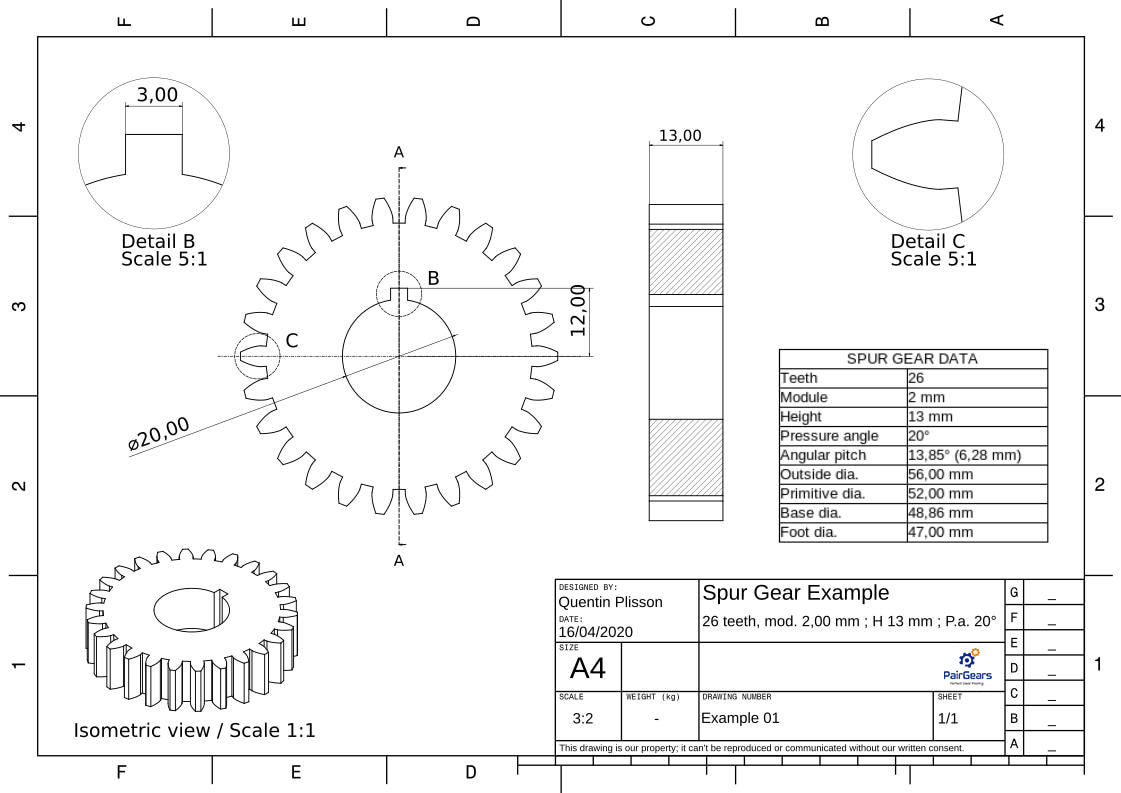
A complete drawing is still the best starting point. For 2D work, PDF is easy to review. For more complex shafts, housings, or assemblies, STEP or IGES files help show the structure more clearly.
A useful gear drawing should ideally include:
●outside diameter, bore diameter, face width, and total length
●tooth count
●module or diametral pitch
●pressure angle
●helix angle and hand, if applicable
●spline or keyway details
●material grade
●heat treatment and hardness
●accuracy grade or inspection standard
●notes about backlash, mating condition, or contact pattern if required
How Better RFQ Details Improve the Project
| Benefit | What improves | Practical result |
| More accurate quotation | Less guessing in process and cost | Better price and fewer revisions |
| Better process planning | Material and heat treatment match the part | Lower production risk |
| Faster technical review | Missing items are identified early | Shorter clarification cycle |
Better sample accuracy | Supplier works from clearer assumptions | Less chance of repeated samples |
Better replacement fit | Matching conditions are reviewed earlier | Lower risk of field mismatch |
A complete RFQ does't only help the supplier. It also helps the buyer compare quotations more fairly. If one supplier quotes based on a full drawing and another quotes based on only a photo, the numbers may not mean the same thing at all.
Practical Tips Before Sending a Gear RFQ
● Send the drawing first if you have it.
A clear drawing saves time and reduces avoidable questions.
●If no drawing is available, send a sample plus photos.
Include multiple views, key dimensions, and any known OEM number.
●Do not separate material from heat treatment.
These two should be reviewed together because they affect the real service behavior of the part.
●Explain the application honestly.
A supplier can only judge risk correctly if the load, speed, and working condition are described clearly.
●State report requirements before quotation is finalized.
If you need hardness reports, tooth inspection reports, or material certificates, it is better to define that at the beginning.
Why Choose PairGears for Custom Gear Projects
PairGears supports custom gear projects from drawings, samples, OEM numbers, photos, and application information. For quotation review, we do not only look at the visible shape of the part. We review the full manufacturing route, including tooth data, material, heat treatment, matching conditions, and inspection scope, depending on the gear type and project requirements.
What we focus on:
●practical review for Agricultural Machinery, Heavy-Duty Trucks, Construction Equipment, and EV drivetrains
●drawing-based and sample-based custom gear development
●material and heat treatment planning based on real duty conditions
●inspection logic that connects geometry, hardness, and fit
●workable routes from quotation to sample approval and repeat production
This early review is especially useful when the project involves replacement parts, discontinued items, worn samples, or gear sets that must match existing mating components.
FAQ
Q1: Can I get a quote without a drawing?
Yes. A sample, OEM number, product photo, or key dimensions can still help start the review, but the quotation may need more technical confirmation.
Q2: What is the most important information in a gear RFQ?
A drawing is usually the most useful starting point, followed by tooth data, material, heat treatment, quantity, and application details.
Q3: Why does the supplier ask about the application?
Because the same-looking gear may need a very different process depending on torque, speed, load, and service condition.
Q4: Should I send both mating gears for a replacement project?
If possible, yes. This makes it easier to review matching, backlash, contact, and ratio together.
Q5: What reports should buyers request before shipment?
That depends on the project requirements. Common options include material certificates, hardness reports, dimensional reports, and gear inspection reports for profile, lead, pitch, or runout when needed.
Conclusion
A custom gear quote works best when it is based on enough real information to judge the part correctly. Drawings, tooth data, material, heat treatment, quantity, application details, and inspection requirements all help the supplier choose a practical route and reduce avoidable mistakes.
If you are preparing a custom gear RFQ or trying to quote a replacement part from a sample, you are welcome to Contact Us with your drawings, samples, OEM numbers, photos, and working conditions so PairGears can help review the project and discuss a practical quotation, production, and inspection plan.