What Are Worm Gears and Where Are They Used
- Share
- publisher
- Jessica
- Issue Time
- Mar 23,2026
Summary
Worm gears provide compact high-ratio reduction and controlled backdriving behavior. This guide explains types, uses, limits, and sourcing checks.
1. Introduction
Worm gears are often selected when a drive needs a large reduction ratio in limited space, smooth output motion, or resistance to backdriving. But in real factory projects, choosing a worm gear set is not only about ratio. It also means balancing torque, sliding friction, heat generation, lubrication quality, and whether the application truly benefits from a worm layout instead of a spur, helical, or bevel route.
At PairGears, we manufacture custom precision gear sets for agricultural machinery, heavy-duty trucks, construction equipment, and EV drivetrains. Worm drives can solve specific transmission challenges, but they demand disciplined material matching, lubrication, and heat management. So this guide explains how worm gearing works, where it fits best, and what engineers and buyers should check before sourcing it for heavy-duty or precision systems.
2. What is a worm gear drive?
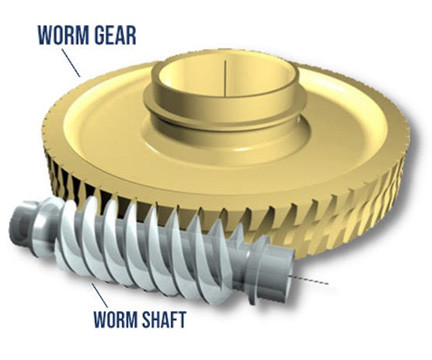
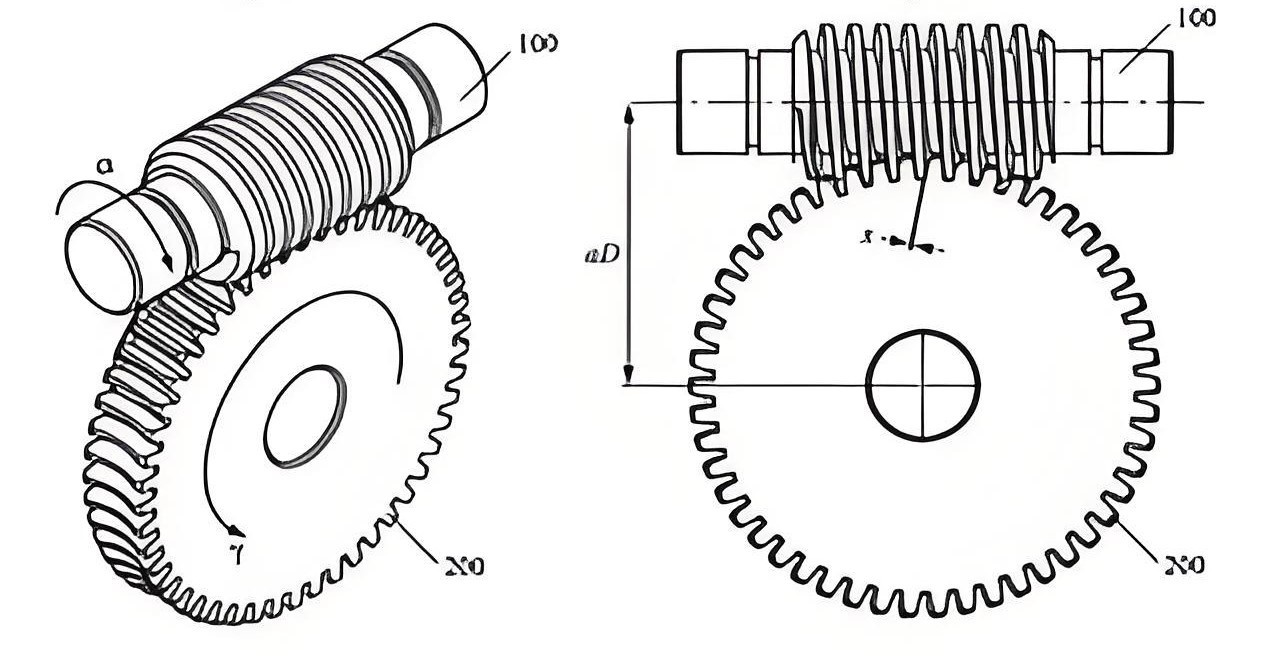
A worm gear drive is a transmission system in which a screw-like worm meshes with a worm wheel to transfer motion and torque between non-parallel, non-intersecting shafts.
3. Why worm gears are chosen in real applications
The first reason engineers choose worm gears is ratio. A worm drive can deliver a large speed reduction in a compact layout, often with fewer stages than a spur or bevel solution would require. That matters when installation space is restricted but the output still needs higher torque and lower speed.
The second reason is motion behavior. Worm gears usually run smoothly because engagement is continuous rather than strongly interrupted. In positioning systems, lifts, gates, and controlled adjustment mechanisms, smooth output can be more important than maximum efficiency. A worm drive can also simplify the package when the shafts are arranged at 90 degrees but do not intersect.
The third reason is backdriving resistance. Many worm gear systems resist reverse motion because the contact between the worm and worm wheel has a strong sliding component. In practice, however, "self-locking" should never be treated as automatic. It depends on lead angle, friction, lubrication condition, temperature, wear state, and actual service load. This is why a factory review must look at the working condition, not just a theoretical catalog claim.
At the same time, worm gears come with trade-offs. Their sliding contact creates more heat and usually lowers efficiency compared with spur, helical, or bevel systems. If the application runs continuously, carries high duty, or is sensitive to temperature rise, those trade-offs must be understood early. From a sourcing point of view, worm gears are attractive when their unique strengths matter; they are not the default answer for every reducer.
4. Common worm gear configurations
| Type | Main feature | Best fit | Watch-outs |
Single-start worm drive | High reduction per worm revolution | Compact reducers, controlled motion, holding-focused layouts | Lower efficiency and more heat under heavy duty |
| Multi-start worm drive | Faster wheel advance and lower ratio than single-start | Smoother motion with somewhat better efficiency | Reduced resistance to backdriving |
| Cylindrical worm + worm wheel | Most common industrial form | General machinery, conveyors, actuators | Lubrication and wear control remain critical |
| Precision worm gear set | Tighter geometry and fit control | Positioning systems, automation, lift control | Cost and inspection requirements are higher |
In practice, the decision is not only between one worm and another. It is also about whether a worm drive is the right architecture at all. If the program needs very high efficiency under continuous duty, a helical or planetary route may be more practical. If it needs compact reduction and controlled holding behavior, a worm drive becomes much more attractive.
5. Where worm gears are commonly used
● Agricultural Machinery
Used in adjustment systems, feed mechanisms, steering-related auxiliaries, and compact reducers where controlled motion and packaging matter more than peak efficiency.
● Heavy-Duty Trucks
Applied in selected steering or actuator systems where smooth control and resistance to unintended reverse motion can be useful under service load.
● Construction Equipment
Used in lifting, positioning, and controlled adjustment systems where stable motion and holding behavior are important under load.
● EV drivetrains
Applied in compact actuators, automation equipment, and positioning assemblies where high reduction and smooth transmission are required in limited space.
6. What engineers and buyers should check
| Check item | What to verify | Why it matters |
Gear ratio target | Required reduction and output speed | Confirms whether a worm drive is the right architecture |
Backdriving behavior | Whether holding or self-locking is actually required | Prevents false assumptions in safety-critical designs |
Sliding and heat generation | Expected friction level, duty cycle, and temperature rise | Drives efficiency, wear, and lubricant selection |
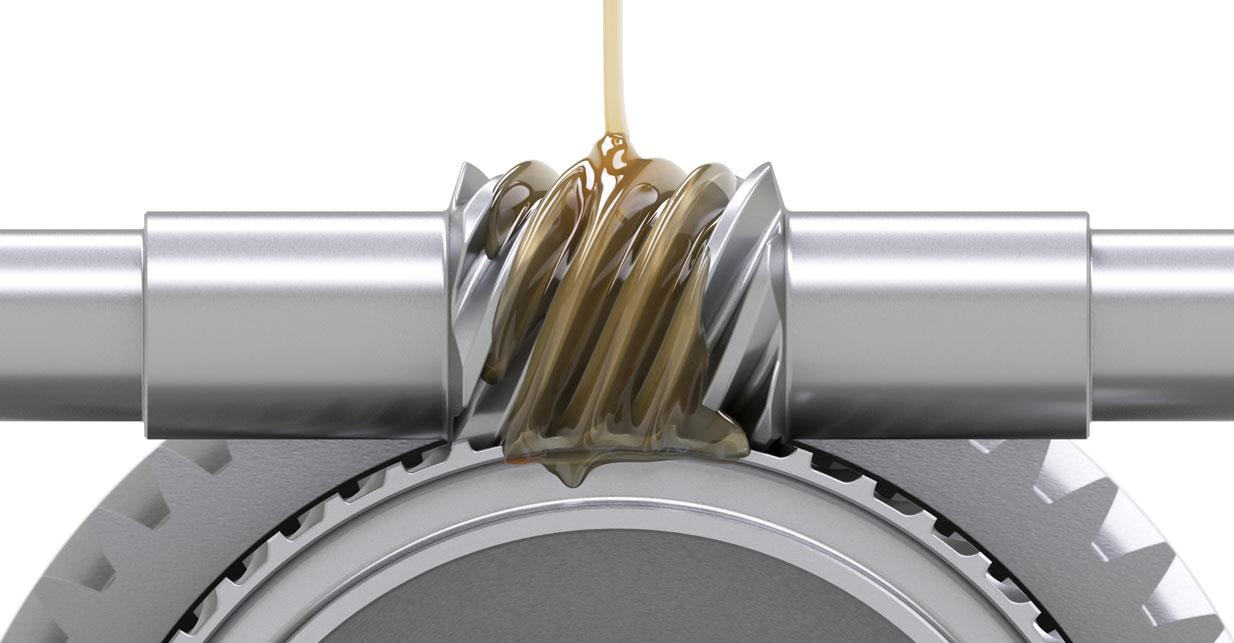
Lubrication plan | Oil type, viscosity, delivery, and contamination control | Critical for surface durability and service life |
Material pairing | Worm and wheel material compatibility | Affects wear rate, friction, and load behavior |
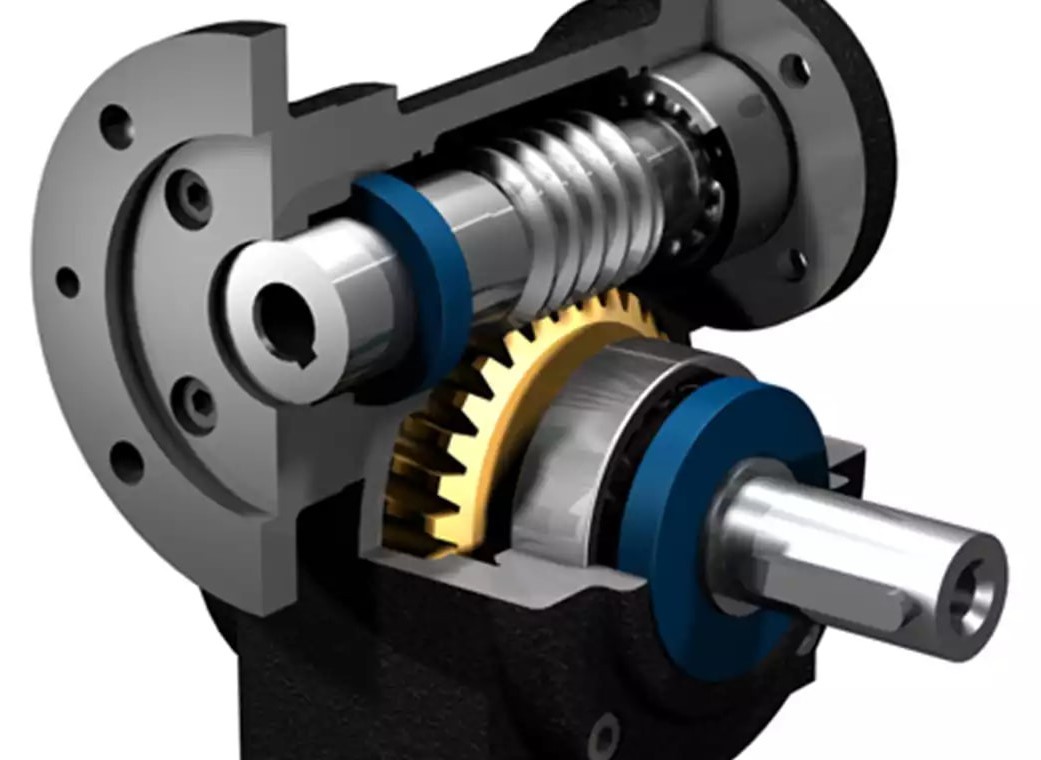
Shaft support and alignment | Bearing support, housing rigidity, and datum control | Keeps contact stable and reduces edge loading |
| Inspection method | Backlash, contact pattern, geometry, and runout (as specified) | Supports repeatable assembly and stable performance |
| Duty cycle match | Continuous duty, intermittent duty, shock load, start-stop frequency | Determines whether a worm drive is practical long-term |
One common sourcing mistake is to focus only on reduction ratio and ignore thermal behavior. A worm gear drive that "works" on paper can still run too hot in continuous service if lubrication, material pairing, and duty cycle are not reviewed together. Another common mistake is assuming that backlash alone defines quality. In service, contact stability, heat, and wear usually matter more than one clearance number by itself.
7. Benefits of choosing the right worm gear solution
| Benefit | What improves | Practical result |
| Compact high reduction | Large speed reduction in a small layout | Simpler transmission packaging |
| Smooth output motion | Continuous meshing action | Better motion control and lower shock |
| Controlled holding behavior | Reduced tendency to backdrive in suitable conditions | Useful for lifts, positioning, and actuators |
High torque multiplication | Lower output speed with higher torque | Better fit for controlled heavy-load motion |
Simplified system layout | Fewer stages in some designs | Easier integration in space-limited systems |
A worm gear drive is usually most valuable when the project needs several of these benefits at once. If the design only needs one of them but cannot accept the losses in efficiency or the added heat load, another gear type may still be the better engineering choice. In other words, the right worm solution is a balance between ratio, controllability, heat, and service environment—not a ratio number alone.
8. Supplier selection tips
● Start with the duty cycle, not just the ratio. Share speed, load, service time, ambient temperature, and whether the application runs continuously or intermittently.
● Do not assume self-locking without checking. Ask the supplier to review whether backdriving resistance is truly expected under your lead angle, lubrication, and service conditions.
● Confirm lubrication assumptions early. Worm gear performance depends heavily on oil quality, viscosity, and contamination control, especially in long-duty applications.
● Review material pairing and wear logic. A good supplier should explain why the worm and wheel materials fit the torque, speed, and life target—not only quote a size.
● Ask how the gear set will be verified. Backlash, geometry, contact, runout, and thermal assumptions should be discussed before approval, not after field issues appear.
9. Why Choose Us
At PairGears, we approach worm gear projects from a practical transmission point of view rather than from ratio alone.
What we focus on
● Practical review of ratio, heat, lubrication, and load assumptions before production
● Manufacturable process planning for repeatable geometry and stable assembly
● Inspection logic tied to functional risk points, not only nominal dimensions
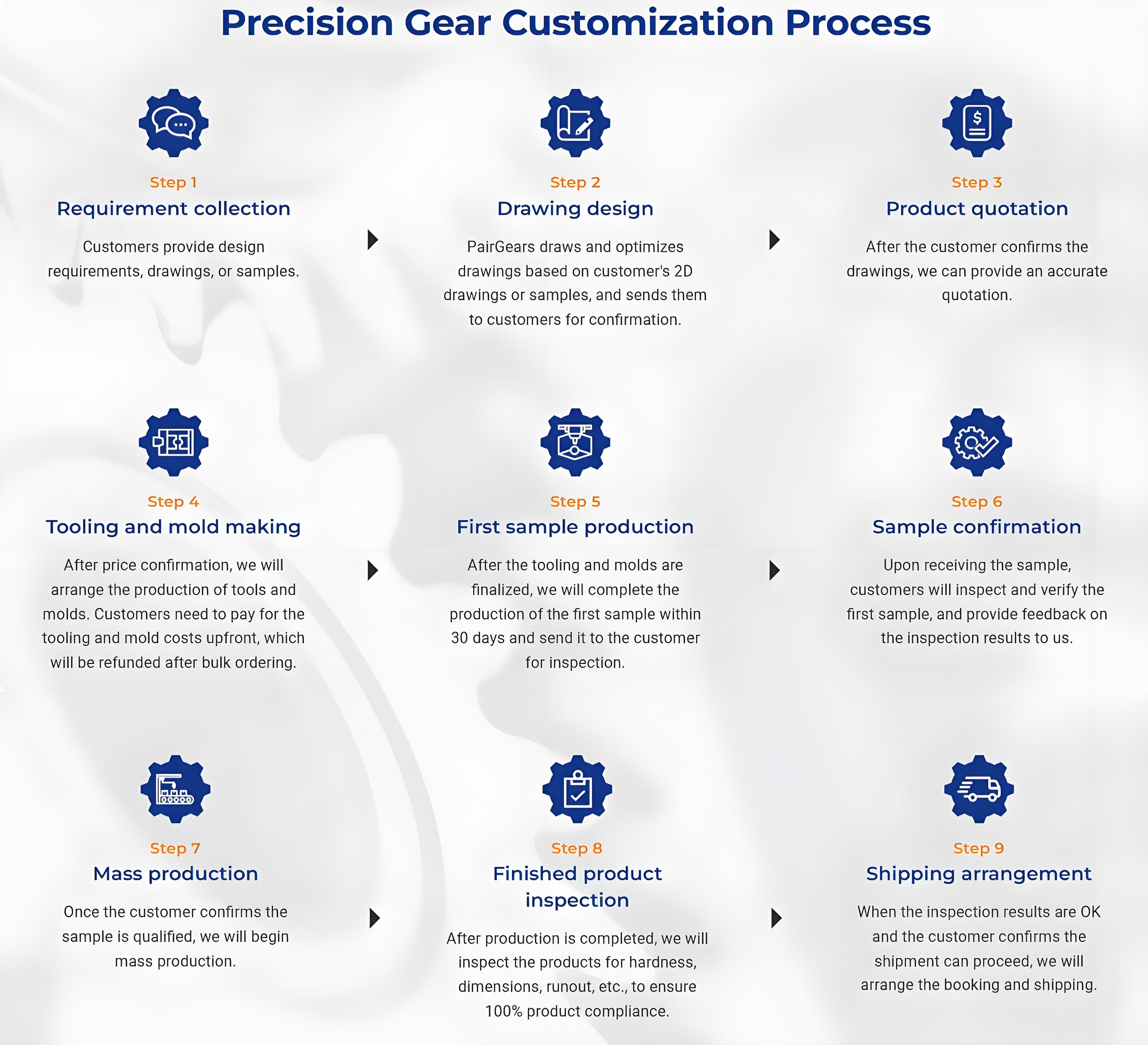
● Support from drawing review through repeat production
For worm gear drives, the real value is often in making sure the selected solution is workable in service, not just drawable in CAD.
10. FAQ
Q1: What Is The Main Advantage Of A Worm Gear Drive?
Its main advantage is achieving a large reduction ratio in a compact layout, often with smooth output motion.
Q2: Are Worm Gears Always Self-Locking?
No. Self-locking depends on lead angle, friction, lubrication, and service conditions. It should never be assumed without review.
Q3: Why Are Worm Gears Less Efficient Than Some Other Gear Types?
Because the worm and wheel have more sliding contact, which creates friction loss and heat.
Q4: When Are Worm Gears A Good Choice?
They are a good fit when the application needs compact reduction, controlled motion, or resistance to backdriving and can accept the efficiency trade-off.
Q5: What Should I Send In An RFQ For A Worm Gear Set?
A drawing or sample, ratio target, input speed, output torque, duty cycle, lubrication condition, and any requirement related to holding or backdriving.
11. Conclusion
Worm gears are not simply "high-ratio gears" They are a specific transmission solution that combines compact reduction, smooth motion, and potentially useful backdriving resistance—but also requires careful attention to friction, heat, lubrication, and service duty.
If you are preparing an RFQ, reviewing a worm gear drive layout, or troubleshooting heat, wear, or backdriving behavior, you are welcome to Contact Us with your drawings, ratio target, lubrication assumptions, and operating conditions so we can help align the worm gear solution with a practical manufacturing and inspection plan.