What Affects Custom Gear Lead Time for Production Orders
- Share
- publisher
- Jessica
- Issue Time
- Jun 24,2026
Summary
Learn what affects custom gear lead time for production orders, including MOQ, drawings, material, heat treatment, inspection, and sample approval.
Introduction
Lead time is the first question after sending a drawing for many buyers. But for custom gears, the answer is rarely simple. Lead time depends on more than part size or quantity. Drawing quality, material, heat treatment, inspection needs, and sample approval can all change the schedule.
A useful lead time is not just the fastest number a supplier can mention. It should be based on clear project conditions. When the information is complete, the estimate is usually closer to the real production timeline. When key details are still missing, the lead time is often only a rough range. For buyers reviewing custom gear projects, PairGears can be used as a starting point to understand typical production conditions and timing.
Quick Answer
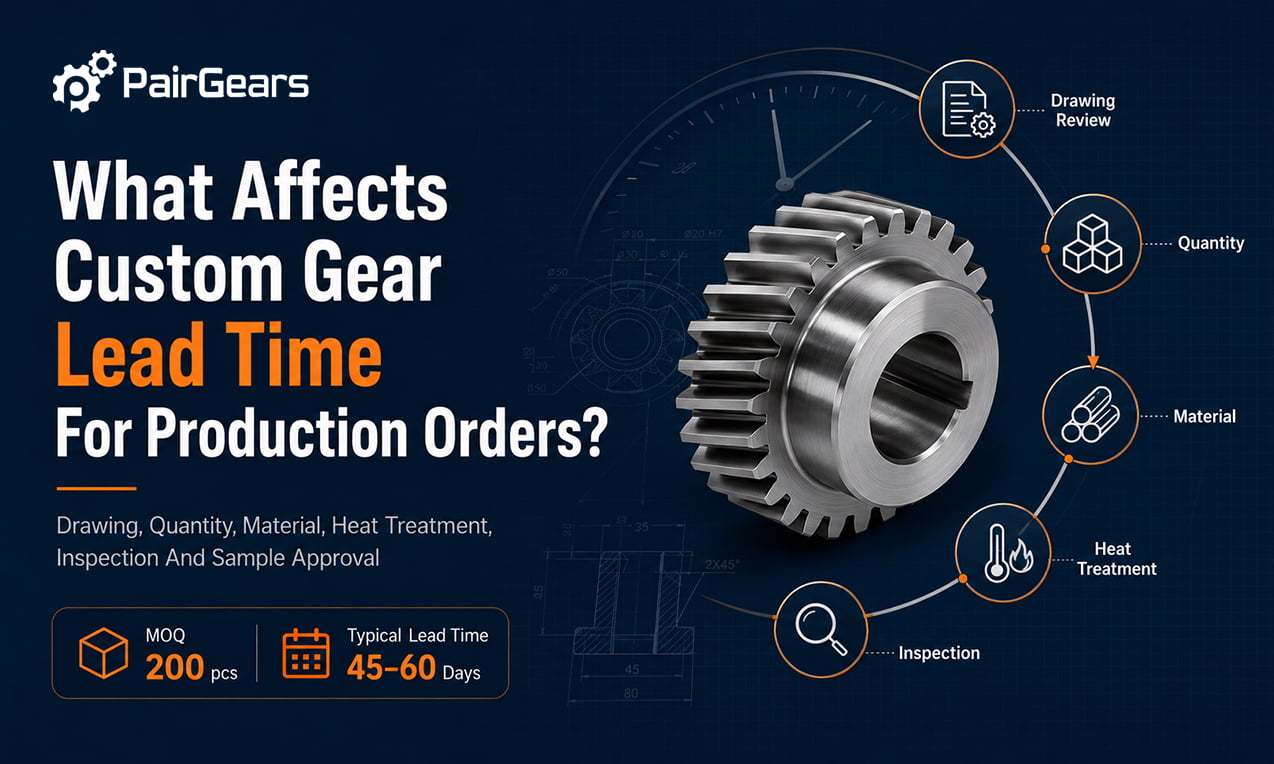
Custom gear lead time for production orders is mainly affected by drawing completeness, quantity plan, material, heat treatment, inspection requirements, and sample approval.
Under current regular production-order conditions, the typical MOQ is 200 pcs, and the usual lead time is around 45–60 days. This is a common range, not a fixed promise. If project conditions change, lead time will change too.
Why Can Lead Time Vary So Much Between Custom Gear Projects?
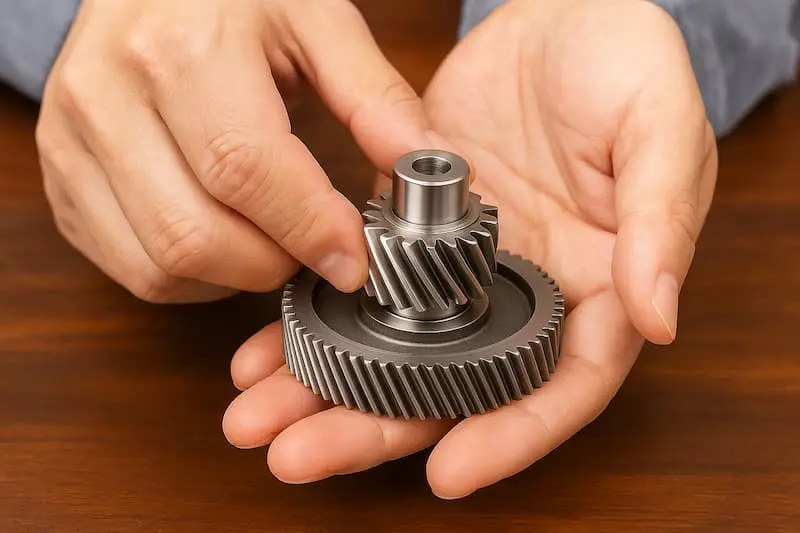
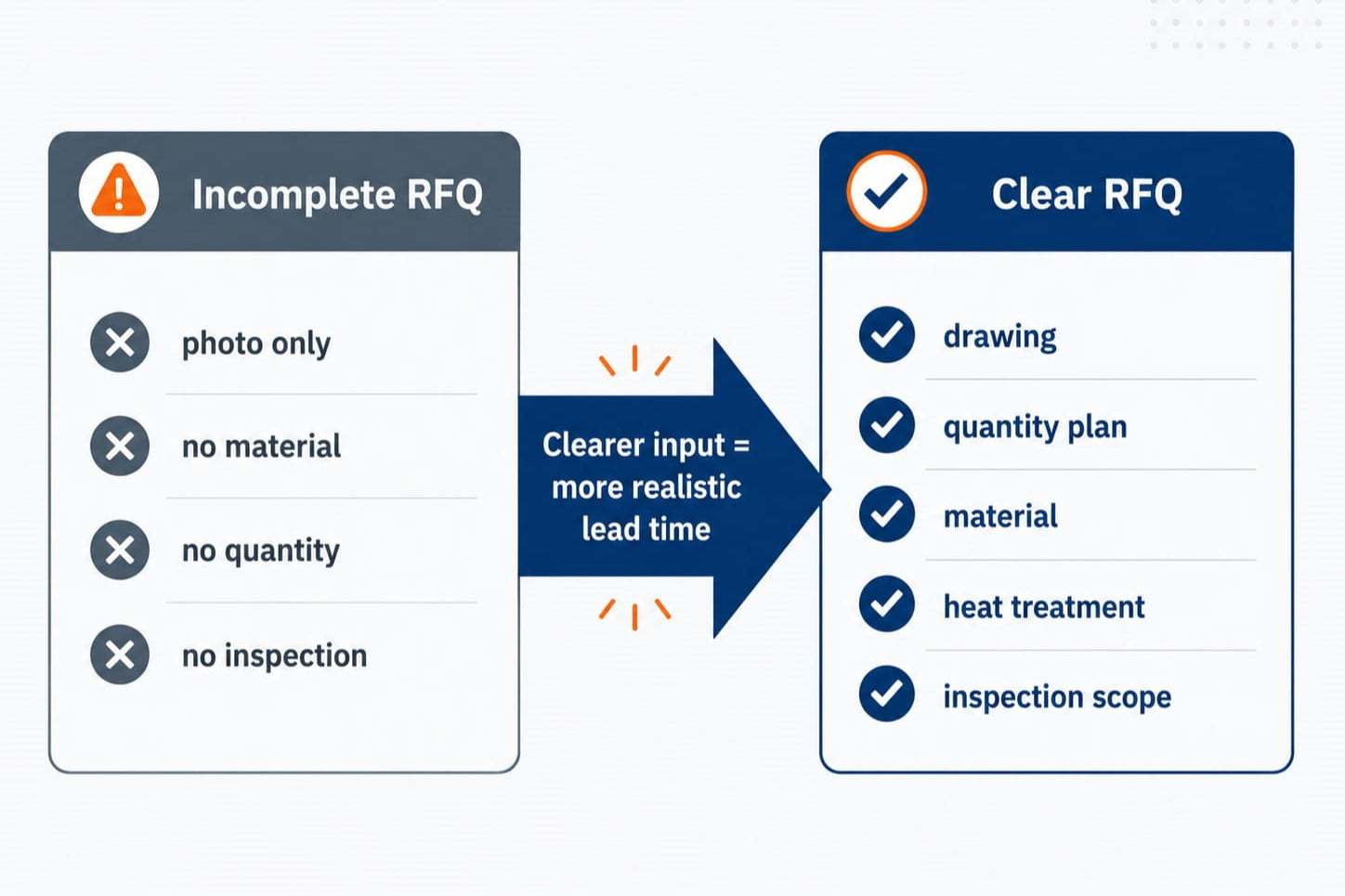
Some projects start with complete drawings and clear gear data, material, heat treatment, and tolerances. These projects usually move into review and scheduling faster. Others start with old samples, site photos, or only a few basic dimensions. Those projects need more confirmation first.
Another common issue is that buyers and suppliers may mean different things by "lead time." One side may mean sample lead time, while the other means full production lead time. Sometimes packing, inspection, and shipment are also included. If these points are not clarified early, different suppliers may give very different answers.
What Should Buyers Confirm Before Asking About Lead Time?
If buyers want a more realistic lead time estimate, it helps to organize the following information first.
| Check Item | What Should Be Confirmed | Why It Affects Lead Time |
| Drawing status | Whether complete 2D / 3D drawings are available, and whether key tolerances and gear data are included | The more complete the drawing, the faster the initial review |
| Quantity plan | Whether it is for samples, trial orders, or formal production orders | Different stages follow different production logic |
MOQ condition | Whether the project is being evaluated based on the regular production-order MOQ of 200 pcs | This affects whether the project enters a stable batch-production schedule |
Material requirement | Whether the material is specified, and whether it follows a standard route | Special materials usually require more preparation time |
Heat treatment requirement | Whether carburizing, quenching, tempering, or other processes are needed | This directly affects the process cycle |
| Inspection requirement | Whether dimensional reports, hardness reports, or gear inspection data are required | The clearer the requirement, the clearer the arrangement, but time may also change |
Sample approval | Whether samples have been made and approved | If samples are not approved, mass production time is usually difficult to lock |
Packing and shipment | Whether labels, anti-rust treatment, separated packing, or other requirements apply | These also form part of the delivery timeline |
If these points are still unclear, suppliers can usually give only a rough range, not a stable production lead time.
Why Does an MOQ of 200 pcs Affect Lead Time?
Many buyers assume a smaller quantity should mean faster delivery. In custom gear work, that is not always true. A lot of time is spent on early review, process planning, material confirmation, and inspection setup, not only on machining quantity.
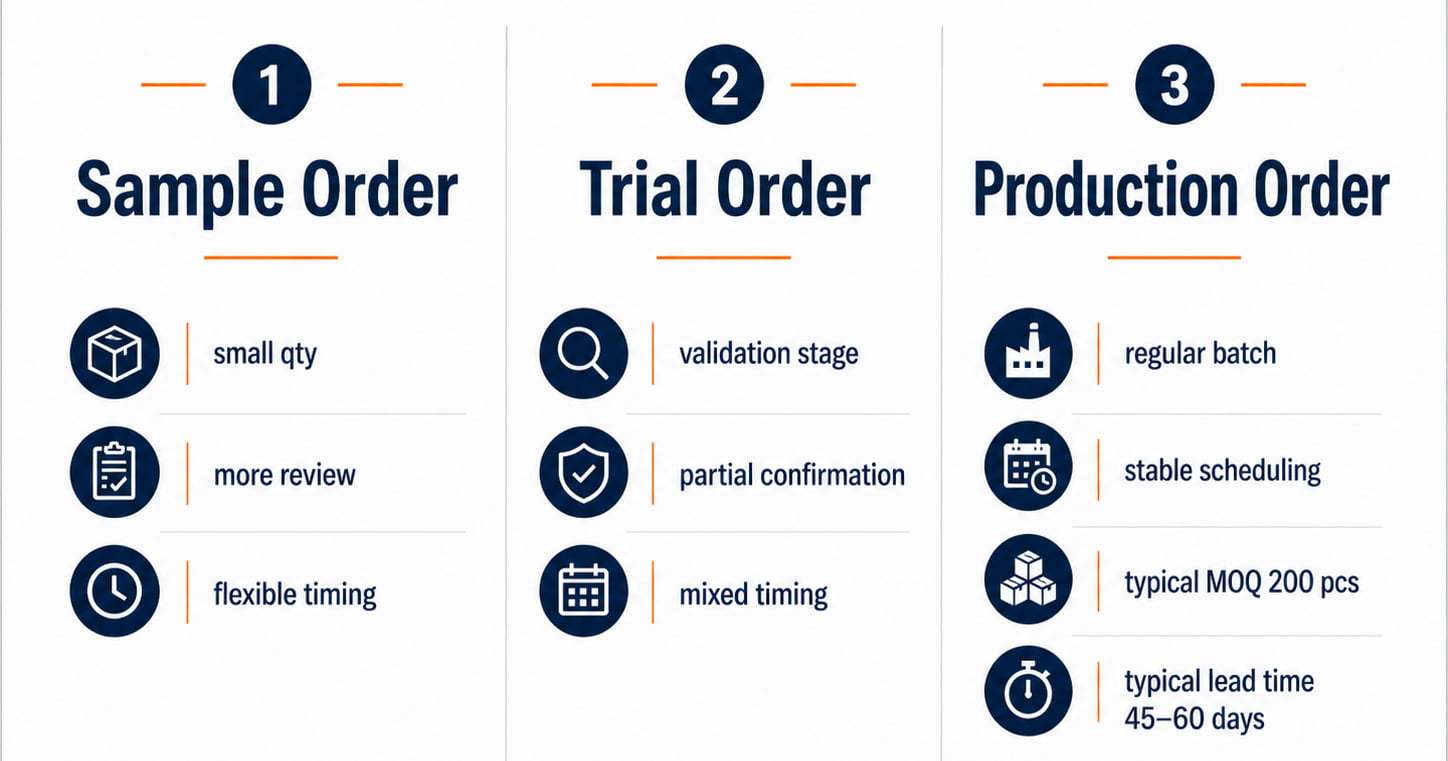
Under regular production-order conditions, an MOQ of 200 pcs is more likely to fit a stable production schedule. Material preparation, machining, heat treatment, and inspection can be arranged more smoothly. If the quantity is much lower, the project may be treated more like a sample or trial order. In that case, the review may actually take more time.
So when asking about lead time, buyers should explain the quantity background clearly. Is it a sample run, a trial order, or a full production order? Will there be repeat orders later? These details affect how the supplier plans the schedule.
Why Do Material and Heat Treatment Often Extend the Schedule?
From the buyer's side, material and heat treatment may seem like technical details. From the production side, they are often major timing factors.
If the material is standard and the process route is familiar, the project usually moves more smoothly. If the material is special or the heat treatment requirement is more demanding, the lead time is no longer only about gear cutting. It also includes heat treatment scheduling, distortion control, possible post-treatment finishing, and hardness checks.
Many projects start with size discussion only, and material or heat treatment details are added later. Once that happens, the earlier schedule may need to be adjusted. That is why these two items are better confirmed early.
How Inspection and Sample Approval Affect Lead Time
Some projects do not slow down during machining. They slow down during confirmation.
For example, a buyer may not mention report requirements during quotation, then later ask for hardness reports, dimensional reports, or more inspection items near the end of production. That can add extra inspection work, extra documents, or even process changes.
Sample approval works the same way. If the sample is not approved, mass production is hard to lock in. Even if the supplier already has a rough schedule, the final production plan usually waits for stable sample feedback or confirmed data. This stage may be less visible than machining, but it affects lead time directly.
What Can Buyers Do to Reduce Lead Time Delays?
First, try to clarify the main conditions during quotation. The earlier the drawing, quantity, material, heat treatment, inspection requirements, and target delivery date are confirmed, the lower the risk of delay.
Second, do not mix sample lead time with production lead time. Samples, trial orders, service parts, and production orders do not follow the same schedule.
Third, state your priority clearly. Do you need a sample first, a faster full batch, or more stable inspection and heat treatment? Different priorities lead to different planning.
Fourth, if the project involves reverse engineering, worn samples, or incomplete mating-part information, say so early. Many lead time problems start with unclear project understanding, not with slow production.
How Would a Project Like This Usually Be Reviewed by PairGears?
For custom and replacement gear projects, the safer approach is not to quote the shortest possible time first. It is to check whether the project is actually ready for production.
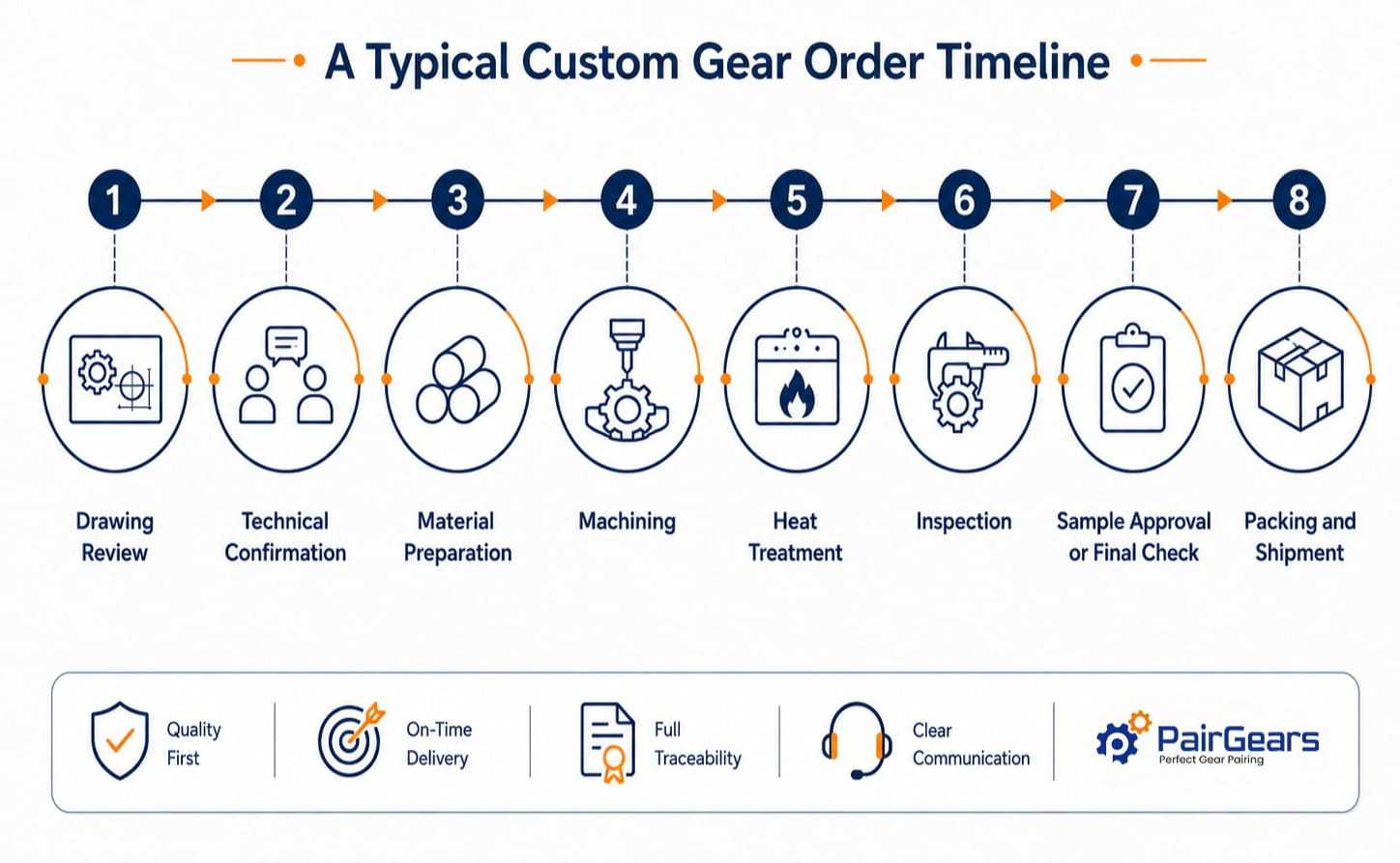
Drawing clarity, quantity, material, heat treatment, and inspection scope all affect lead time. If the project information is relatively complete and the order is reviewed under current regular production-order conditions, then MOQ 200 pcs and a lead time of 45–60 days can be used as a practical reference range.
However, if the project is still at the stage of sample approval, reverse engineering, pending material confirmation, or unclear inspection standards, then the lead time estimate will need more flexibility.
FAQ
Q1: What is the usual lead time for custom gear production orders?
Under current regular production-order conditions, a common reference range is about 45–60 days, but it still depends on drawing quality, quantity, material, heat treatment, and inspection requirements.
Q2: Why does quantity affect lead time?
Because quantity affects whether the project is treated as a sample job, trial order, or full production order, and each one follows a different planning rhythm.
Q3: Will incomplete drawings delay the project?
Yes. Incomplete drawings usually increase review time and also make rework or repeated confirmation more likely later.
Q4: Do heat treatment and inspection make lead time longer?
They usually do affect the overall schedule because they add process steps, sample checks, and final shipment preparation.
Q5: What can buyers do to reduce delays?
Prepare the drawing, quantity plan, material, heat treatment, inspection requirements, and target delivery date as early as possible.
Conclusion
Custom gear lead time cannot be judged separately from the project conditions. For production orders, quantity, drawing completeness, material, heat treatment, inspection, and sample approval all affect the final schedule. If a buyer asks only "how long will it take" without clarifying these points, the answer will usually be only a rough estimate.
A safer method is to organize the project information first and then compare how suppliers review the schedule. If you are evaluating a custom gear production order, prepare your drawing, quantity plan, material requirement, inspection requirement, and target delivery date first, then contact us for project review. That usually leads to a lead time estimate that is closer to real execution.