Straight Cut Gears: How They Work and When to Use
- Share
- publisher
- Jessica
- Issue Time
- Feb 4,2026
Summary
Straight-cut gears are efficient for parallel shafts. This guide covers common types, key pros/limits, main processes, and selection tips from PairGears.
1. Introduction
Straight-cut gear are often described as the simplest gears. In most real-world sourcing and design discussions, the term refers to spur gear: cylindrical gears with teeth parallel to the shaft axis. Their geometry is easy to understand, their power flow is direct, and they are widely used across machinery and mobile equipment.
Simple does not mean universal. Straight-cut gear (spur gear) can be a strong fit when efficiency, cost, and straightforward manufacturing matter, but other tooth forms may be preferred as speed rises or when smoother engagement is needed. As a precision gear manufacturer, PairGears helps teams match tooth form and process route to duty cycle, tolerance targets, and production volume across Agricultural Machinery, Heavy-Duty Truck, Construction Equipment, and EV drivetrains.
2. What are Straight-cut gear
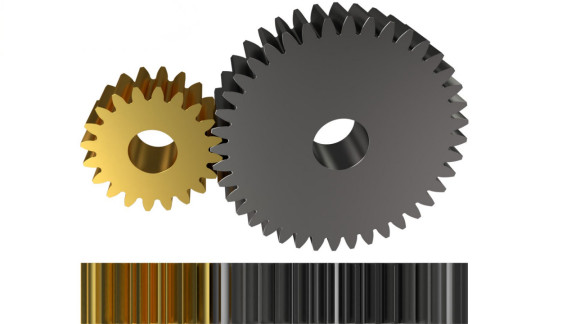
Straight-cut gear are typically spur gear with teeth parallel to the axis of rotation, used to transmit motion and torque between parallel shafts. In most cases, "straight-cut" simply means spur gear with teeth parallel to the shaft.
In most cases, straight-cut means spur gear with teeth parallel to the shaft.
3. Why Straight-cut gear still matter
Straight-cut gear (spur gear) remain common because they deliver high efficiency with minimal sliding at the tooth contact, which helps keep power loss low and behavior predictable.
They also simplify system design. spur gear do not create axial thrust from the tooth geometry, so bearing arrangements are usually simpler than those required by angled-tooth designs.
Finally, their simplicity supports practical manufacturing and inspection planning. When you define tooth geometry and mounting datums clearly, you can achieve stable results without over-processing parts.
4. Straight-cut gear options at a glance
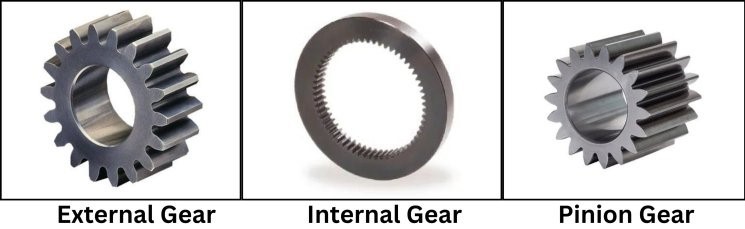
Even within spur gear, different configurations change packaging, load sharing, and how a supplier will manufacture and inspect the part.
| Option | What it is | Why it's used | Practical notes |
| External spur gear | Teeth on the outside diameter | Most common, easy to package | Good starting point for parallel-shaft stages |
| Internal spur gear (ring gear) | Teeth on the inside diameter | Compact sets and tight packaging | Often pairs with a pinion; check clearance and inspection access |
| Corrected/modified spur gear | Profile shift or tooth modifications | Improves strength or avoids undercut | Useful when space is tight or load is high |
Spur pinion | Smaller gear in a mesh pair | Sets ratio and drives the mating gear | Often sees higher speed cycles; watch tooth-to-datum alignment |
Quick selection note:
5. Where Straight-cut gear are used
Straight-cut gear (spur gear) appear across PairGears' four focus sectors in many supporting stages and reducers:
● Agricultural machinery: auxiliary drives, compact reducers, implement and attachment drives
● Heavy-duty trucks: accessory drives, PTO-related stages, supporting reduction stages
● Construction equipment: compact reducers, feed mechanisms, drive stages for heavy equipment
● EV drivetrains: compact reduction stages and actuation mechanisms where the duty cycle fits
In these applications, spur gear transmit power, set speed ratio, and keep the design compact and serviceable when the operating speed and load profile support the choice.
6. Key design and inspection checks
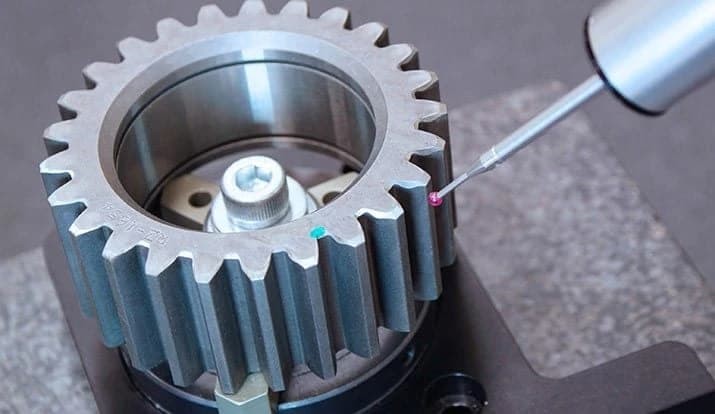
Performance is shaped by tooth geometry under load and by how consistently the teeth are located to functional datums. When these relationships drift, assemblies can vary even when basic dimensions look acceptable.
| Item to control | What to specify | Why it matters |
Tooth geometry | Profile/lead/pitch targets and inspection method | Stabilizes meshing behavior across batches |
Tooth-to-datum relationship | Runout/concentricity to bore or shaft seats | Supports repeatable assembly and load sharing |
| Backlash strategy | Target window and how it is verified | Avoids scatter between units and reduces rework |
| Face width and root strength | Design margin and any correction/shift | Reduces risk of tooth root overload |
| Material and heat treatment | Route aligned to duty cycle | Balances wear resistance and core toughness |
A "spur gear" label isn't enough for a reliable quote. Include tooth parameters (module/DP, pressure angle, helix angle if any), face width, material, and the assembly datums.
To avoid rework, define datums/runout and tooth-geometry acceptance checks, plus key details like chamfers, deburring, and any special surface requirements.
7. What you gain when the choice is matched well
| Outcome | What improves | What you avoid |
Predictable efficiency | Lower loss and stable power transfer | Unexpected heat from inefficient stages |
Right-cost route | Processing matches tolerance and volume | Paying for finishing that does not reduce risk |
| Repeatable assembly | Datums and geometry stay aligned | Variation that causes rework or fit issues |
| Scalable production | Tooling and inspection plan fit growth | Surprises when volume increases |
| Clear acceptance checks | Supplier and buyer align early | Disputes caused by hidden assumptions |
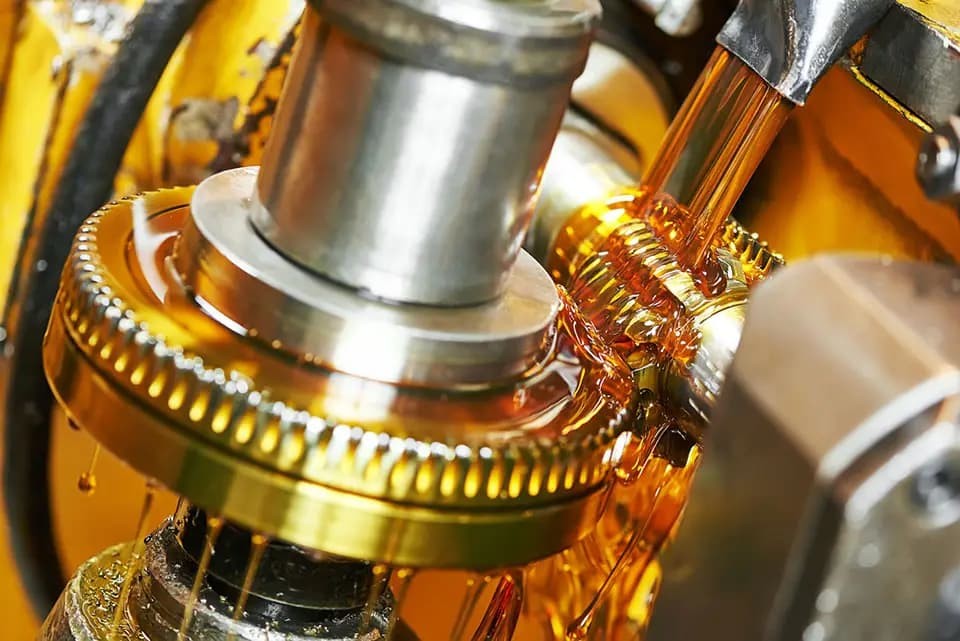
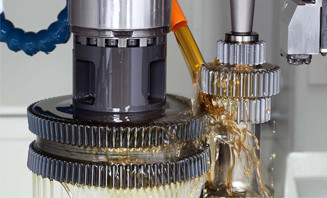
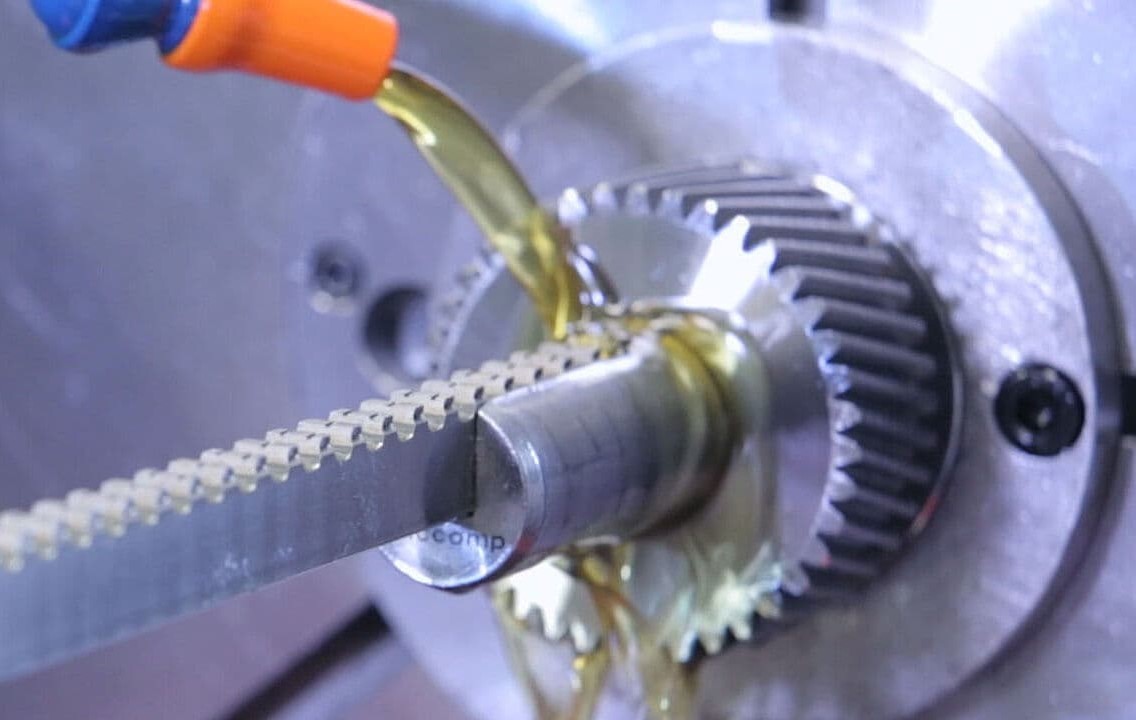
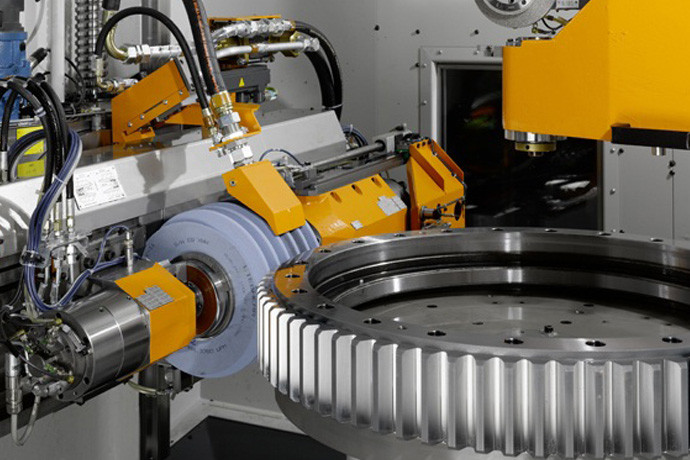
8. Manufacturing routes for Straight-cut gear
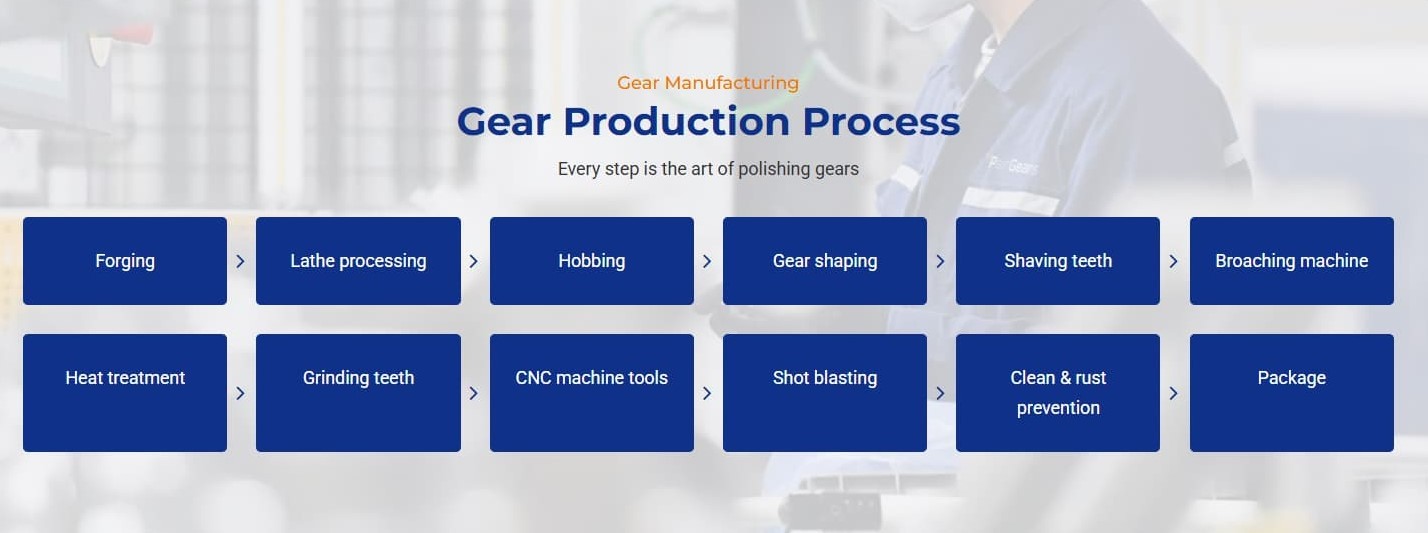
Spur gear can be produced by several common processes. The best route depends on volume, accuracy targets, and whether the gear is external or internal.
| Process | Best for | Strengths | Typical limits |
Hobbing | External spur gear, medium to high volume | Efficient and repeatable | Not ideal for some internal or shouldered forms |
Shaping | Internal gears and special geometries | Flexible for internal gears | Slower cycle than hobbing |
| Milling | Prototypes and small batches | Flexible and accessible | Less efficient for volume |
| Broaching | Internal gears and splines (high volume) | Very fast once tooled | Dedicated tooling cost |
| Grinding (finishing) | Higher accuracy or improved surface | Tight control where needed | Added cost; not always required |
9. Straight-cut gear vs helical gears
Both spur and helical gears are used on parallel shafts. The decision is usually about speed, load distribution, bearing constraints, and cost.
| Factor | Straight cut (spur) | Helical |
| Tooth engagement | More direct engagement | More gradual engagement |
Axial load | No axial thrust from tooth form | Axial thrust present; bearings must support it |
Efficiency | Typically very high | Often slightly lower due to sliding component |
High-speed behavior | May become limiting in some programs | Often preferred as speed rises |
| Load sharing | Fewer teeth share load at a time | More teeth share load more gradually |
Cost and manufacturability | Simpler, often lower cost | More complex geometry and setup control |
10. How to choose a route with your supplier
To help a supplier recommend a practical route, share a few essentials. These inputs improve quote accuracy and reduce manufacturing risk.
● Application and layout: parallel shafts, internal ring gear set, or special packaging constraints
● Approximate torque and speed range; steady load vs shocks and frequent start-stop
● Target volume: prototype, small batch, or repeat production
● Key acceptance checks: tooth geometry items, runout to datums, backlash window, and any surface or heat-treat targets
● Mating part details: gear pair ratio or tooth counts, and any pairing rules if the set is delivered together
When comparing a custom gear supplier, look for alignment between the proposed route and your main risk point: tolerance, durability, or delivery stability. A route that is slightly more expensive on paper can be cheaper overall if it prevents rework and stabilizes repeat orders.
Ask the supplier to explain what drives cost in the proposed route: tooling, cycle time, heat treatment, finishing, and inspection. A good answer is specific and ties back to your tolerance and volume plan, rather than using generic claims.
11. Why Choose PairGears
● Route planning with risk control: we align cutting, heat treatment (if required), finishing, and inspection to reduce scrap and rework.
● Datum-aware manufacturing: we focus on tooth-to-datum relationships that drive assembly repeatability across batches.
● Four-sector experience: agriculture, heavy truck, construction equipment, and EV drivetrains with duty-cycle-aware support.
● Practical supplier communication: as a precision gear manufacturer, we translate duty cycle and acceptance checks into quoteable specifications.
● Flexible production support: prototypes to repeat orders, with inspection outputs matched to what the application actually needs.
12. FAQ
Q: Are Straight-Cut Gear The Same As Spur Gear?
A: In most sourcing and design contexts, yes. Straight-cut usually refers to spur gear with teeth parallel to the shaft axis.
Q: When Are Internal Spur Gear A Better Choice?
A: When packaging is tight or a compact gear set is needed. Internal gears can help achieve ratios in a smaller envelope.
Q: Do Spur Gear Always Have High Noise?
A: Not always. Results depend on speed, load, accuracy, housing stiffness, and setup. Matching the route to the duty cycle is key.
Q: Which Manufacturing Process Is Best For Spur Gear?
A: There is no single best method. Hobbing is common for external gears at volume; shaping or broaching is common for internal gears; grinding is used when finishing control is needed.
Q: What Should I Send For An Accurate Quote?
A: A drawing, sample, or OEM number plus application, torque and speed range, volume, material or heat-treat expectations (if any), and your acceptance checks.
13. Conclusion
Straight-cut gear (spur gear) remain a strong option when you need efficient power transfer on parallel shafts with a straightforward manufacturing and inspection route. The best results come from matching tooth form and process route to the real duty cycle and from controlling the checks that drive assembly consistency, especially tooth-to-datum alignment.
If you have a drawing, sample, or OEM number, Contact Us, and we can recommend a practical route and deliver spur gear that assemble smoothly and perform consistently across batches.