Straight Bevel Gears vs Spiral Bevel Gears: Buyer's Guide
- Share
- publisher
- Jessica
- Issue Time
- Jul 3,2026
Summary
Straight or spiral bevel gears? Compare load, speed, cost, smoothness, and RFQ details to choose the right type before sourcing custom gear sets.
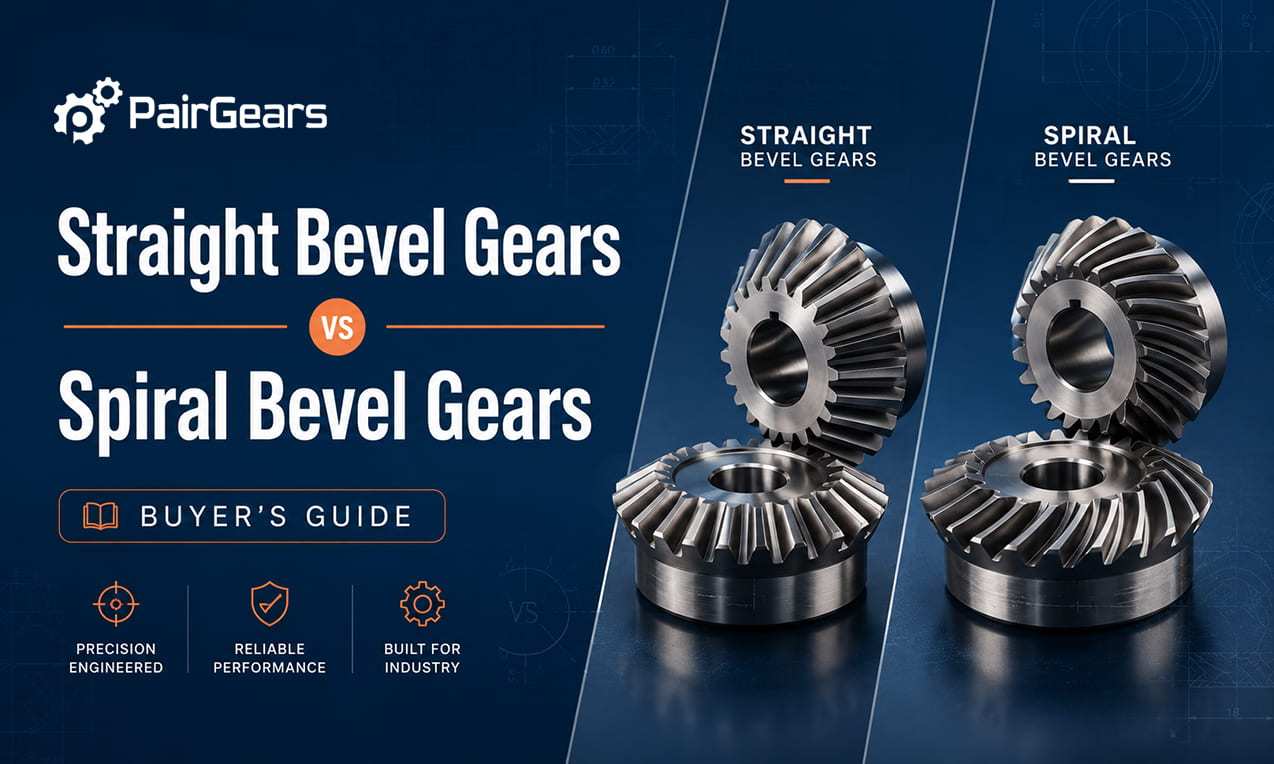
When sourcing bevel gears, the choice between straight bevel gears and spiral bevel gears should not depend only on the gear name or unit price. Speed, load, assembly structure, budget, mating gear condition and inspection needs all affect the final decision.
Straight bevel gears are often used in simpler, lower-speed transmission positions. Spiral bevel gears are more suitable when higher load capacity, smoother meshing or better running stability is required. For buyers, choosing the wrong type may lead to assembly issues, poor tooth contact, faster wear or unstable batch production.
For custom bevel gear projects, drawings, samples, OEM numbers, material details, heat treatment requirements and application information help suppliers evaluate whether the part is suitable for sampling, replacement or production.
What Are Straight Bevel Gears?
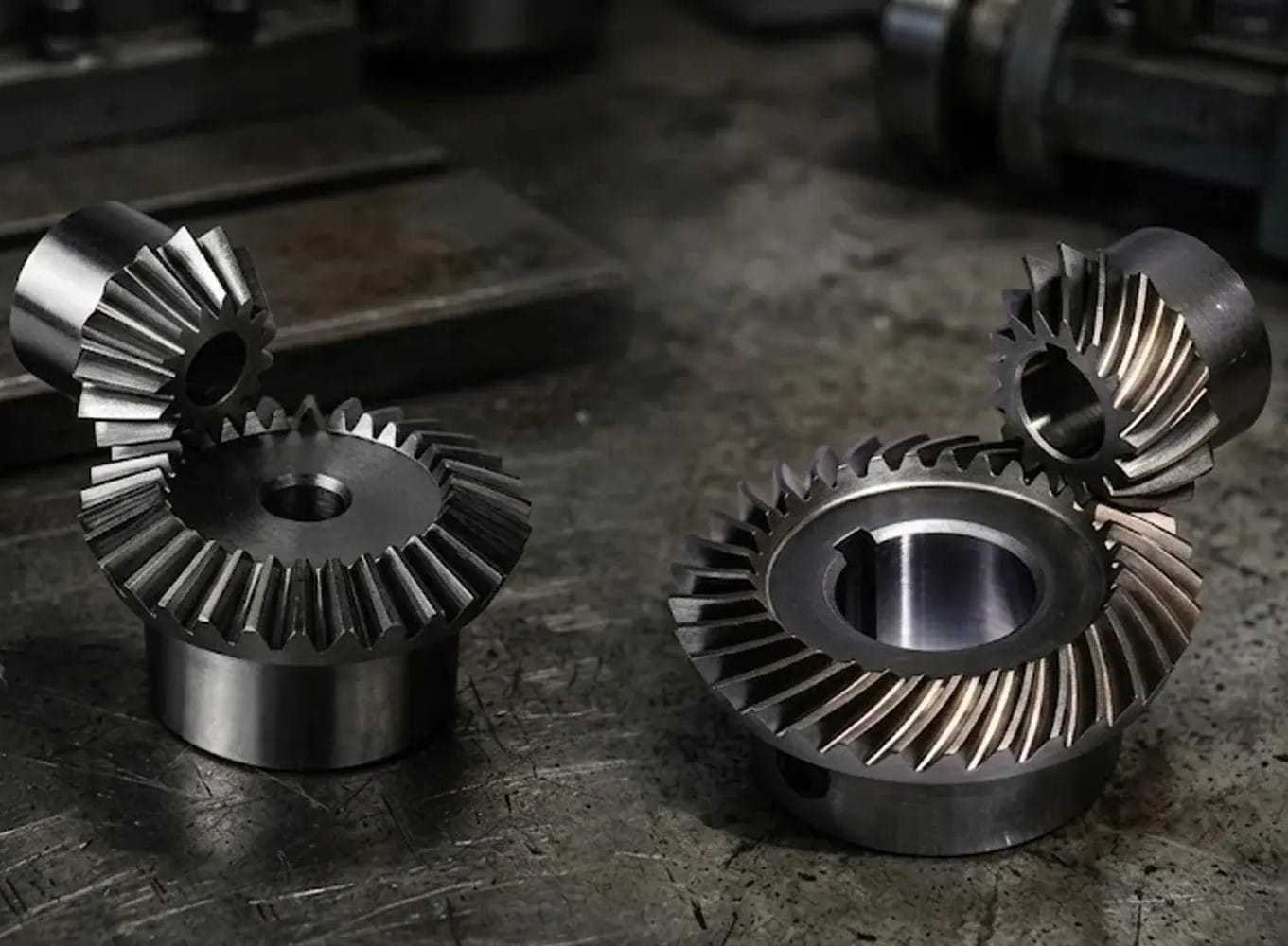
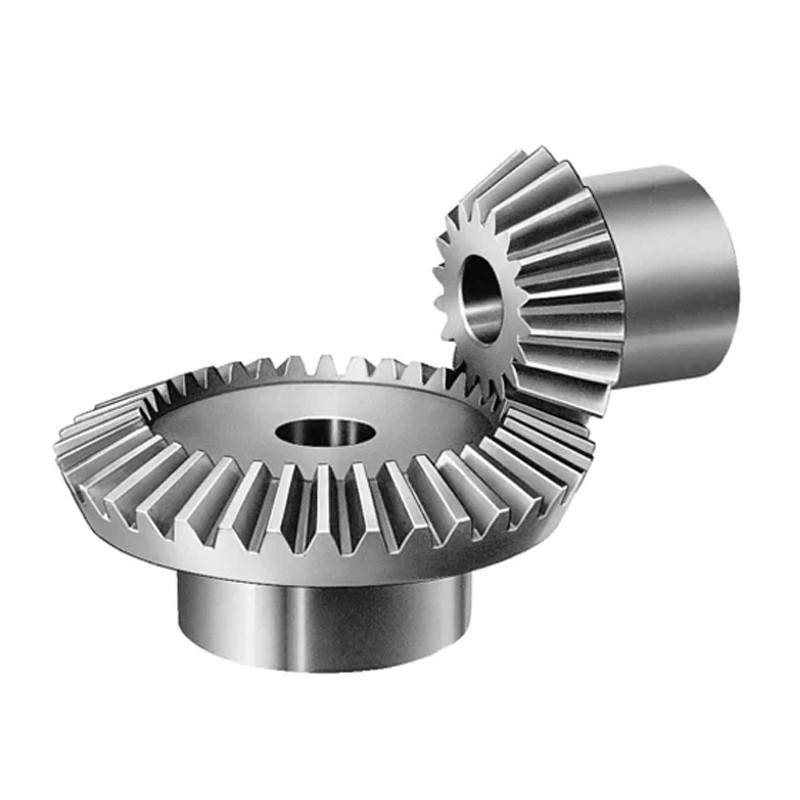
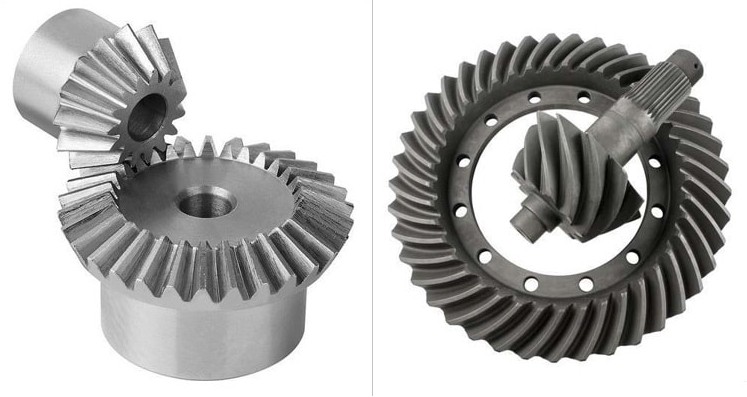
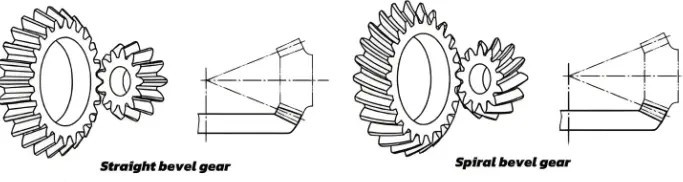
Straight bevel gears have a straight tooth line and are commonly used to transmit power between intersecting shafts. Their structure is relatively simple, and the manufacturing process is mature, which makes them practical for low-speed, medium-load and cost-controlled applications.
From a purchasing perspective, they are often easier to manage in terms of cost and lead time. They can be a good option for replacement parts, general mechanical transmission, small-batch repair orders or projects where the original design already uses straight bevel gears.
However, lower cost should not be the only reason for selection. If the equipment works under higher speed, continuous load, shock load or stricter stability requirements, the material, heat treatment, tooth contact and assembly condition still need careful confirmation.
What Are Spiral Bevel Gears?
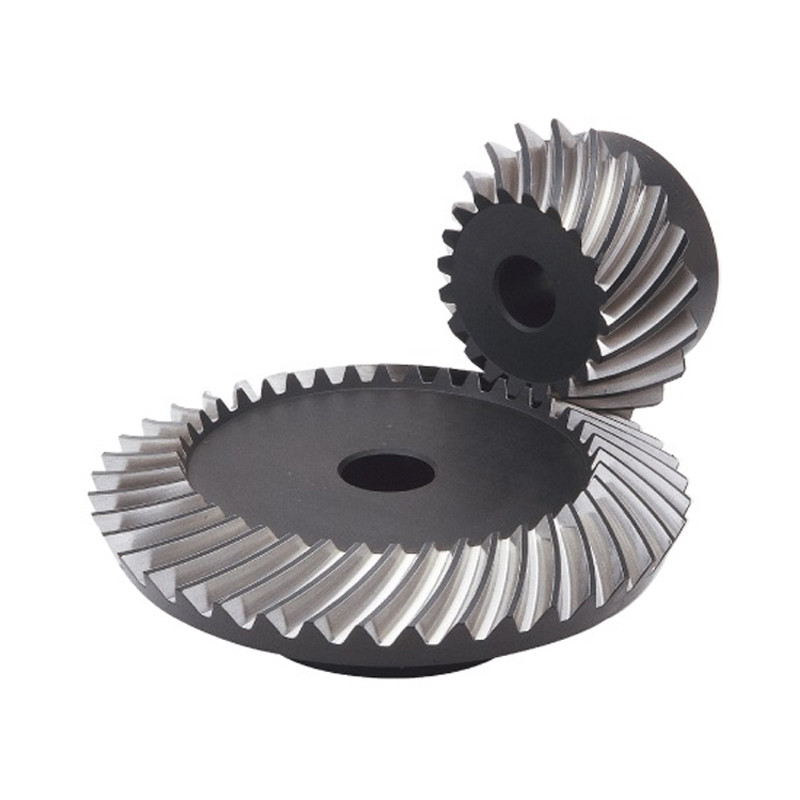
Spiral bevel gears have curved or spiral tooth lines. Their meshing is usually smoother because the teeth engage more gradually, which helps distribute load more continuously.
They are commonly considered for higher-speed, heavier-load or more stability-sensitive systems. At the same time, they require closer attention to spiral direction, mounting distance, mating gear condition, contact pattern, heat treatment distortion and inspection method.
For projects based on worn samples, the original tooth geometry may be difficult to identify. In that case, photos, key dimensions and mating part information become important before quotation or sampling.
Straight Bevel Gears vs Spiral Bevel Gears: Key Differences
| Comparison Point | Straight Bevel Gears | Spiral Bevel Gears | Buyer's Note |
Tooth direction | Straight tooth line | Curved or spiral tooth line | Do not replace one type with another without design review |
Running smoothness | Moderate | Better | Spiral bevel gears are usually preferred for smoother operation |
Load capacity | Suitable for medium load | Better for higher load | Final performance still depends on material and heat treatment |
Noise level | Usually higher | Usually lower | More important for higher-speed or noise-sensitive systems |
| Manufacturing cost | Usually lower | Usually higher | Compare full manufacturing requirements, not only unit price |
| Machining difficulty | Relatively simpler | More complex | Spiral bevel gears need clearer technical details |
| Assembly requirement | Relatively easier | More sensitive to pairing and alignment | Matched gear sets should be reviewed carefully |
Common use | Low-speed machinery, general transmission | Higher-load and smoother transmission systems | Choose based on real application conditions |
This comparison is only a starting point. In real sourcing work, buyers also need to consider lubrication, installation space, original design and mating gear condition. The two gear types should not be treated as directly interchangeable, especially in matched gear sets.
How to Choose the Right Bevel Gear Type
The first step is to understand how the gear will work inside the equipment. A lower-cost option may not be suitable if the part needs to handle high speed, heavy torque or continuous operation.
For moderate load and lower speed, straight bevel gears may offer a practical balance between performance, cost and lead time. This is especially true when the original design is simple and assembly sensitivity is low.
For heavier torque, higher speed or smoother meshing, spiral bevel gears are often worth evaluating. They can improve running stability, but they also require more accurate geometry control, pairing and inspection.
If the gears work as a set, the mating gear should be checked together. Contact pattern, mounting position and wear marks can directly affect noise, service life and replacement success.
For replacement projects, changing the original gear type without design review is not recommended. Straight and spiral bevel gears may differ in tooth geometry, force direction, axial thrust and assembly requirements.
Buyer Checklist Before Ordering Bevel Gears
Before requesting a quote, buyers should prepare the following information. Complete details help improve quotation accuracy and reduce sample or production risk.
| Information to Provide | Why It Matters |
| 2D or 3D drawing | Confirms dimensions, tolerances and technical requirements |
| Sample photos or old part | Helps review structure, wear condition and replacement feasibility |
Tooth number, module or DP | Defines basic gear geometry |
Spiral direction | Critical for spiral bevel gears |
Mating gear information | Bevel gears often need pairing review |
| Material requirement | Affects strength, wear resistance and heat treatment route |
Heat treatment requirement | Influences hardness, distortion and service life |
Hardness or case depth | Important for load capacity and wear resistance |
Application details | Helps evaluate working conditions |
Speed and load condition | Supports correct type and process evaluation |
Order quantity | Affects cost, production method and lead time |
Inspection requirements | Influences quotation and delivery standard |
An OEM number can support initial checking, but it usually cannot replace drawings, samples and application details. This is especially true for spiral bevel gears, where the mating relationship has a strong impact on assembly and service performance.
Common Buyer Mistakes When Comparing Bevel Gears
Only Comparing Unit Price
Straight and spiral bevel gears have different manufacturing requirements. A lower unit price may not cover proper material, heat treatment, inspection or mating gear review. The later cost may appear as noise, wear, rework or poor batch consistency.
Sending Only a Worn Sample
A worn sample can provide useful reference, but severe wear may hide the original tooth profile, contact pattern and key dimensions. For spiral bevel gears, mating gear photos and installation details are often needed as well.
Ignoring the Mating Gear
Bevel gears usually work in pairs. Even if one gear is dimensionally correct, poor matching may cause contact shift, abnormal noise or faster wear. When possible, both the pinion and gear should be reviewed.
Changing Gear Type Without Review
Straight bevel gears and spiral bevel gears are not simple substitutes. Their tooth geometry, force direction, axial thrust and assembly conditions may differ. Changing the type only to reduce noise or increase load capacity can create new risks.
Confirming Inspection Too Late
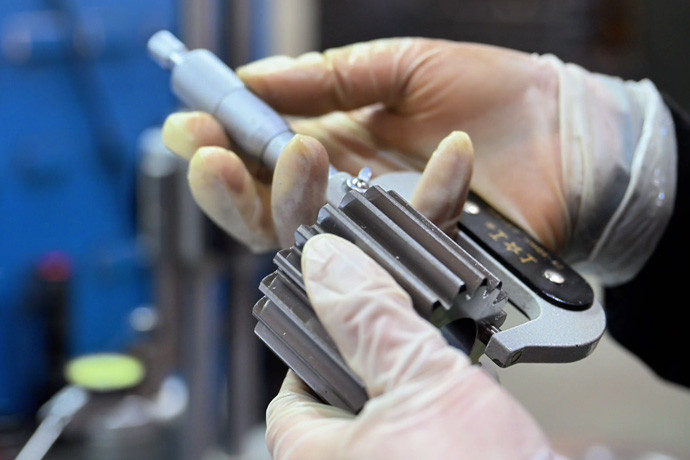
Inspection affects both quotation and delivery standards. Some projects need only dimensional, hardness and visual checks, while others may require tooth profile, lead, runout, material report, heat treatment report or contact pattern inspection. Early confirmation helps avoid disputes.
How PairGears Reviews Bevel Gear Projects
For bevel gear projects, PairGears usually reviews the drawing, sample condition, material, heat treatment route, tooth contact requirement and inspection standard before confirming the manufacturing plan.
For replacement or old-sample projects, the review also includes mating gear condition, wear marks, mounting dimensions and production consistency. This helps identify risks before sampling or batch manufacturing.
If you are comparing straight bevel gears and spiral bevel gears, you can send drawings, sample photos, OEM numbers or application details for review. The project can then be evaluated based on actual use instead of gear type alone.
FAQ About Straight and Spiral Bevel Gears
Q1: Which is better for a purchasing project?
It depends on the application. Straight bevel gears are usually better for low-speed, simple and cost-sensitive projects. Spiral bevel gears are more suitable for higher speed, heavier load and smoother operation.
Q2: Are spiral bevel gears always more expensive?
Usually, yes. They require more complex geometry, pairing, machining and inspection. Final cost also depends on material, heat treatment, accuracy, quantity and delivery requirements.
Q3: Can spiral bevel gears directly replace straight bevel gears?
Direct replacement is usually not recommended. The two types may differ in tooth geometry, force direction, axial thrust and mating relationship. A design review is needed first.
Q4: Can I get a quote with only an old sample?
An initial review may be possible, but quotation accuracy depends on sample wear and information completeness. Mating gear photos, key dimensions, application position and order quantity can help improve evaluation.
Q5: Should bevel gears be purchased as a matched set?
In many cases, yes, especially for spiral bevel gears. Replacing only one part may lead to poor contact pattern, increased noise or faster wear.
Conclusion
Choosing between straight bevel gears and spiral bevel gears is a balance of cost, load, speed, machining difficulty, assembly risk and long-term stability. The better option is the one that fits the equipment, not simply the one with a lower price or more advanced tooth form.
If your project involves custom bevel gears, replacement gears or reverse engineering from old samples, prepare drawings, photos, OEM numbers, application details, quantity and inspection requirements before requesting a quote. PairGears can review these details and help evaluate the gear type, material, heat treatment and next steps for sampling or batch production.