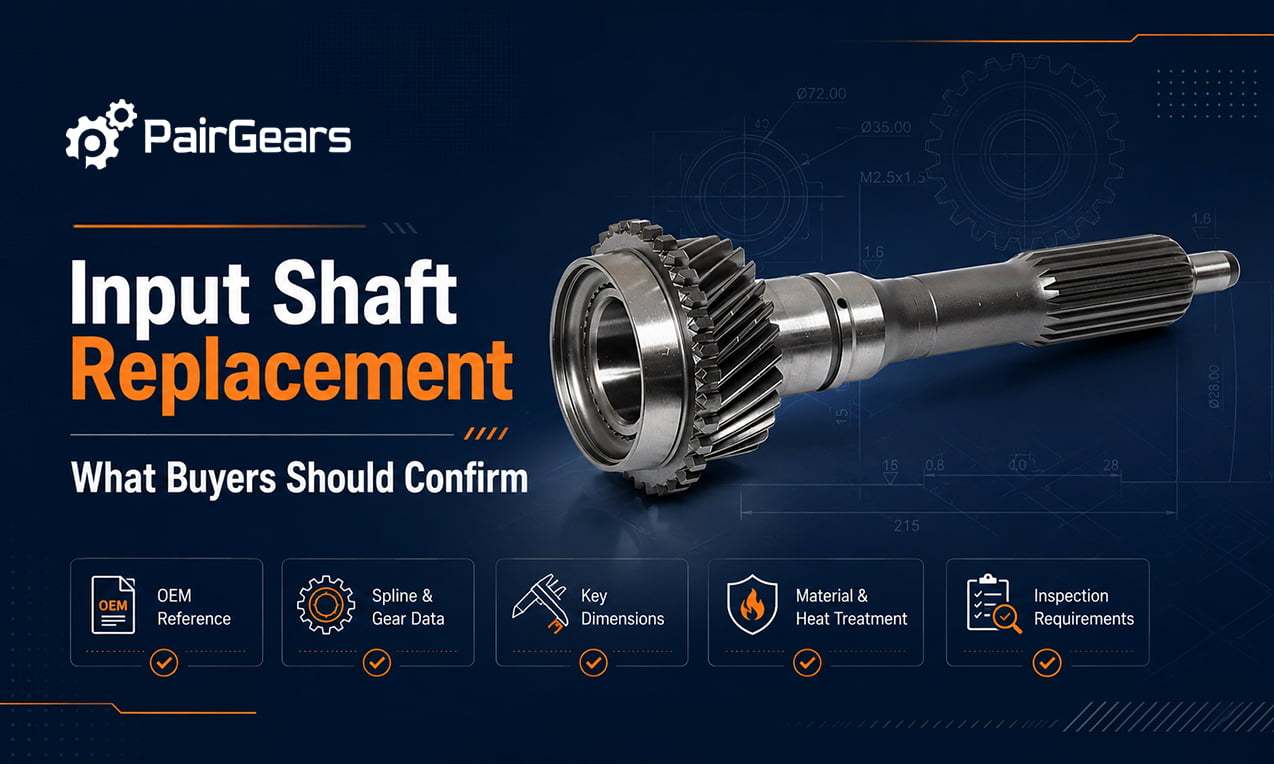
Input Shaft Replacement: What Buyers Should Confirm
- Share
- publisher
- PairGears
- Issue Time
- Jul 14,2026
Summary
Learn what to confirm before ordering an input shaft replacement, including OEM number, spline data, material, heat treatment, inspection and fit.
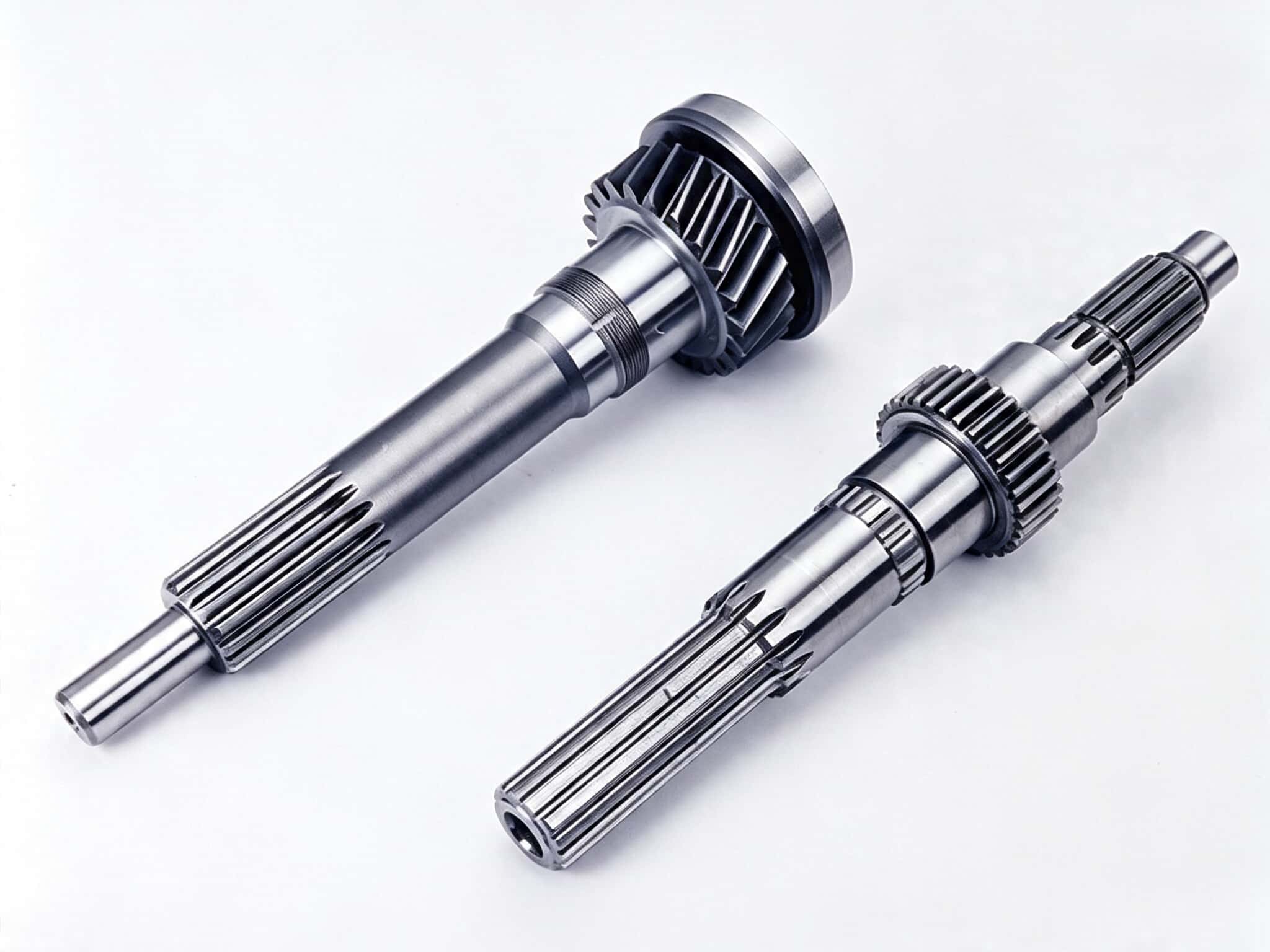
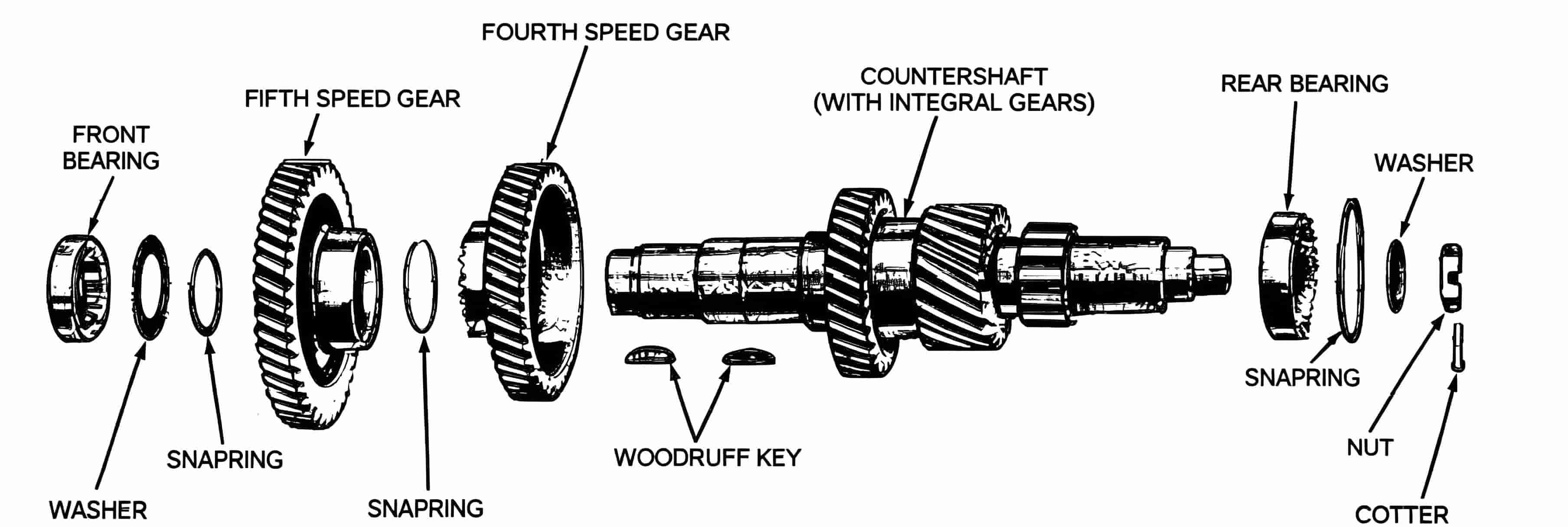
Send the OEM number, transmission information, clear photos, main dimensions, requested quantity, and reason for replacement. Add mating hub, bearing, clutch, or gear information when available. This checklist gives the supplier enough information to identify the part, review manufacturability, and prepare a quotation based on the actual order scope. A worn sample can still be useful when no drawing exists, but it should not be copied without review. Bearing seats, splines, grooves, and tooth surfaces may no longer represent the original dimensions. Photos of the mating parts and the damaged area help the supplier distinguish design features from wear. These six checks cover the issues most likely to cause a wrong order, an incomplete quotation, or repeat damage after installation. Confirm the OEM reference together with the transmission model, series, and available serial or build information. Do not assume that a matching name or similar number means the shaft has the same length, spline, or integral gear. Check more than tooth count. The spline standard, module or DP, pressure angle, major and minor diameters, tooth thickness or fit class, effective length, and lead-in all affect assembly and torque transfer. Bearing journals, grooves, shoulders, threads, and seal areas should also match the intended assembly. Material, hardness, and heat treatment should be reviewed as one specification. The correct route depends on torque, shock load, shaft section, gear or spline wear, and acceptable distortion. Buyers should request the drawing requirement or an agreed equivalent rather than applying one hardness or case depth to every shaft. When the shaft includes a gear, confirm tooth count, module or DP, pressure angle, helix angle, hand, face width, and required accuracy. Under ISO 1328, lower grade numbers indicate tighter cylindrical-gear tolerances. The selected grade should match the mating gear and application rather than being copied from another project. Inspect the mating spline or clutch hub, bearings, seal, retainers, mating gear, lubricant path, and housing alignment. A new input shaft cannot correct a worn hub, rough bearing, incorrect backlash, or misaligned housing. Include failure photos when the original cause is unclear. Define the reports needed before the order is placed. Depending on the drawing and risk level, inspection may include critical dimensions, runout, spline or gear measurement, hardness, case depth, material certification, and nondestructive testing. The scope should match the project rather than being described as the same inspection for every shaft. Input shafts do not use one universal steel grade. The material and processing route should reflect the load, geometry, mating surfaces, heat-treatment distortion, and original design requirement. Surface hardness alone does not define an acceptable shaft. Case depth, core hardness, distortion, crack-control requirements, and finishing allowance may also be relevant. PairGears has public input-shaft pages showing specific 20CrMnTi parts with carburizing and stated hardness, but those values apply to the listed products rather than every input shaft project. Include material and heat treatment in the same RFQ line. State whether the order requires a material certificate, hardness record, heat-treatment report, case-depth result, or another agreed document. A reference number may not show the transmission revision, spline fit, input length, or mating arrangement. Confirm the gearbox information and physical features as well. A used sample may have undersized journals, loosened splines, damaged grooves, or altered tooth surfaces. Compare the sample with mating components and other technical references. A worn hub, bearing, seal, mating gear, or housing can damage the replacement shaft. Buyers should review the assembly condition rather than treating the shaft as an isolated component. Reports, sampling, special measurements, and nondestructive testing can affect process planning and price. Define them during quotation instead of adding them after production. PairGears supplies gears, shafts and replacement transmission components for agricultural machinery, heavy-duty trucks, construction equipment, and EV-related drivetrains. Our identify input shafts through OEM references, PairGears numbers, transmission versions, tooth counts, material, and heat treatment. A project may begin with an OEM number, drawing, sample, photos, or transmission information. The review normally covers part identification, functional interfaces, process planning, quotation, sample approval, and production requirements. References, transmission information, drawings, samples, and mating interfaces are compared before production planning. The route is selected according to the shaft geometry, material, heat treatment, quantity, and finishing requirements. Dimensions, spline or gear data, hardness, runout, and other checks follow the drawing and agreed order scope. Approved sample information and retained production records support later batch comparison. Related reading: Input Shafts Explained, Gear Shaft Materials, Heat Treatment and Inspection, and What to Send When You Need Replacement Gears. OEM names and part numbers are used for identification and compatibility reference. They do not imply authorization, affiliation, or endorsement unless expressly stated. Not always. Add the transmission model, serial number or gearbox series, photos, and key dimensions because similar references may cover different revisions or interfaces. Yes. A physical sample and clear photos can support reverse engineering. Transmission information, mating-part details, and any available service or inspection records make the review more reliable. Main factors include material, shaft size, spline and gear complexity, heat treatment, finishing, quantity, tooling, inspection scope, and whether a drawing or reverse-engineering review is required. Service life depends on load and shock conditions, material and heat treatment, gear and spline fit, bearing condition, alignment, lubrication, contamination, installation, and the condition of mating components. It cannot be defined by one mileage or operating-hour figure. Depending on the project, buyers may request material certification, dimensional results, spline or gear measurements, hardness or heat-treatment records, case-depth results, runout checks, and nondestructive-testing records. Agree the required scope before ordering. A reliable input shaft replacement depends on the part reference, transmission version, spline and gear geometry, material, heat treatment, mating components, and inspection requirements being reviewed together. Send your OEM number, transmission information, drawing or sample photos, quantity, and available failure details to PairGears for a manufacturing and inspection review.Input Shaft Replacement Checklist
Information
What to Provide
Why It Matters
OEM reference
Part number, suffix, superseded number, or PairGears number
Provides the first identification reference
Transmission details
Brand, model, gearbox series, serial number, or build list
Separates similar versions and assemblies
Drawing or sample
Drawing, old shaft, or clear photos from several angles
Confirms the structure and missing catalogue details
Spline data
Standard, tooth count, module or DP, pressure angle, fit, and length
Confirms connection with the mating hub or clutch
Key dimensions
Overall length, journal diameters, shoulders, grooves, and seal areas
Controls bearing location, retention, and axial fit
Material and heat treatment
Steel grade, hardness, case depth, old report, or equivalent requirement
Defines strength, fatigue resistance, and wear behaviour
Mating components
Hub, clutch, bearing, seal, and mating-gear information
Helps prevent a correct shaft being used in a worn assembly
Order requirements
Quantity, sample needs, target date, and inspection documents
Defines process planning, cost, and acceptance scope
Six Critical Factors Every Buyer Must Confirm
Part Identification and Transmission Version
Spline Compatibility and Assembly Interfaces
Material and Heat-Treatment Route
Integral Gear Data and Accuracy
Condition of Related Components
Inspection Scope and Supplier Documents
Material Selection for an Input Shaft Replacement
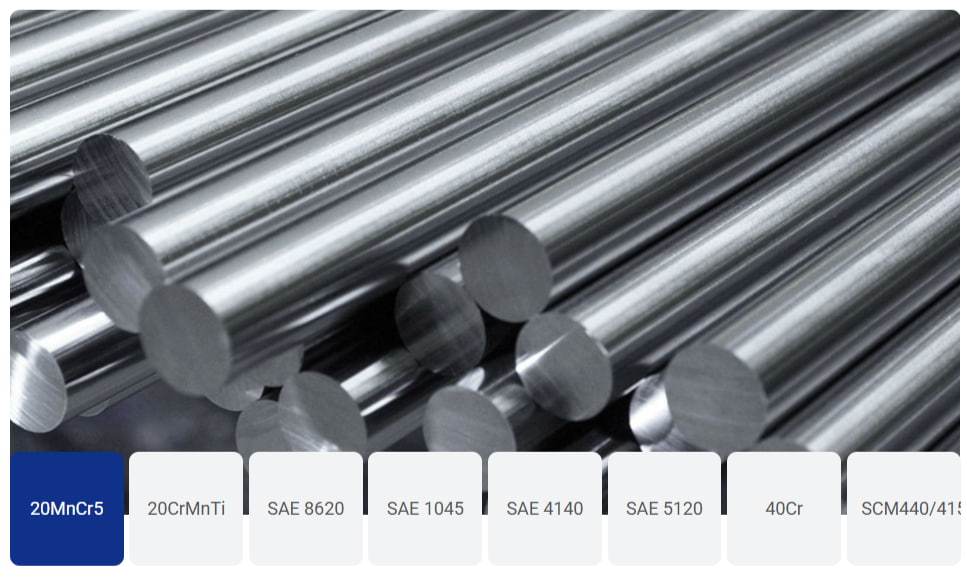
Common Material and Process Routes
Material Family
Common Processing Route
Typical Engineering Reason
20CrMnTi, 20MnCr5, SAE 8620
Carburizing, quenching, tempering, and grinding where required
Combines a wear-resistant surface with a tougher core
40Cr, 42CrMo, SAE 4140
Quenching and tempering; selective induction hardening or nitriding when specified
Provides core strength for shafts exposed to torsion and shock
Drawing-specified alloy steel
Process selected according to the drawing and application
Maintains a validated OEM or customer material system
Common Mistakes That Cause Wrong Orders or Repeat Failures
Ordering From a Part Number Alone
Copying Wear as a Design Dimension
Ignoring Related Components
Leaving Inspection Requirements Until Shipment
How PairGears Reviews Input Shaft Replacement Projects
Frequently Asked Questions About Input Shaft Replacement
Is an OEM number enough to order a replacement input shaft?
Can an input shaft be reviewed without a drawing?
What affects input shaft replacement cost?
What affects the service life of a replacement input shaft?
What inspection documents can buyers request?
Confirm the Complete Shaft Before Ordering