How to Source Industrial Gears for Heavy Loads
- Share
- publisher
- Jessica
- Issue Time
- Jul 7,2026
Summary
Source industrial gears for heavy loads with fewer RFQ risks. Check drawings, material, heat treatment, wear signs, mating parts and inspection.
Introduction
Sourcing industrial gears for heavy loads is rarely as simple as matching an outside diameter or choosing the lowest quotation. In high-torque, shock-load, or continuous-duty applications, a gear may look correct on paper but still fail early if the material, heat treatment, tooth contact, or mating part condition is not reviewed properly.
A worn gear sample can tell part of the story, but not the whole story. Wear marks, cracks, tooth damage, lubrication conditions, and installation position all help explain why the original part failed. Without that context, a supplier may be able to copy the shape, but not necessarily improve the reliability of the replacement.
For heavy-load gear projects, the sourcing process should answer one practical question: will this gear work reliably in the real machine, not just match the old part visually?
What Are Industrial Gears for Heavy Loads
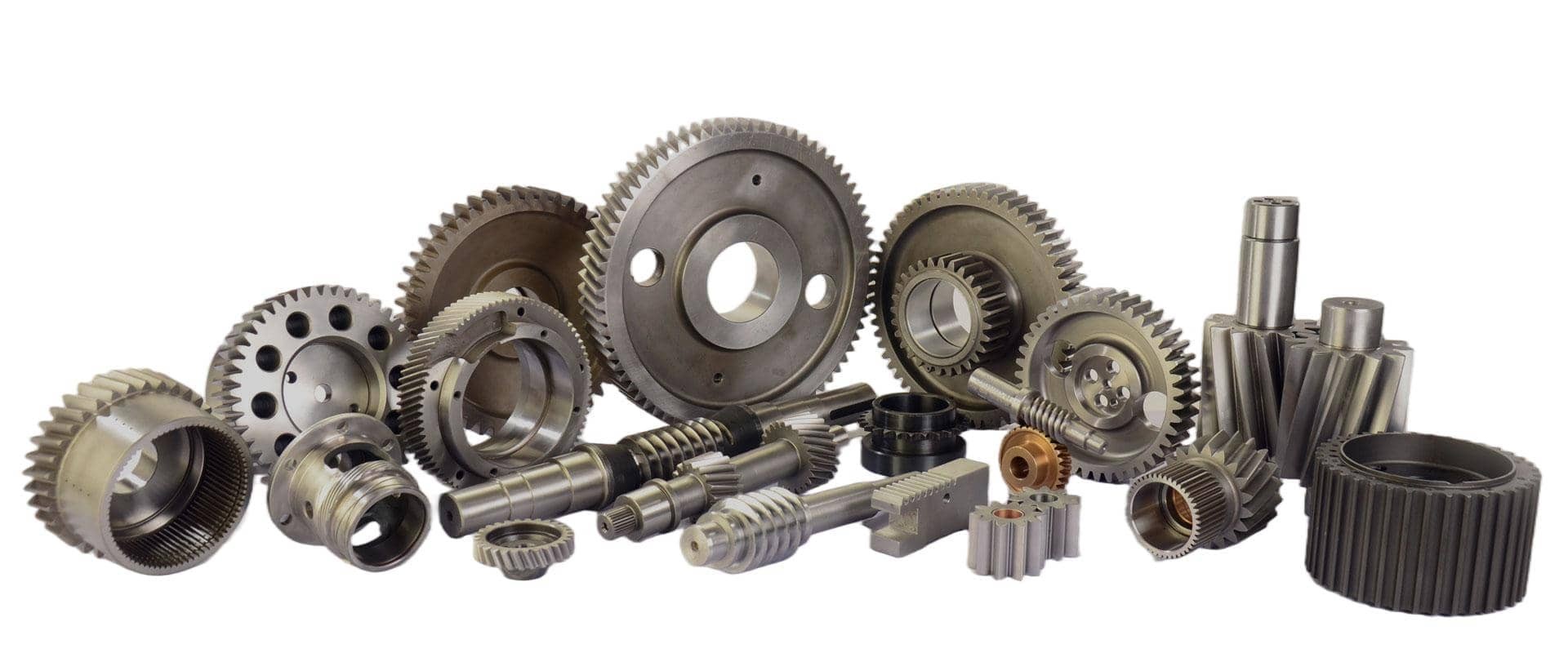
Industrial gears for heavy loads are power transmission components used in equipment where torque, impact, or long operating hours place higher stress on the gear teeth and supporting structure. These parts may include spur gears, helical gears, bevel gears, gear shafts, spline parts, or other custom transmission components.
The gear type alone does not decide performance. Two gears with similar shapes may have very different service lives if their material strength, hardness, tooth accuracy, heat treatment, or mating parts are different.
Before sourcing, it helps to clarify three points:
▷Is the gear working under steady load, impact load, or repeated heavy load?
▷Did the old part fail because of normal wear, lubrication issues, assembly error, or manufacturing mismatch?
▷Will the new gear work alone, or does the mating part also need to be checked?
These details shape the quotation, manufacturing route, inspection scope, and delivery risk.
Why Heavy-Load Gears Need Careful Sourcing
Early gear failure often has more than one cause. Material strength, heat treatment, lubrication, tooth contact, mating gear condition, and assembly alignment can all affect wear, pitting, noise, or tooth breakage.
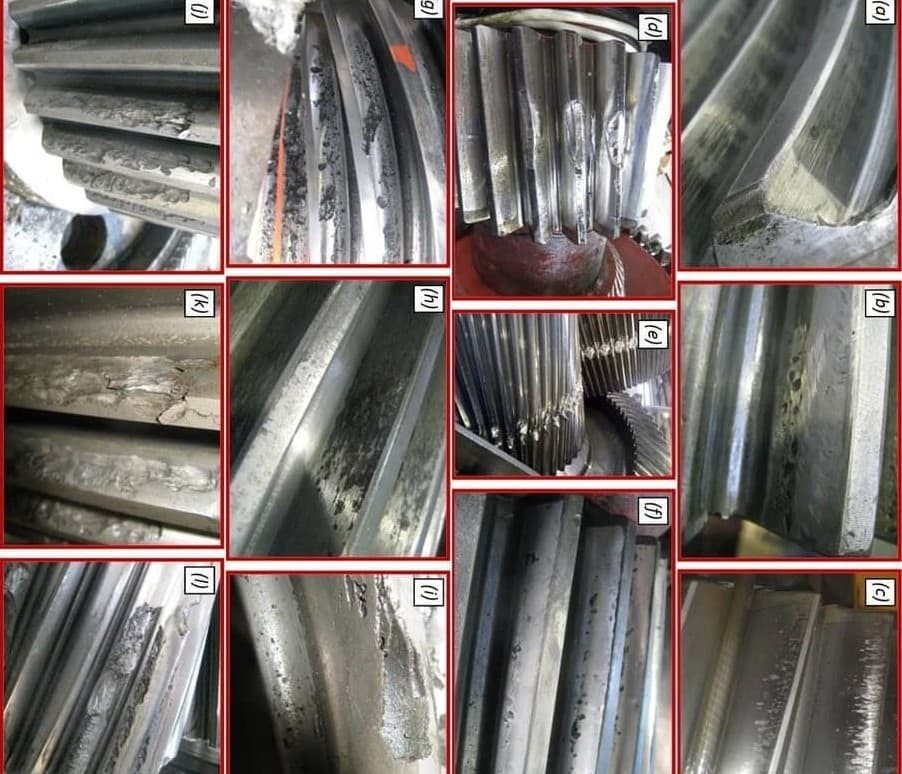
Pitting on the tooth surface may point to hardness, lubrication, contact pattern, or load distribution issues. A cracked tooth root may suggest shock load, weak core strength, case depth problems, or stress concentration. Fast wear may come from a worn mating part, hardness mismatch, contaminated working conditions, or poor alignment.
This is why a heavily worn sample needs context. A supplier can measure dimensions from the part, but the failure pattern needs operating information. Otherwise, the new gear may fit the machine but repeat the same problem after installation.
Heavy-load gear sourcing should look at both the part and the application, not just the price.
What to Check Before Sourcing Industrial Gears
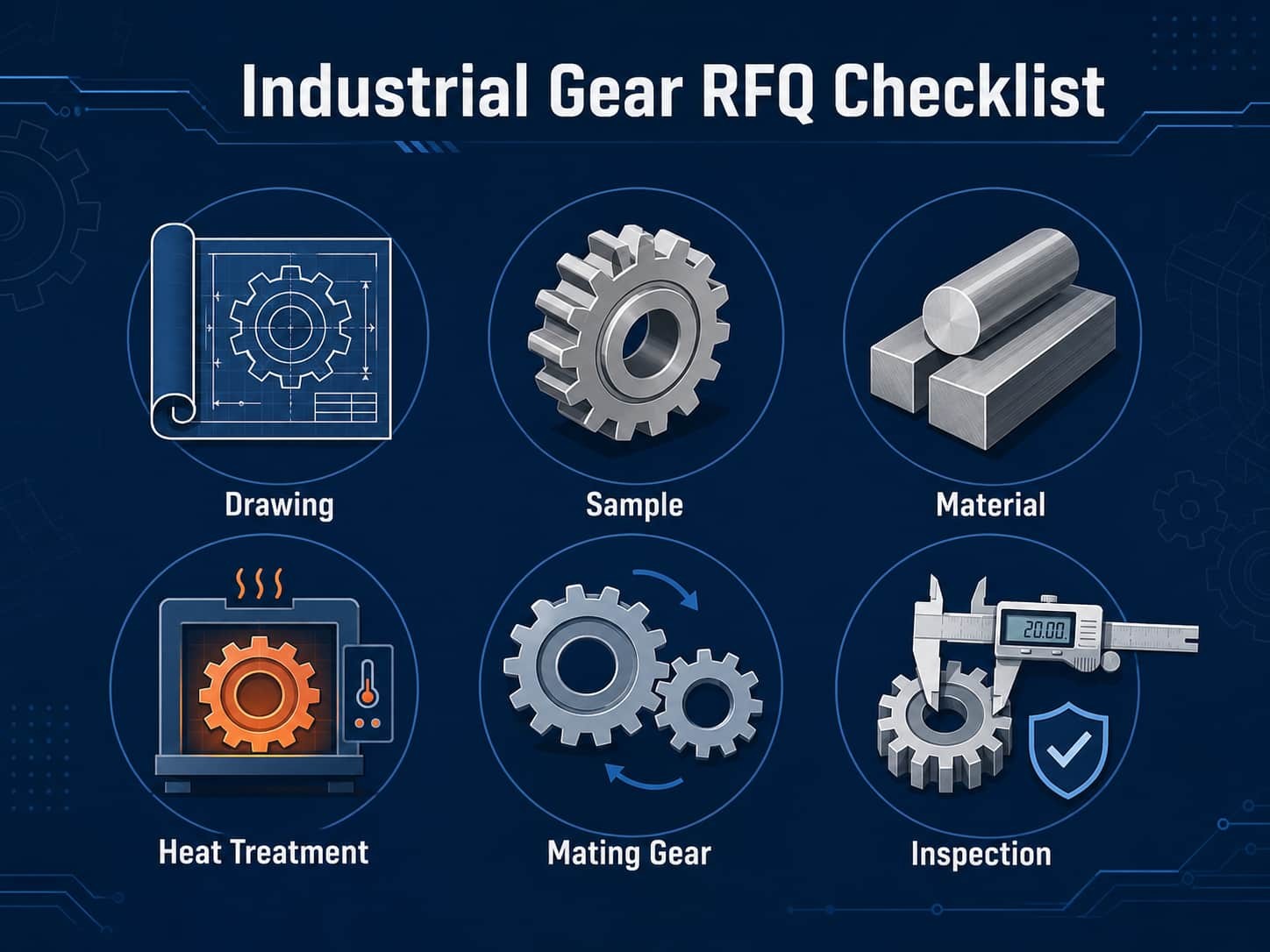
Before sending an RFQ, organize the basic geometry, old-part condition, and working background. Clear information helps the supplier judge the process, cost, lead time, and technical risk more accurately.
| Information to Check | Why It Matters |
| 2D or 3D drawing | Confirms dimensions, tolerances, and technical requirements |
| Old sample or clear photos | Shows wear, fracture, tooth damage, and structure |
| Tooth number, module, or DP | Defines the basic gear geometry |
Bore, spline, or keyway details | Affects assembly fit and torque transfer |
Material requirement | Influences strength, wear resistance, and process choice |
Heat treatment requirement | Affects hardness, distortion, and service life |
Hardness or case depth | Important for heavy-load and wear-resistant applications |
Mating gear condition | Poor matching may cause noise, contact shift, or fast wear |
Load and speed condition | Helps judge whether the design fits the application |
Lubrication and working environment | Affects wear, pitting, and surface damage |
Quantity | Affects cost, production method, and lead time |
Inspection requirements | Influences quotation, process control, and delivery standard |
When a full drawing is not available, useful starting materials include photos, key dimensions, tooth count, OEM number, damaged areas, and mating part photos. For heavy-load replacement gears, these details often provide more value than a part number alone.
How to Evaluate Material and Heat Treatment
Material and heat treatment have a direct influence on load capacity, wear resistance, and service life. Instead of asking only whether a material can be made, the better question is whether that material matches the load, speed, and working environment.
For gears carrying high torque or impact, the material needs both core strength and surface durability. Carburizing, quenching, or other heat treatment processes may be considered when higher tooth surface hardness is needed. However, higher hardness is not always the best answer. Distortion control, machining allowance, and meshing condition also matter.
Some projects focus only on final hardness and overlook case depth, core hardness, or tooth contact. A soft surface may wear quickly. A weak core may increase fracture risk. Too much heat treatment distortion may affect assembly and running stability.
When exact specifications are missing, describe the gear position, load condition, and failure appearance as clearly as possible. That gives the supplier a better basis for a practical manufacturing assessment.
Common Mistakes When Sourcing Heavy-Load Gears
Only Matching the Outside Shape
Outer diameter, thickness, and bore size are not enough. Tooth count, module or DP, pressure angle, face width, spline, keyway, and mating relationship can all affect assembly.
Ignoring Wear Marks on the Old Gear
Wear marks can reveal failure clues. One-sided tooth wear may suggest contact or alignment problems. Tooth root cracks may indicate shock load, stress concentration, or heat treatment issues.
Choosing the Lowest Quote Too Quickly
Heavy-load gear cost includes more than machining. Material, heat treatment, inspection, process control, and packaging protection all affect the final result. A low quote that leaves out key requirements may lead to downtime, rework, or repeated replacement.
Replacing One Gear Without Checking the Mating Part
Many industrial gears work in pairs. If the mating gear is already worn or has a hardness mismatch, the new part may soon develop noise, contact shift, or abnormal wear.
Confirming Inspection Requirements Too Late
Inspection requirements should be confirmed during quotation. Dimensional checks, hardness testing, tooth inspection, material certificates, heat treatment records, and contact pattern review can all affect production planning and delivery cost.
Overseas buyers who are not familiar with sourcing from China can also review how to work with a gear manufacturer in China before sending an RFQ.
Inspection Points for Industrial Gears
Inspection for heavy-load gears is not just about dimensions. It helps confirm whether the part is ready for assembly, meshing, and long-term service.
| Inspection Point | What It Helps Confirm |
| Dimensional inspection | Basic fit, bore, width, keyway, spline, and mounting dimensions |
| Tooth profile or lead check | Gear accuracy and meshing quality |
| Runout inspection | Rotation stability and assembly accuracy |
Hardness testing | Surface and core hardness suitability |
Case depth check | Heat treatment depth for wear resistance |
Material certificate | Material traceability and compliance with requirements |
Heat treatment record | Process consistency and hardness control |
Visual inspection | Surface defects, cracks, burrs, or obvious damage |
Contact pattern review | Tooth contact condition in matched gear sets |
Packaging check | Rust prevention, separation, and transport protection |
For common replacement parts, dimensional, hardness, and visual checks may be enough. For heavy-load, batch production, or matched gear projects, tooth profile, lead, runout, heat treatment records, or contact pattern checks may also be needed.
Inspection scope affects both quotation and lead time. Confirming it during sourcing is usually easier than adding reports after production has already started.
How PairGears Reviews Heavy-Load Gear Projects
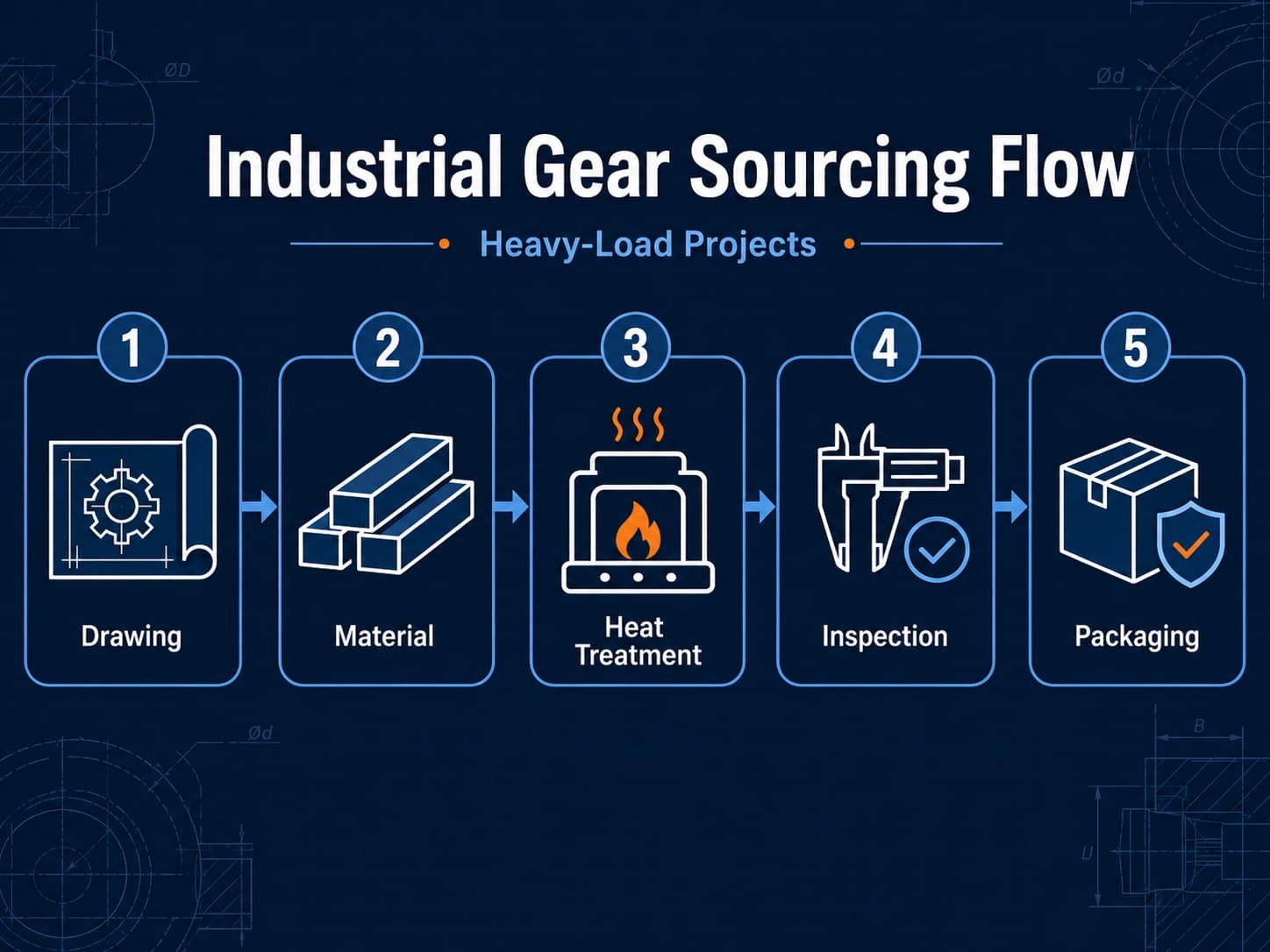
For heavy-load industrial gear projects, PairGears first reviews the drawing, sample condition, key dimensions, material, heat treatment route, mating part information, and application background before confirming the manufacturing plan.
For reverse engineering or replacement work, the review is not limited to copying the shape. Wear position, possible failure causes, assembly relationship, and production consistency also need attention. Clear photos, samples, OEM numbers, application position, and quantity information can make the evaluation more reliable.
When a project moves from sampling to batch production, material batch control, heat treatment stability, inspection scope, rust prevention, packaging, and delivery requirements should also be confirmed. This helps reduce the risk of a sample passing while later production becomes unstable.
If you are sourcing industrial gears for heavy loads, prepare drawings, sample photos, wear details, application background, and inspection needs before requesting a quote. PairGears can review the information and help evaluate material, heat treatment, machining process, sampling, and batch production options.
FAQ About Sourcing Industrial Gears
Q1: What information is needed to source industrial gears for heavy loads?
Useful RFQ information includes drawings, old samples or photos, tooth count, module or DP, material, heat treatment, hardness, mating part details, working condition, quantity, and inspection needs. More complete information usually leads to a more accurate quotation.
Q2: Can industrial gears be quoted from an old sample?
Yes, an initial review is possible. However, quotation accuracy depends on sample wear and missing technical details. Key dimensions, tooth count, mating part photos, application position, failure details, and quantity can improve the evaluation.
Q3: Why do heavy-load gears wear out quickly?
Common causes include unsuitable material, poor heat treatment, weak lubrication, shock load, worn mating parts, poor contact pattern, or assembly deviation. The old part and working environment should be reviewed together.
Q4: What inspection reports should buyers request?
Common reports include dimensional inspection, hardness testing, material certificate, and visual inspection. For high-load or matched gear projects, tooth profile, lead, runout, heat treatment records, or contact pattern checks may also be needed.
Q5: Is the lowest price a good choice for heavy-load gears?
Not always. Heavy-load gears should be evaluated by material, heat treatment, inspection, and production consistency. If a low quotation misses key processes or inspection items, later downtime, rework, or replacement cost may be higher.
Conclusion
Sourcing industrial gears for heavy loads requires more than matching dimensions. Gear geometry, material, heat treatment, mating parts, operating background, and inspection standards all influence whether the part can work reliably after installation.
For replacement gears, old samples, or custom industrial gears, complete RFQ information helps reduce quotation errors and production risks. A clear technical review at the beginning is often more valuable than solving wear, noise, or fit problems after delivery.