How to Avoid Wrong OEM Replacement Gear Orders?
- Share
- publisher
- Jessica
- Issue Time
- Jun 10,2026
Summary
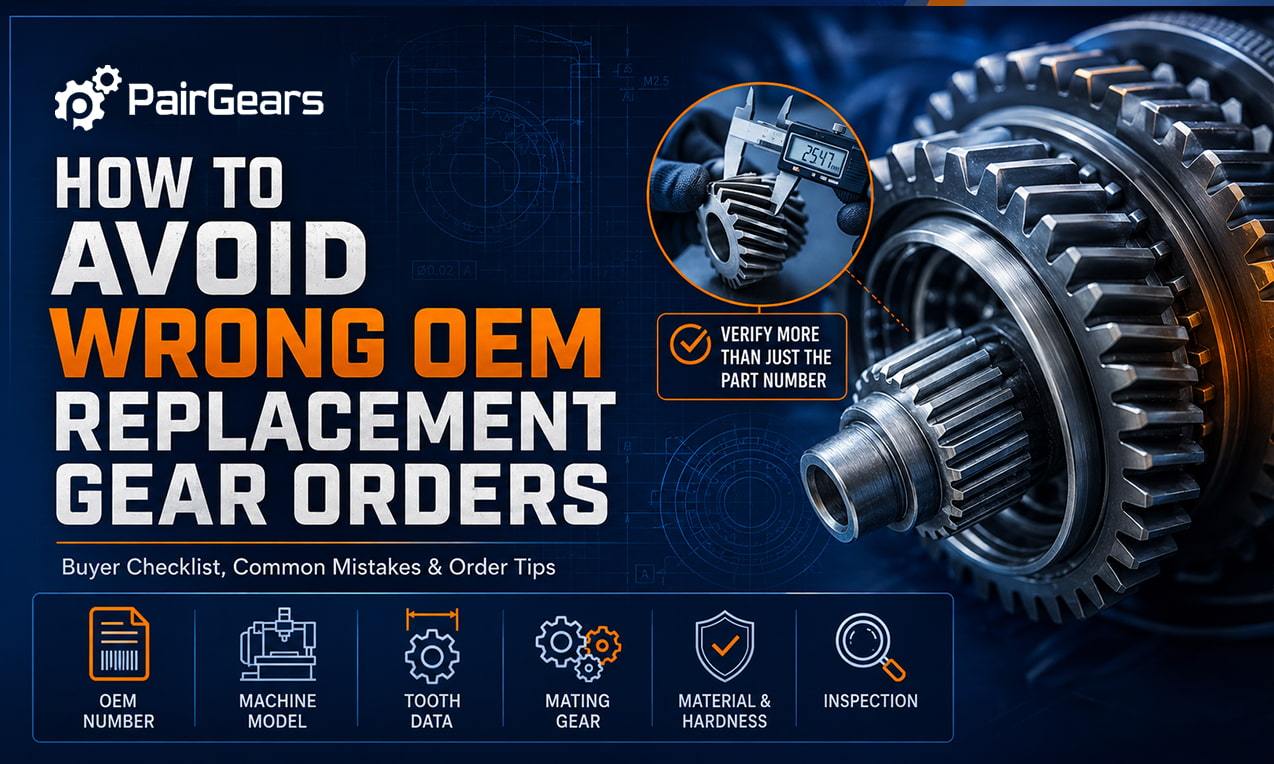
Learn how buyers can avoid wrong OEM replacement gear orders by checking OEM numbers, tooth data, fit, mating parts, and application details.
Introduction
Wrong OEM replacement gear orders usually cost more than the part itself. A gear may look correct in photos, carry the same OEM number, or match a few basic dimensions on paper, but still fail in fit, contact, or service life after installation. That is why an OEM replacement gear project should never be treated as a simple part-number purchase.
At PairGears, we support custom precision gears and replacement gear projects for agricultural machinery, heavy-duty trucks, construction equipment, and EV drivetrains. In many cases, the real issue is not whether the gear can be made. The real issue is whether the order information is complete enough to confirm tooth data, fit, material, heat treatment, mating condition, and actual application requirements before production begins.
This article focuses on how buyers can avoid wrong OEM replacement gear orders before quotation and production, especially when they are working from OEM numbers, worn samples, old photos, or incomplete machine information.
What Is a Wrong OEM Replacement Gear Order?
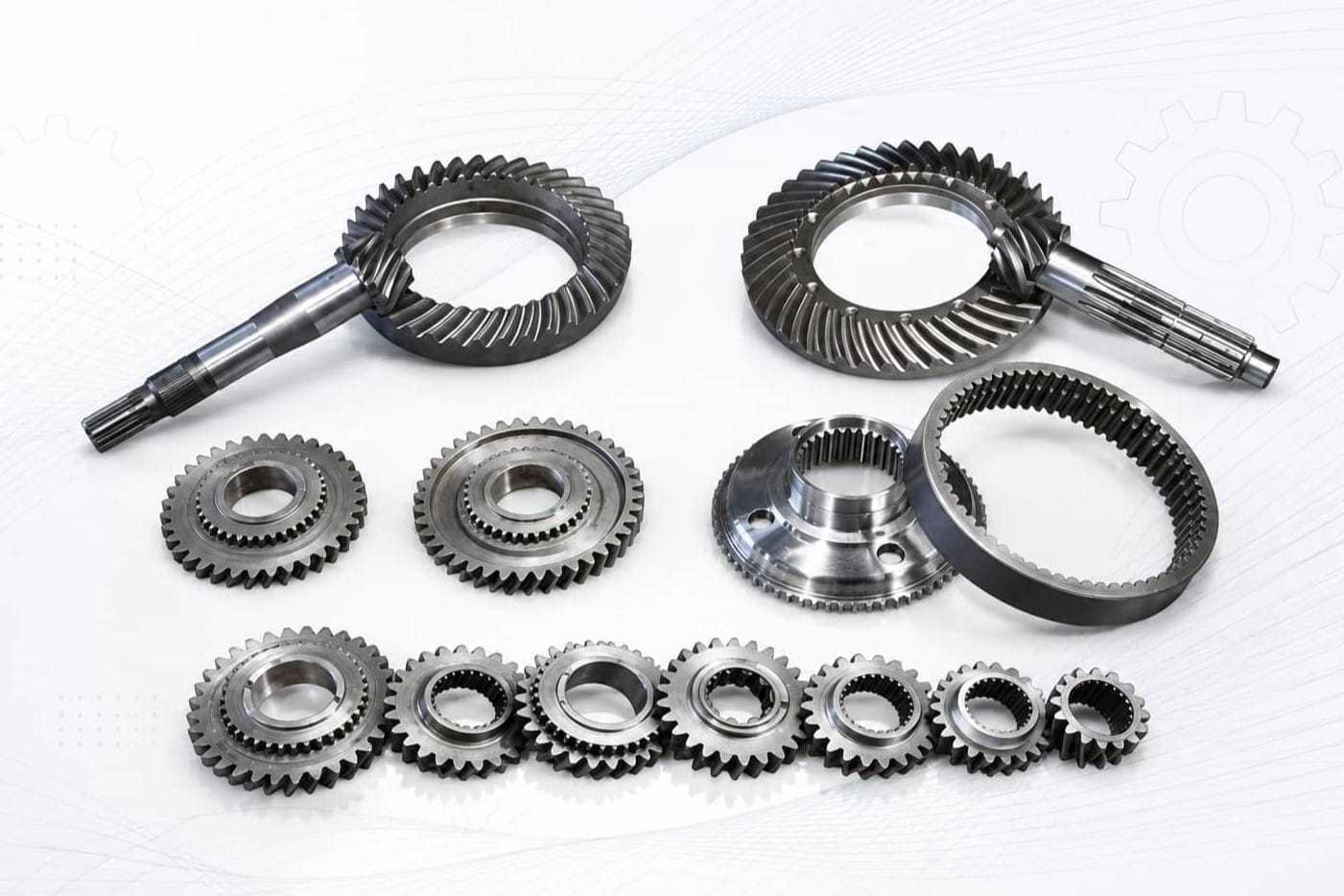
A wrong OEM replacement gear order happens when the new gear does not truly match the original system in tooth data, fit, mating condition, material, or service requirement.
Why OEM Replacement Gear Orders Go Wrong
Many replacement gear orders go wrong because buyers assume one piece of information is enough. In practice, an OEM number may point to a family of parts, a revised version, or a component that changed across machine models, production years, or transmission variants. The number is useful, but it is only the starting point.
Another common problem is relying on visible shape alone. A replacement gear may look close to the original part but still differ in tooth count, module, pressure angle, helix angle, spline fit, hardness, or mating condition. These differences may not be obvious in a quick photo review, but they are enough to create noise, poor fit, early wear, or installation problems.
Wrong OEM replacement gear orders also happen when a worn part is copied directly without checking whether wear has already changed the original tooth form, backlash, or bore fit. Under time pressure, buyers may move forward with a quotation too quickly. That may save one day at the RFQ stage, but it often creates much more delay later if the replacement does not install or run correctly.
What Buyers Should Confirm Before Ordering OEM Replacement Gears
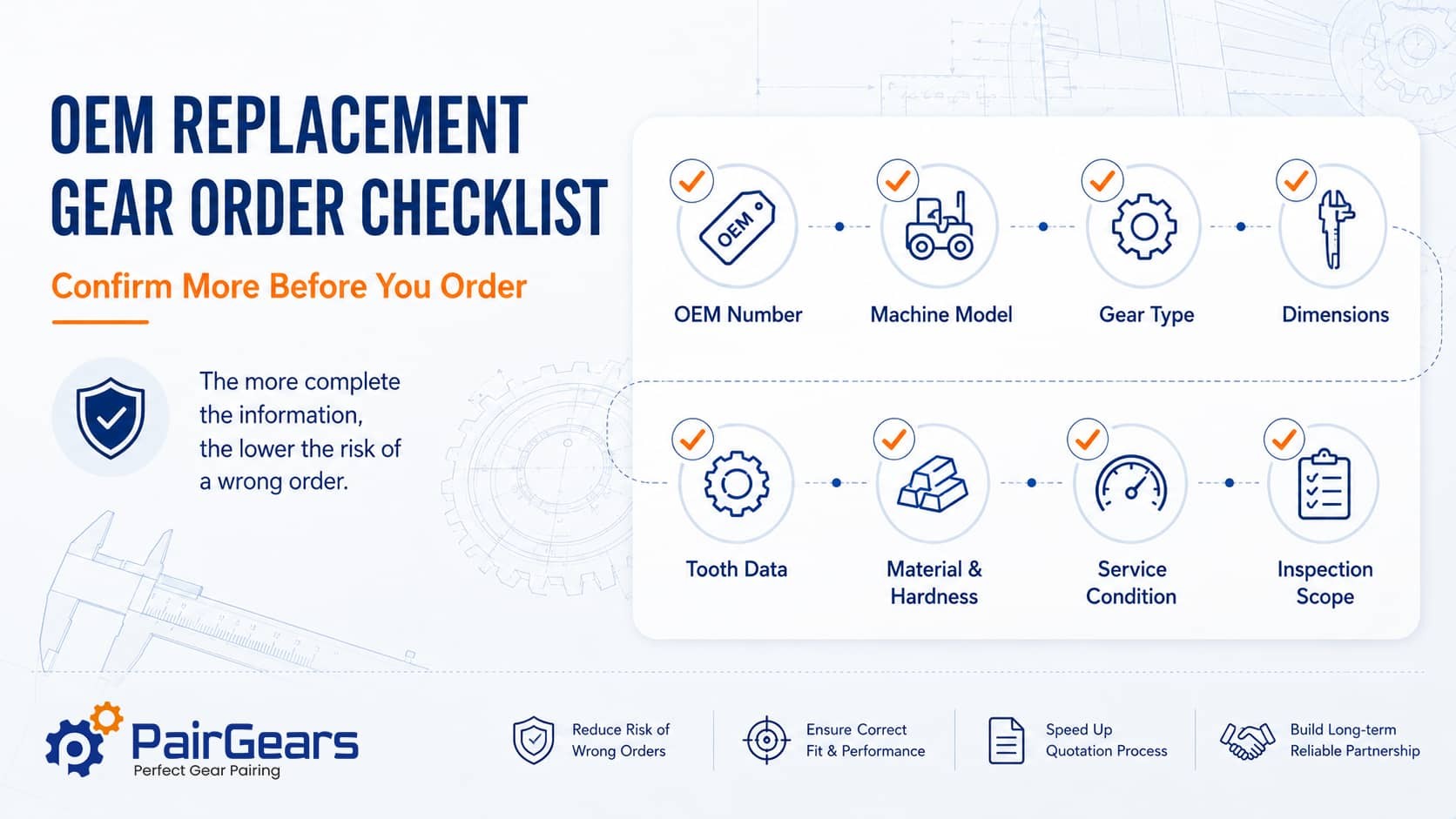
The safest OEM replacement gear review starts with more than one reference point. Buyers do not need to prepare everything perfectly before the first message, but the more complete the information is, the lower the risk of a wrong order.
| OEM number | What to confirm | Why it matters |
| OEM number | Full part number, suffix, revision, superseded number | Helps identify the correct replacement target |
| Machine brand and model | Brand, model, gearbox, reducer, axle, or assembly series | Prevents cross-model or cross-version confusion |
| Gear type | Spur, helical, bevel, shaft gear, spline gear, ring gear, etc. | Helps confirm the right manufacturing route |
Basic dimensions | OD, bore, face width, total length, spline or keyway size | Helps confirm fit before production |
Tooth data | Tooth count, module or DP, pressure angle, helix angle, hand direction | Confirms meshing compatibility |
Mating part condition | Mating gear photos, sample, backlash, assembly position | Prevents pair mismatch and repeated wear |
Material and hardness | Known steel grade, hardness, case depth, or old report | Helps avoid weak or unsuitable replacements |
Service condition | Load, speed, lubrication, shock, contamination | Helps judge the real application risk |
Quantity and urgency | Sample quantity, repair quantity, downtime condition | Helps choose the right supply route |
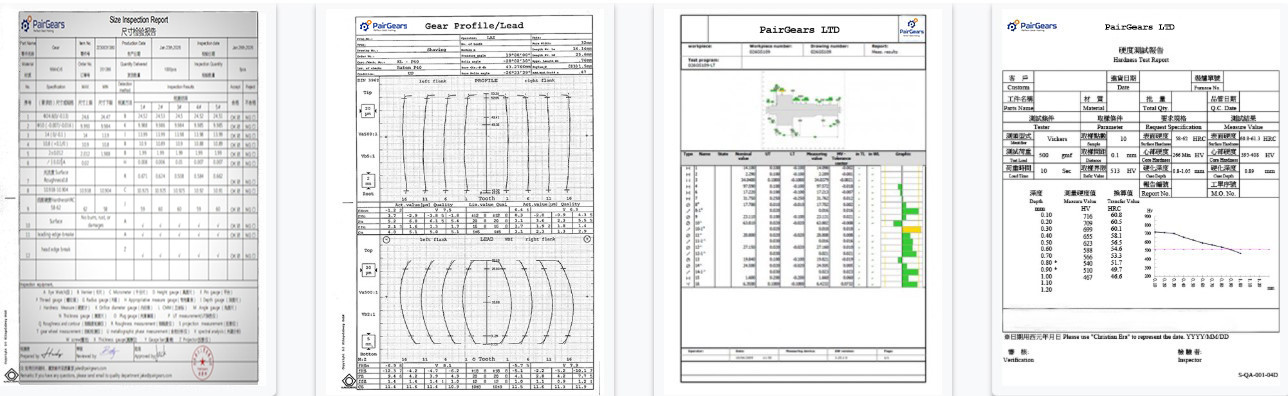
Inspection scope | Dimensional, hardness, material, and gear inspection reports | Defines acceptance criteria before shipment |
If the project moves into quotation or production with too many gaps, the chance of a wrong OEM replacement gear order becomes much higher.
Who Should Pay Special Attention to OEM Replacement Gear Matching?
● Agricultural machinery buyers: Older machines often stay in service for years, and replacement parts may be sourced from worn samples, mixed aftermarket references, or outdated lists.
● Heavy-duty truck repair and parts teams: Truck gearbox and axle parts often need strict matching in tooth data, spline fit, hardness, and mating logic.
● Construction equipment maintenance teams: Downtime pressure is high, so rushed ordering can easily create wrong OEM replacement gear decisions.
● EV drivetrain and compact drive projects: Even small replacement gears can be sensitive to noise, geometry, and fit, so "close enough" is rarely acceptable.
● Aftermarket distributors and rebuilders: These teams often work with old OEM numbers, sample-based sourcing, and mixed references, so identification discipline matters more than speed alone.
Common Mistakes That Cause Wrong OEM Replacement Gear Orders
Before placing an OEM replacement gear order, buyers should try to confirm not only the visible gear shape, but the full working identity of the part. The mistakes below are common reasons replacement projects move in the wrong direction.
| Mistake | What can go wrong | Better buyer action |
| Relying only on the OEM number | The number may have revisions, superseded versions, or model-specific differences. | Combine the number with machine model, photos, and key dimensions. |
Sending only one photo | A single view may hide tooth direction, bore structure, spline form, or wear marks. | Send full gear photos, close-ups, bore/spline photos, and mating part photos. |
Ignoring the mating gear | A new gear can fail if it runs with a worn or mismatched mating part. | Share mating gear condition and assembly position when possible. |
| Copying a worn sample directly | Wear may have changed the original tooth flank, backlash, or bore fit. | Use the sample for review, but confirm critical dimensions and tooth data. |
| Missing heat-treatment needs | Geometry alone does not define service durability. | Confirm hardness, case depth, material route, or report requirements early. |
Skipping application details | A gear for light duty and a gear for shock load may need different review logic. | Share load, speed, lubrication, contamination, and duty condition. |
Why an OEM Number Alone Is Not Enough
An OEM number is helpful, but it should not be treated as the only source of truth. It works best when combined with machine model, photos, key dimensions, and sample condition. In many projects, that extra information is what prevents a wrong replacement gear order.
Before You Place an Order: Final Buyer Checklist
● Do not rely on the OEM number alone. Use it as a starting point, not as the full technical definition.
● Send the old sample if possible. A sample helps, but it should be supported by photos and machine details because wear may have already changed the original condition.
● Provide machine model and gearbox, axle, reducer, or assembly information. This often helps confirm whether the OEM replacement gear belongs to the correct transmission family.
● Share the mating gear or at least clear photos of it. A replacement gear should be reviewed as part of a working pair, not as one isolated part.
● State material, hardness, or report requirements early. If you need hardness confirmation, material certificates, or gear inspection reports, define that before quotation is finalized.
● Explain why the old gear failed. Wear, pitting, chipping, or breakage photos help show whether the issue is only identification or also a service problem.
Why Choose PairGears
PairGears supports OEM-number-based, replacement, and compatible gear projects from OEM numbers, drawings, samples, photos, and application details. For replacement work, we do not only review the visible gear shape. We look at the full working condition behind the order, including tooth data, mating logic, material route, heat-treatment target, fit dimensions, and inspection needs.
We focus on practical review for agricultural machinery, heavy-duty trucks, construction equipment, and EV drivetrains; OEM-number-based and sample-based replacement gear development; material and heat-treatment planning based on real service conditions; inspection logic that connects geometry, hardness, and fit; and workable routes from quotation to sample approval and repeat production.
This is especially useful when the project involves worn parts, discontinued items, unclear old references, or gears that must match an existing mating part in service.
FAQ
Q1: Is an OEM number enough for a correct replacement gear order?
Not always. It is a strong starting point, but machine model, tooth data, fit details, and mating condition are often still needed.
Q2: Can a worn sample still be used for quotation?
Yes. A worn sample is useful, but it should be combined with photos, application details, and any known reference data.
Q3: Why should I send the mating gear too?
Because the new OEM replacement gear should be reviewed as part of a working pair, especially when ratio, backlash, and contact pattern matter.
Q4: What is the biggest mistake in OEM replacement gear orders?
The biggest mistake is assuming that a similar-looking gear or a single old reference is enough to define the full replacement part.
Q5: Can PairGears start a project from OEM numbers, samples, or photos?
Yes. Projects can start from OEM numbers, drawings, samples, photos, and working-condition information.
Conclusion
Wrong OEM replacement gear orders usually happen when identification, fit, tooth data, service condition, and inspection expectations are not reviewed together. The safest approach is to treat the replacement as a working transmission part, not just as a number on a label.
If you are preparing an OEM replacement gear RFQ or trying to avoid a wrong order before production starts, Contact us to send your OEM numbers, drawings, samples, photos, machine model, and working conditions. Our team can review the project and discuss a practical quotation, manufacturing, and inspection plan.