How Long Does Custom Gear Manufacturing Take?
- Share
- publisher
- Jessica
- Issue Time
- Jul 22,2026
Summary
Learn what affects custom gear manufacturing lead time, including drawings, materials, tooling, heat treatment, inspection, approval, and production.
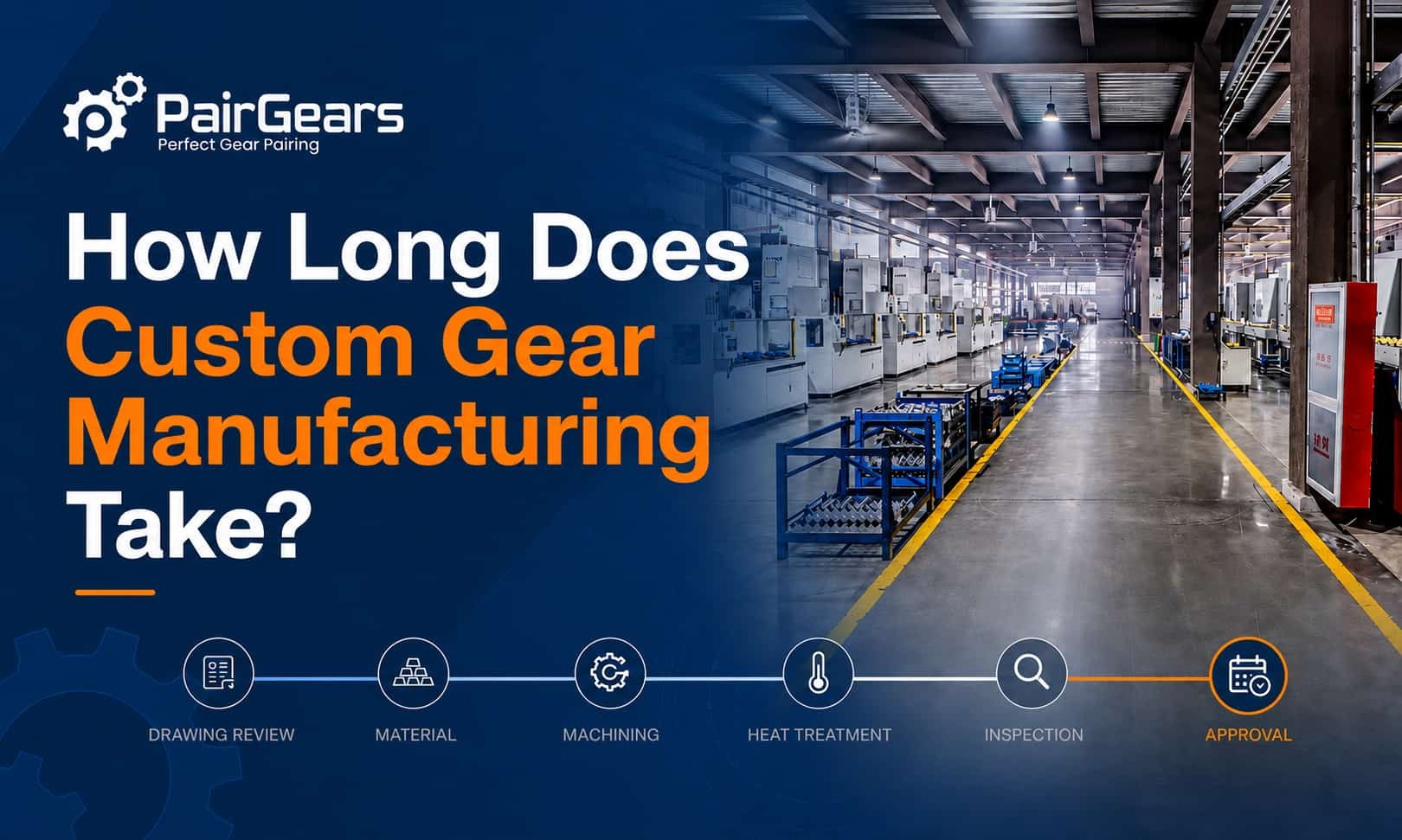
Custom gear manufacturing does not have one fixed lead time. Two gears may look similar, but differences in material, heat treatment, accuracy, tooling, inspection, sample approval, and order quantity can result in different project schedules.
At PairGears, the timeline is reviewed after the drawing or sample has been checked and the main technical and inspection requirements have been clarified. This provides a more reliable basis for planning prototypes and production than estimating delivery from the gear type or quantity alone.
Quick Answer: What Lead Time Should Buyers Expect?
Custom gear manufacturing is normally planned in weeks rather than days. Buyers should provide the final drawing or sample photos, quantity, material, heat treatment, accuracy, inspection needs, and target delivery date. The schedule depends on technical clarification, material availability, tooling, machining difficulty, heat treatment, inspection, approval, and production capacity.
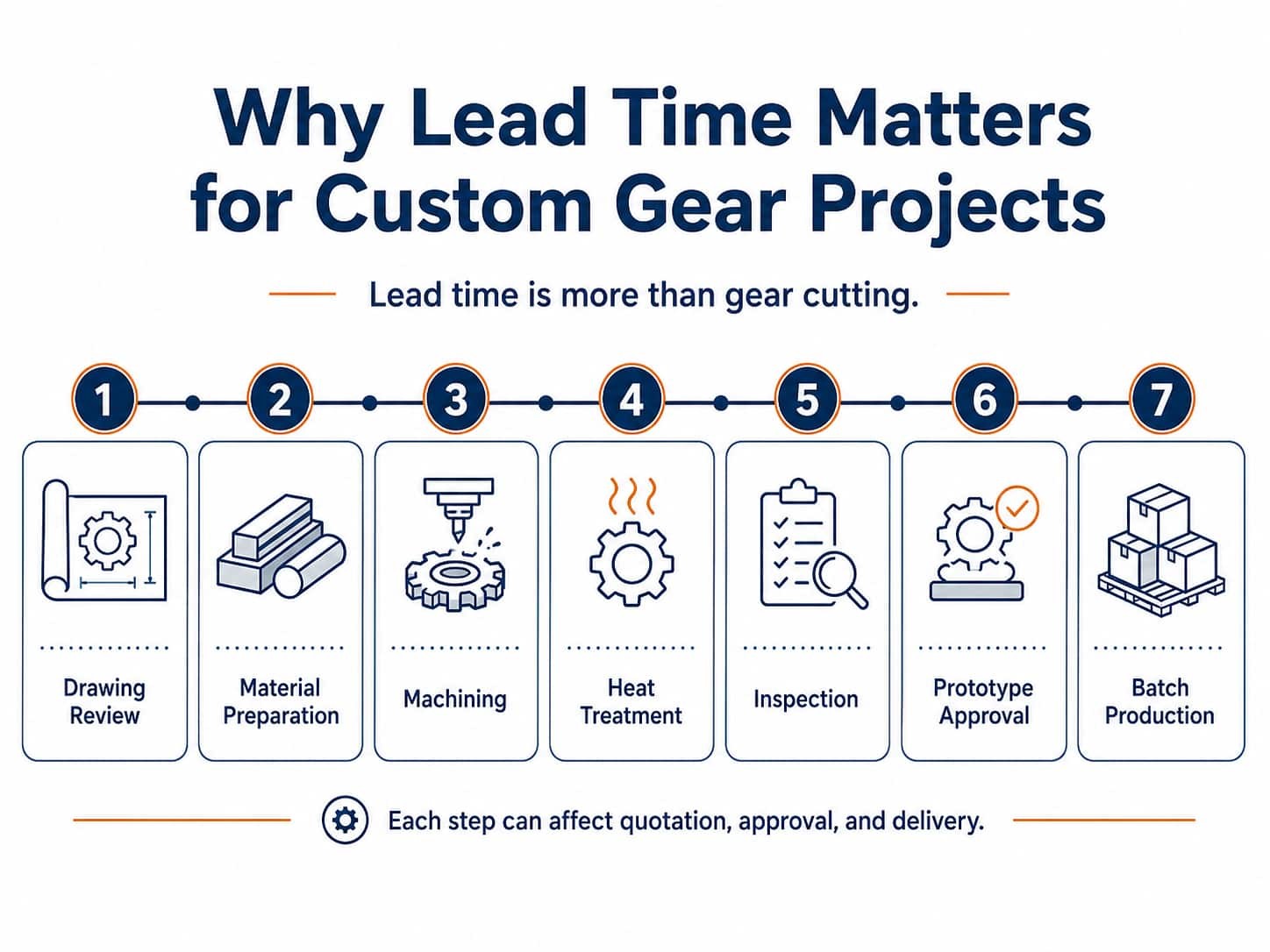
Why Lead Time Matters for Custom Gear Projects
A realistic timeline helps purchasing, engineering, and quality teams coordinate material planning, prototype testing, assembly approval, and production.
Lead Time Includes More Than Gear Cutting
Gear cutting is only one stage of the project. Before machining begins, the supplier may need to:
- Review the drawing or old sample;
- Confirm missing gear parameters;
- Source the required material;
- Check cutting tools and fixtures;
- Plan heat treatment and finishing;
- Define the inspection scope.
These activities form part of the overall schedule. Buyers who want a broader view of the project stages can review the complete custom gear manufacturing process from drawing to production.
Prototype Approval Requires Separate Planning
A finished prototype may still require dimensional review, assembly testing, backlash or meshing checks, and internal approval.
If testing results in a change to the drawing, material, heat treatment, or tolerance, the manufacturing route may need to be reviewed again. Prototype lead time, buyer approval time, and production lead time should therefore be treated as separate stages.
Late Changes Can Affect the Schedule
Changes to the drawing version, hardness, quantity, inspection reports, or packaging requirements may affect work that has already been prepared.
Confirming the main requirements before material procurement and manufacturing helps reduce repeated clarification and rescheduling.
What Should Buyers Provide for an Accurate Lead Time?
Complete project information helps the supplier determine which processes are required and whether additional measurement, tooling, finishing, or approval stages are needed.
| Information Buyers Should Provide | Why It Matters |
|---|---|
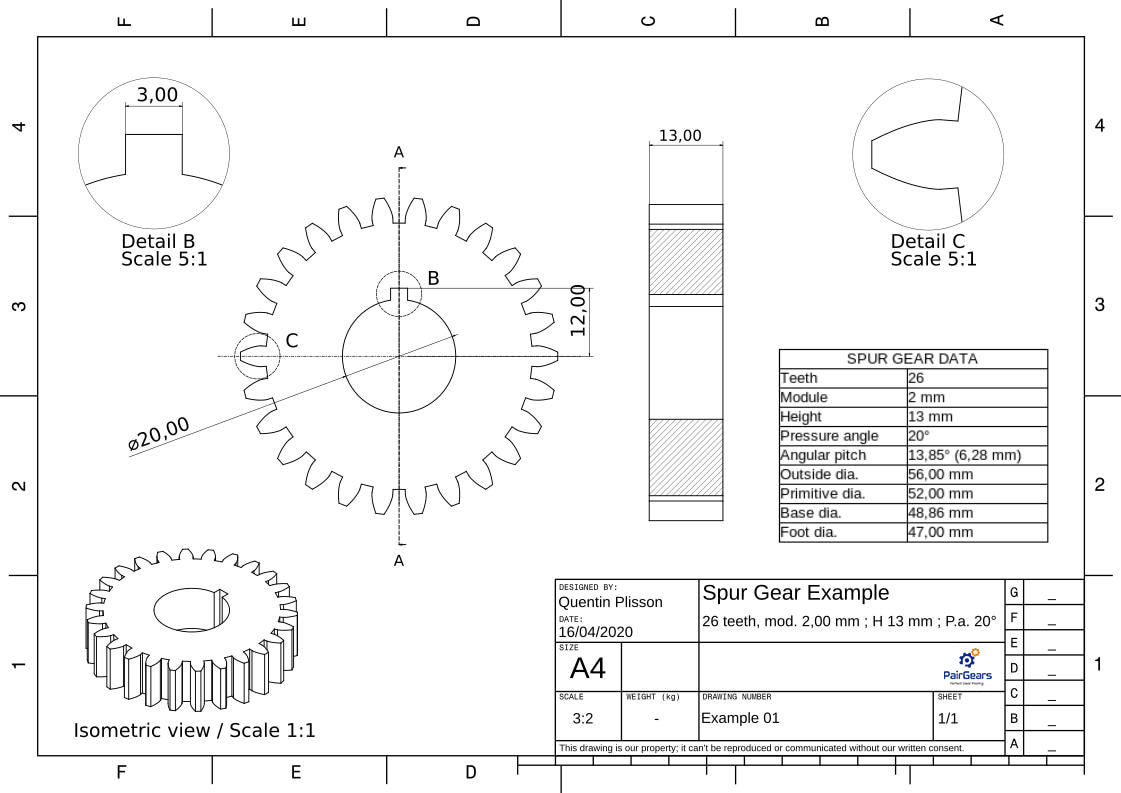
| Final 2D drawing and 3D model | Confirms dimensions, gear parameters, tolerances, datums, and drawing version. |
| Old sample or clear photos | Helps determine whether measurement or reverse engineering is required. |
| Prototype and production quantities | Affects material planning, tooling, machining, inspection, and scheduling. |
| Material grade and standard | Determines whether material is available or needs special procurement. |
| Heat treatment and hardness | Affect furnace scheduling, distortion control, finishing, and reinspection. |
| Gear accuracy grade | Helps define the machining route and inspection scope. |
| Mating gear or assembly information | Supports review of backlash, direction, mounting, and meshing conditions. |
| Inspection and documentation needs | Affect measurement time, reports, certificates, and approval documents. |
| Target delivery date | Clarifies prototype, approval, production, and shipment milestones. |
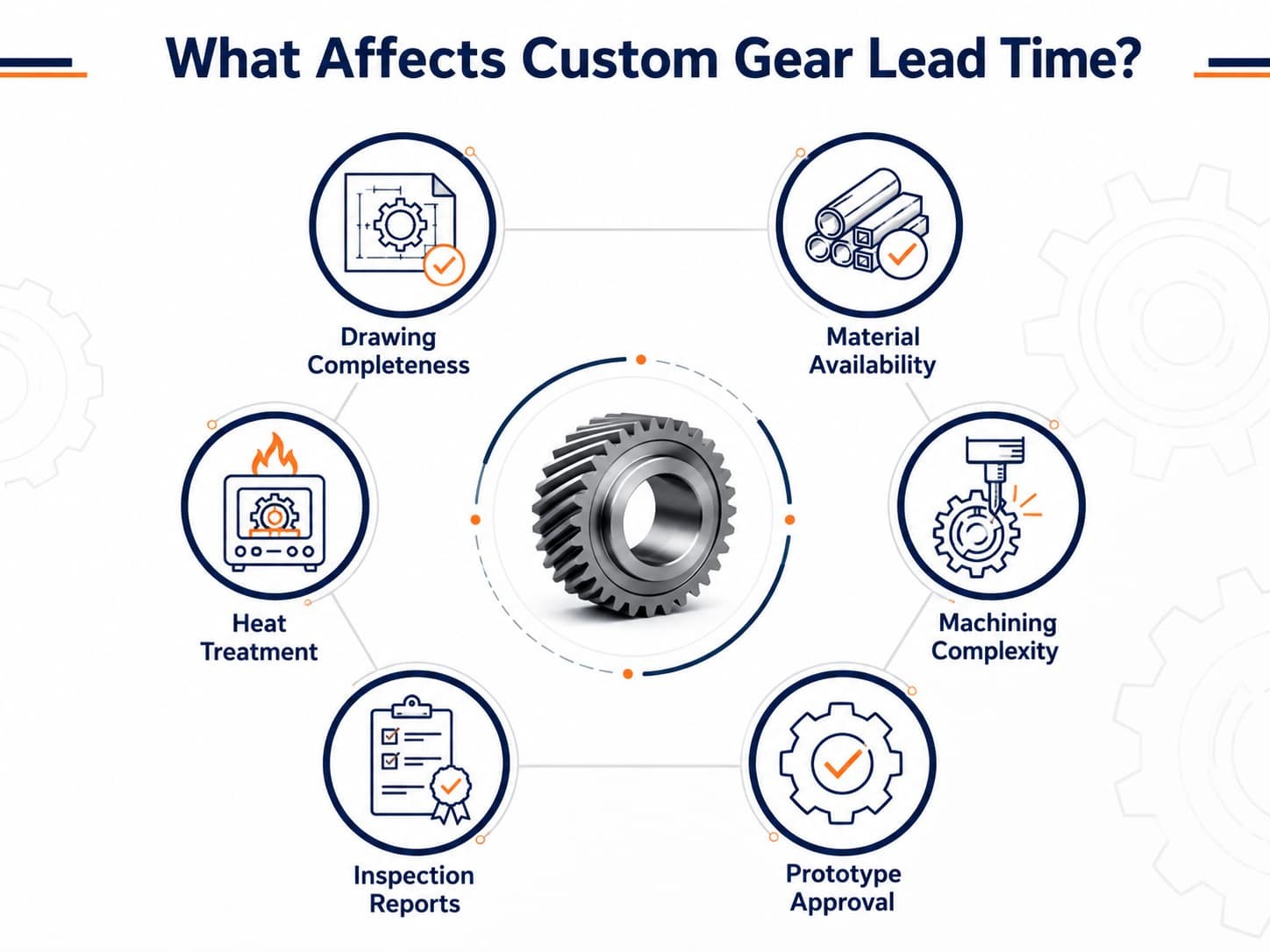
What Affects Custom Gear Manufacturing Lead Time?
Drawing and Sample Review
A complete drawing helps the supplier confirm gear parameters, tolerances, material, heat treatment, and inspection requirements faster. If the drawing is missing key details, extra clarification is needed before quotation or production planning.
For projects that start from an old sample, photos, or an OEM part number, the supplier may need to check wear, measure the sample, confirm mating parts, or rebuild the drawing before manufacturing can begin.
Material and Heat Treatment
Common gear steels are easier to arrange. Special grades, imported materials, designated steel mills, or low-volume material specifications may take longer.
Heat treatment also affects the schedule. Carburizing, induction hardening, nitriding, or quenching and tempering may require furnace scheduling, hardness checking, distortion review, finishing, and final reinspection.
Material should not be changed only to shorten delivery. Any substitution needs technical review and customer approval.
Machining, Tooling and Accuracy
The process route depends on gear type, tooth structure, accuracy level, and finishing requirements. A simple gear may use standard tools and machining steps. A complex gear may need dedicated cutters, fixtures, gauges, or gear grinding.
Higher accuracy also means more control points. The supplier may need intermediate inspection, tooth profile measurement, lead inspection, runout checks, or adjustment after heat treatment.
Mating Parts and Working Conditions
Some gears cannot be reviewed as single parts. Bevel gear pairs, ring and pinion sets, worm gear sets, and matched components may need mating gear data, backlash requirements, contact pattern, mounting distance, or shaft angle.
Working conditions also matter. Load, speed, shock, lubrication, temperature, and duty cycle may influence material, heat treatment, accuracy, and inspection requirements.
Inspection and Approval
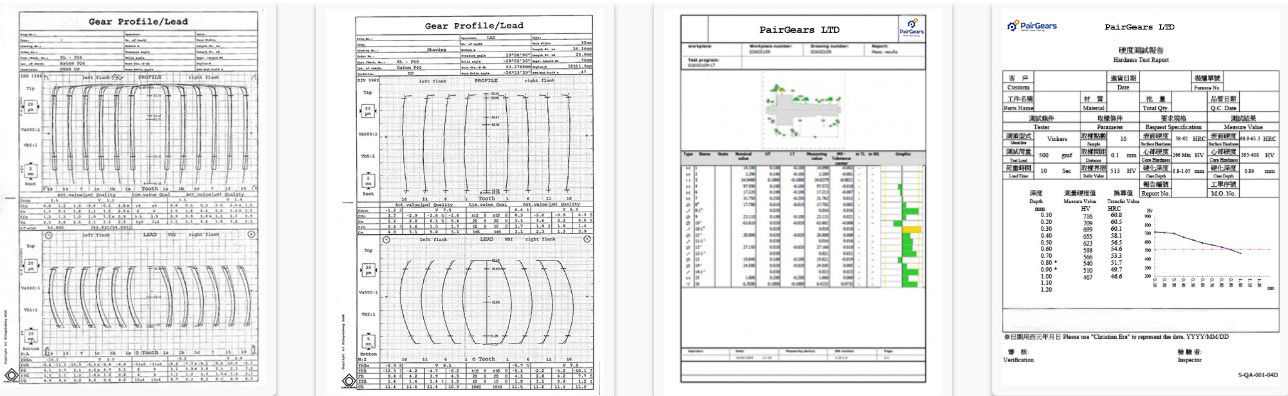
Inspection reports take time, especially when the project requires tooth profile and lead reports, hardness records, material certificates, first article inspection, or PPAP documents.
These requirements should be confirmed before production. Adding new reports after manufacturing may require extra measurement, retesting, or even a new sample.
How PairGears Reviews a Custom Gear Project
PairGears reviews each project according to the available technical information and the confirmed manufacturing and inspection requirements.
Drawing or Sample Review
The initial review covers the 2D drawing, 3D model, sample photos, OEM part number, or old gear sample. When no complete drawing is available, the old part is checked to determine whether measurement, reverse engineering, or mating-part information is needed.
Technical Clarification
Confirm gear parameters, material, heat treatment, accuracy, quantity, critical tolerances, mating conditions, and inspection requirements. Drawing conflicts and version differences should be resolved here.
Process Planning
Plan blank preparation, turning, gear cutting, heat treatment, finishing, inspection, tools, fixtures, gauges, outside heat treatment, mating inspection, and quality documents.
Prototype or First Article
A prototype or first article may be produced for dimensional confirmation, assembly testing, meshing verification, process validation, or production approval. The approval method should be agreed before manufacturing.
Inspection
The prototype or first article is inspected according to the confirmed scope, which may include dimensions, runout, tooth profile, lead, hardness, case depth, or mating conditions.
Approval and Production
Batch production is arranged after the prototype, first article, and required documentation have been approved. If the route differs from the prototype route, inspection, packaging, and delivery planning should be reconfirmed.
What Evidence Can Buyers Review Before Approval?
Buyers should not rely only on a general statement that a gear has been inspected. The available evidence should match the agreed project scope.
Depending on the order, review records may include:
Sensitive information such as customer names, drawing numbers, order numbers, and equipment details should be removed before reports or project photos are published.
A typical inspection sequence may include:
Why Choose PairGears?
PairGears supports custom precision gear projects based on drawings, samples, or OEM part numbers.
Project support may include:
- Drawing and sample review
- Technical and manufacturability clarification
- Prototype or first article production
- Inspection according to the agreed scope
- Production planning after approval
FAQ
How Long Does a Custom Gear Prototype Usually Take?
There is no single standard lead time. A project with complete drawings, available material, and suitable tooling can normally move forward more easily. Measurement, new tooling, heat treatment, gear grinding, or additional documentation will add more stages.
Is a Small-Batch Order Always Faster Than a Production Order?
Not necessarily. A small batch reduces repeated machining time, but programming, tooling, material preparation, heat treatment, inspection, and approval are still required.
How Does Heat Treatment Affect Gear Manufacturing Time?
Heat treatment adds furnace scheduling, hardness control, distortion assessment, and possible finishing. Gears requiring carburizing, grinding, or reinspection after heat treatment normally follow a longer process route.
Can Custom Gear Manufacturing Be Expedited?
Some waiting time may be reduced when material is available, suitable tooling already exists, drawings are approved early, and inspection documents are prepared in advance. Necessary technical review, heat treatment, inspection, and prototype approval should not be skipped only to shorten delivery.
When Does Manufacturing Lead Time Officially Start?
Lead time normally starts after the final drawing, quantity, material, heat treatment, inspection requirements, and commercial terms have been confirmed. The date of the first inquiry is generally not the start of formal production.
Conclusion
Custom gear manufacturing lead time depends on technical review, material, tooling, machining, heat treatment, inspection, approval, and production planning—not only on the hours required to cut the gear teeth.
Providing complete drawings, sample photos, quantities, material requirements, mating information, inspection needs, and target dates allows the supplier to prepare a more reliable project schedule.
Send Your Project Information for Review
Send your drawing, sample photos, or OEM part number to PairGears for a technical review and quotation.