How Gears Transfer Power in an Electric Bicycle
- Share
- publisher
- Jessica
- Issue Time
- May 18,2026
Summary
Learn how gears transfer power in an electric bicycle, including hub motors, mid-drives, gear ratio, torque flow, wear points, and key inspection checks.
Introduction
When people talk about gears on an electric bicycle, they often think only about shifting. In real drivetrain design, the more important question is how torque moves through the system. Power can come from the rider, the motor, or both. The gear path changes depending on whether the bike uses a hub motor, a mid-drive, an internal gear hub, or a derailleur system.
At PairGears, we manufacture custom precision gears and gear sets for Agricultural Machinery, Heavy Truck, Construction Equipment, and EV drivetrains. For electric bicycle and light EV projects, the focus is usually on compact reduction, stable torque transfer, low noise, wear resistance, and repeatable quality in small precision gears. This guide explains how gears transfer power in an electric bicycle and what buyers and engineers should check when reviewing e-bike gear components.
What gears do in an electric bicycle
Electric bicycle gears transmit and modify torque between the rider, motor, chain drive, and wheel so the bike can start, climb, cruise, and accelerate efficiently.
Why gear layout matters in an e-bike
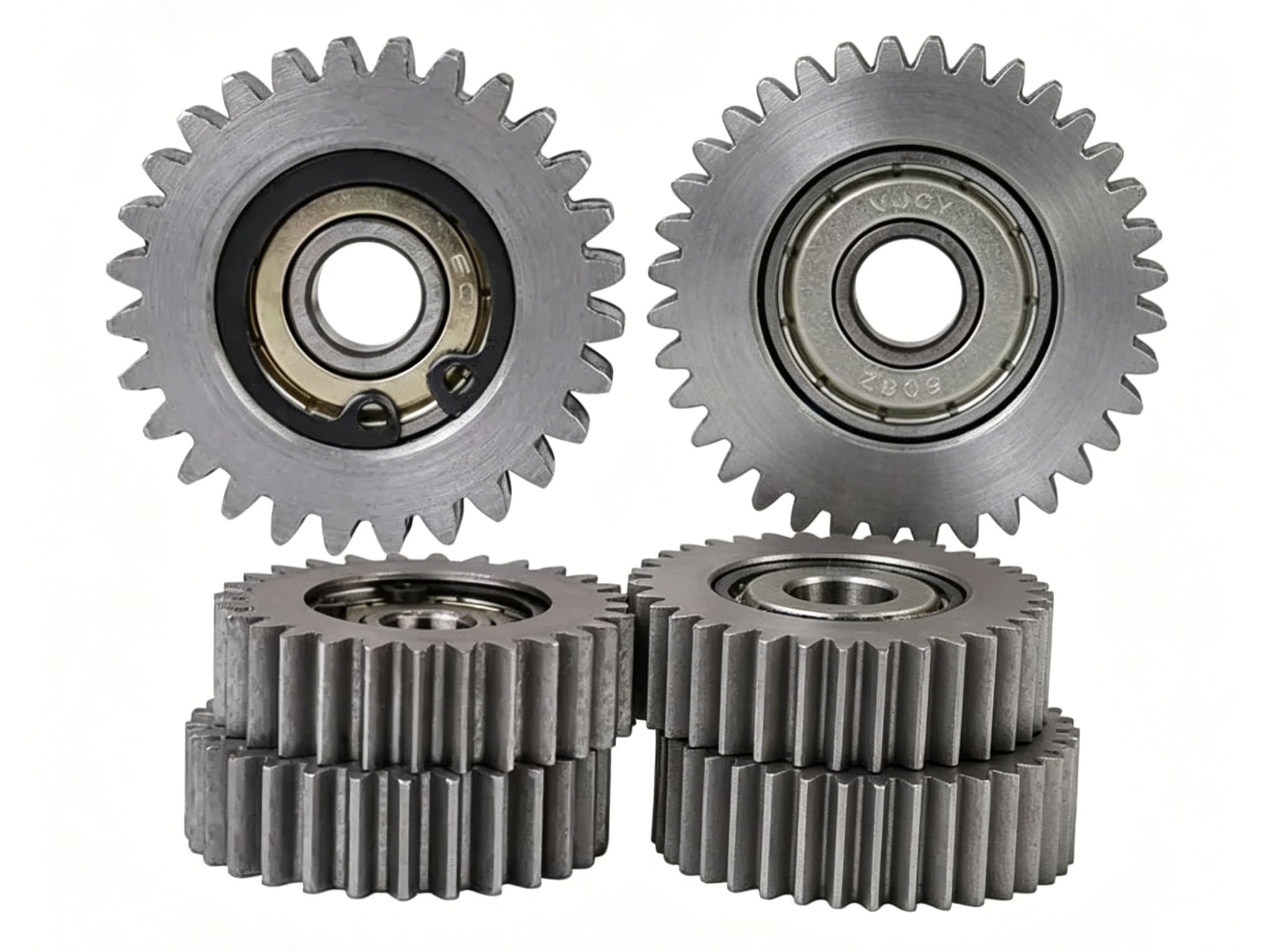
The first thing to confirm is where the motor sits. That decision changes the entire power path. A rear or front hub motor often uses an internal reduction stage to bring motor speed down and increase wheel torque. A mid-drive system usually sends motor torque into the crank area, where it combines with rider input and then passes through the external drivetrain.
The second thing to understand is that e-bike gears are not only about speed change. They also affect efficiency, noise, wear, heat, and control feel. Small precision gears running at high speed inside a motor reduction stage do very different work from external sprockets or hub gears. Even when both are called "bike gears," their engineering priorities are not the same.
The third point is that compact e-bike systems often push small gears harder than people expect. Motor speeds can be high, space is limited, and customers still expect quiet operation and long life. That is why material choice, heat treatment, tooth geometry, lubrication, and inspection matter early, not only after a failure appears.
Main e-bike gear layouts and how power moves
| Drive layout | How power flows | Main strengths | Main watch-outs |
| Hub motor with internal reduction | Motor → small reduction gears → hub shell → wheel | Compact, simple rider interface, fewer external transmission changes | Internal gear wear, noise, heat, lubrication, limited service access |
Direct-drive hub motor | Motor rotor → wheel directly, no reduction gears | Simpler internal structure, fewer reduction parts | Larger motor size, lower torque density at low speed |
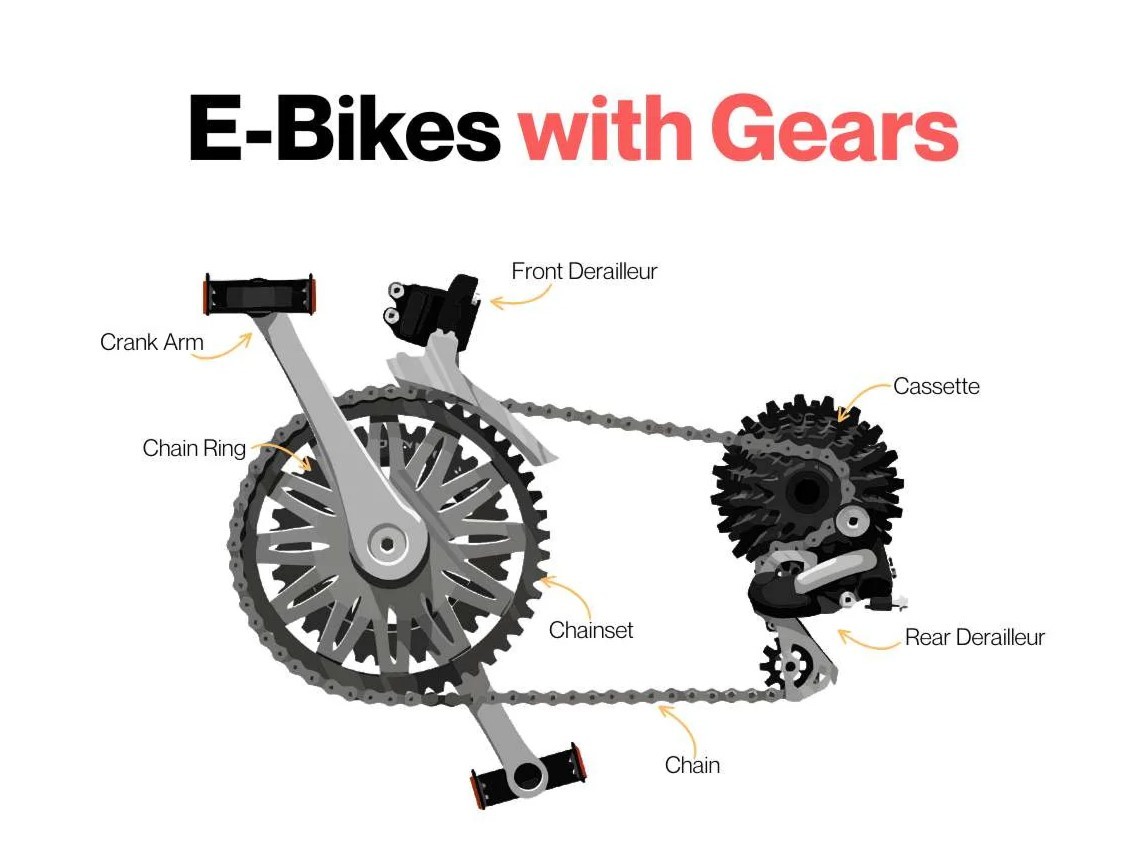
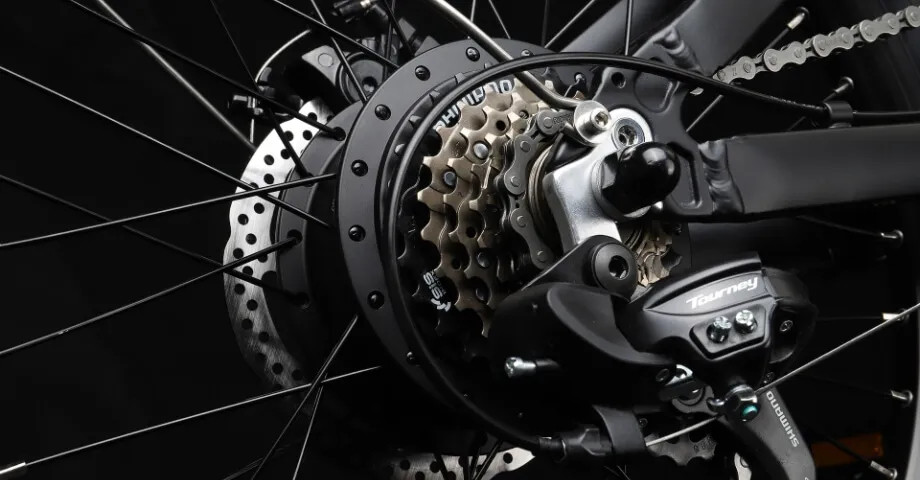
Mid-drive with derailleur system | Motor + rider input → crank / chainring → chain → rear sprocket set → wheel | Uses external ratios efficiently, good climbing performance | Chain and sprocket wear, shifting under load, alignment |
Mid-drive with internal gear hub | Motor + rider input → chain/belt → internal gear hub → wheel | Cleaner external layout, controlled ratio package | Hub limits, internal complexity, torque limits must be checked |
| Planetary reduction inside drive unit | Motor → planetary gear stage → output shaft / chainring | High reduction in limited space, common in compact EV drive units | Precision, heat, noise, and carrier/ring alignment control |
In simple terms, a hub motor usually hides its reduction gears inside the wheel area, while a mid-drive system moves much of the ratio work into the central drive and rear transmission. That is why the same e-bike performance target can lead to very different gear designs.
Who should care about these gear differences
● E-bike drive unit designers
Need to understand how motor speed, reduction ratio, and torque output affect noise, durability, and packaging.
● Procurement teams for EV light-drive parts
Need to know whether the supplier is quoting external transmission parts, internal reduction gears, or the full matched gear set.
● Quality and manufacturing engineers
Need to separate cosmetic dimensions from functional gear checks such as runout, tooth accuracy, backlash, and hardness.
● Aftermarket and service teams
Need to know whether the wear issue comes from the external drivetrain, internal reduction gears, or alignment and lubrication conditions.
Key gear terms and checks in electric bicycle systems
| Check item | What to confirm | Why it matters |
| Motor type | Hub motor or mid-drive | Changes the whole power path |
Reduction ratio | Internal stage ratio and/or external chain ratio | Determines wheel torque and speed response |
Gear type | Spur, helical, planetary, hub gear, sprocket set | Each type has different noise, wear, and load behavior |
Torque path | Where rider torque and motor torque combine | Helps identify overloaded parts and wear points |
Material and heat treatment | Steel grade, hardness route, wear resistance | Critical for small high-speed gears |
| Backlash and fit | Internal gear play and meshing clearance | Affects noise, response, and wear |
Lubrication method | Grease, oil, sealed unit assumptions | Strongly affects efficiency and life |
| Inspection method | Tooth profile, runout, hardness, assembly checks | Supports stable batch quality |
Practical engineering note
In e-bike projects, a "working gear" is not just the gear tooth itself. Its performance also depends on shaft fit, housing stiffness, bearing support, lubrication retention, and thermal behavior. Small reduction gears may fail early not because the tooth form is wrong, but because the full drive unit does not keep the contact stable in service.
What good power-transfer design improves
| Benefit | What improves | Practical result |
| Better climbing torque | Ratio is matched to motor output | Stronger low-speed performance |
| Smoother ride feel | Gear engagement and torque flow stay stable | Lower shock and better control |
Lower noise | Tooth form, backlash, and material route are matched | Better user experience |
Better durability | Wear, heat, and lubrication are controlled | Longer service life |
More compact packaging | Reduction is placed where it works best | Smaller, cleaner drive layout |
For e-bike systems, the right gear layout is usually the one that balances compact size with realistic service conditions. A very small reduction stage may look attractive on paper, but if it runs too hot or wears too quickly, it is not the right solution.
Practical review points when sourcing e-bike gears
● Confirm where the reduction happens.
Ask whether the quoted gears are part of a hub motor stage, a mid-drive reduction stage, or only the external chain transmission.
● Review the real torque path.
Internal motor gears, chainrings, sprockets, and hub gears do not all see the same load. Make sure the supplier understands which part is carrying peak torque.
● Check noise and wear assumptions early.
Small gears in EV/light EV systems often fail on noise, wear, or heat before they fail on simple static strength.
● Ask about material and heat treatment as a pair.
For compact high-speed gears, surface durability and core toughness both matter. One hardness value alone is not enough.
● Confirm inspection logic.
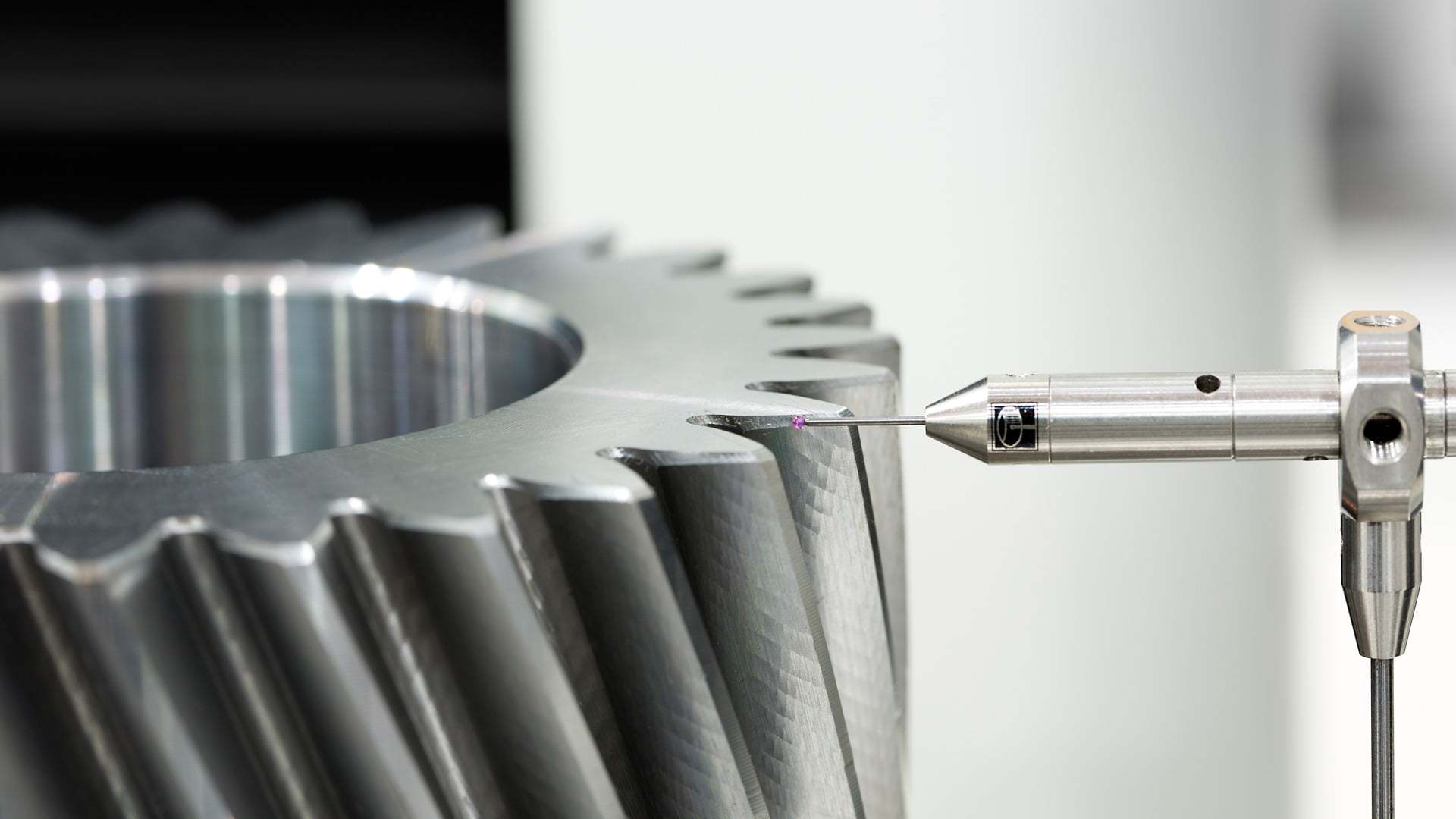
For precision small gears, backlash, runout, tooth quality, and functional fit to shafts or carriers should be part of the review, not an afterthought.
Why Choose PairGears
At PairGears, we look at e-bike and light EV gears as working transmission parts, not just as small machined components. For these projects, compact size often increases the importance of geometry control, wear resistance, lubrication, and repeatable batch quality.
● Practical review of torque flow and reduction layout
● Small precision gear manufacturing for EV-related applications
● Material and heat-treatment choices matched to wear and load
● Inspection planning for gears, shafts, and mating interfaces
● Custom support from drawing review to repeat production
This is especially useful for projects involving mid-drive gears, planetary reduction sets, and other compact EV transmission parts where noise, heat, and durability must be controlled together.
FAQ
Q1: Do all electric bicycles use the same type of gears?
No. Some use hub motors with internal reduction gears, some use direct-drive hubs, and others use mid-drive systems with external or internal ratio changes.
Q2: What is the difference between a hub motor and a mid-drive in terms of gears?
A hub motor usually contains the reduction stage inside the motor area, while a mid-drive typically sends torque through the chain drive and rear transmission.
Q3: Why do small e-bike gears wear faster than expected?
Because they often run at high speed in a compact space. If material, heat treatment, lubrication, or alignment are not matched well, wear can increase quickly.
Q4: Are planetary gears common in electric bicycles?
Yes. Planetary reduction stages are common in compact EV drive units because they can provide useful reduction in limited space.
Q5: What should I provide when asking for custom e-bike gears?
A drawing or sample, drive layout, target ratio, motor speed, torque data, lubrication assumptions, and any space or noise limits.
Conclusion
Electric bicycle gears do more than help the bike change speed. They shape how motor torque and rider input move through the drivetrain, and that affects climbing force, smoothness, wear, noise, and service life. The right solution depends on the drive layout, reduction target, gear type, and how well the system controls heat, fit, and lubrication.
If you are preparing an RFQ, reviewing an e-bike gear layout, or working on a custom mid-drive or planetary reduction project, you are welcome to Contact Us with your drawings, samples, and operating conditions so PairGears can help align the gear design with a practical manufacturing and inspection plan.