How Can a Worn Gear Affect Machine Performance?
- Share
- publisher
- Jessica
- Issue Time
- Jun 19,2026
Summary
Learn how a worn gear affects noise, vibration, heat, efficiency and reliability, plus what buyers should check before ordering a replacement gear.
Introduction
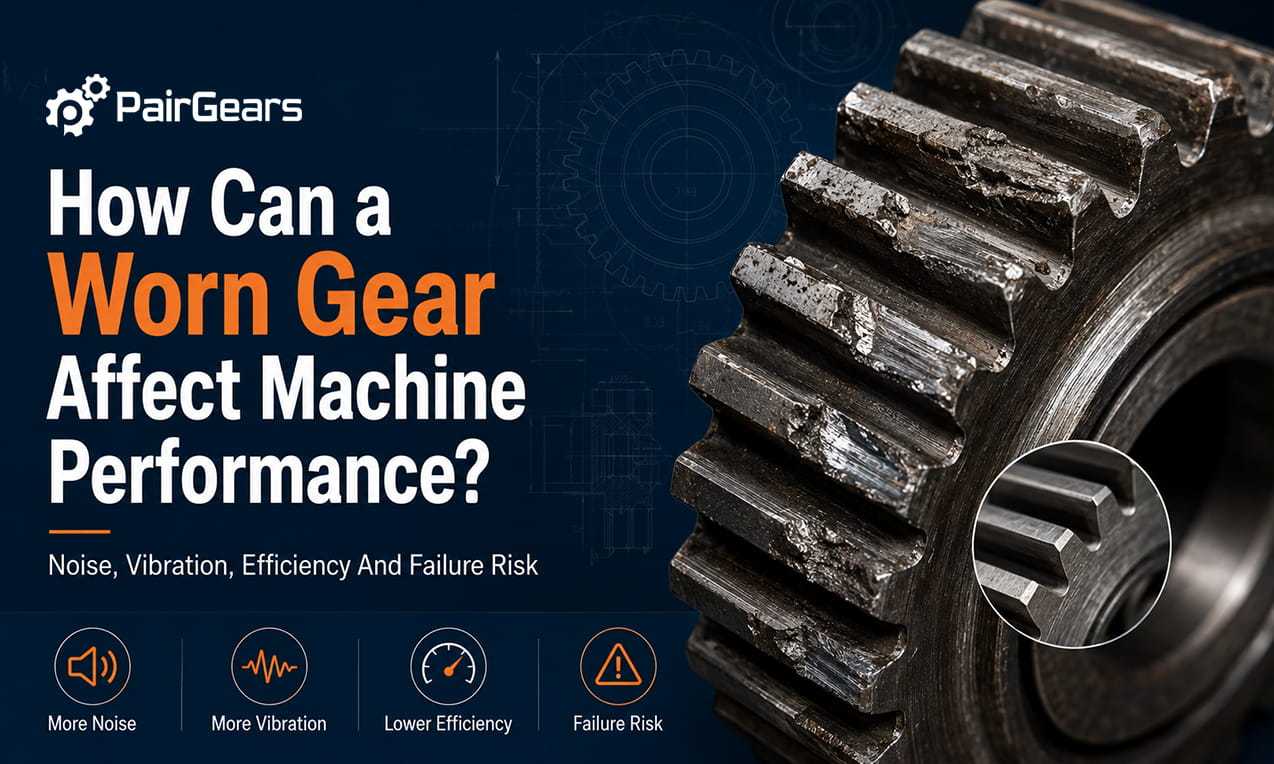
A worn gear may not look serious at first. It may only show a shiny tooth surface, small pits, chipped edges, or slightly louder running noise. However, in agricultural machinery, heavy-duty trucks, construction equipment and EV-related drive systems, even small gear wear can affect how the whole machine performs.
Gears work together with shafts, bearings, mating gears, housings and lubrication. When one gear starts to wear, the problem may spread to other parts of the transmission system. For buyers, the key question is not only whether the gear can still rotate, but whether the worn gear is already causing noise, vibration, poor fit, heat, lower efficiency or higher failure risk.
What Is a Worn Gear?
A worn gear is a gear that has lost part of its original tooth shape, surface condition, fit or size after long use. Wear may appear on the tooth flank, tooth tip, tooth root, bore, keyway or side face.
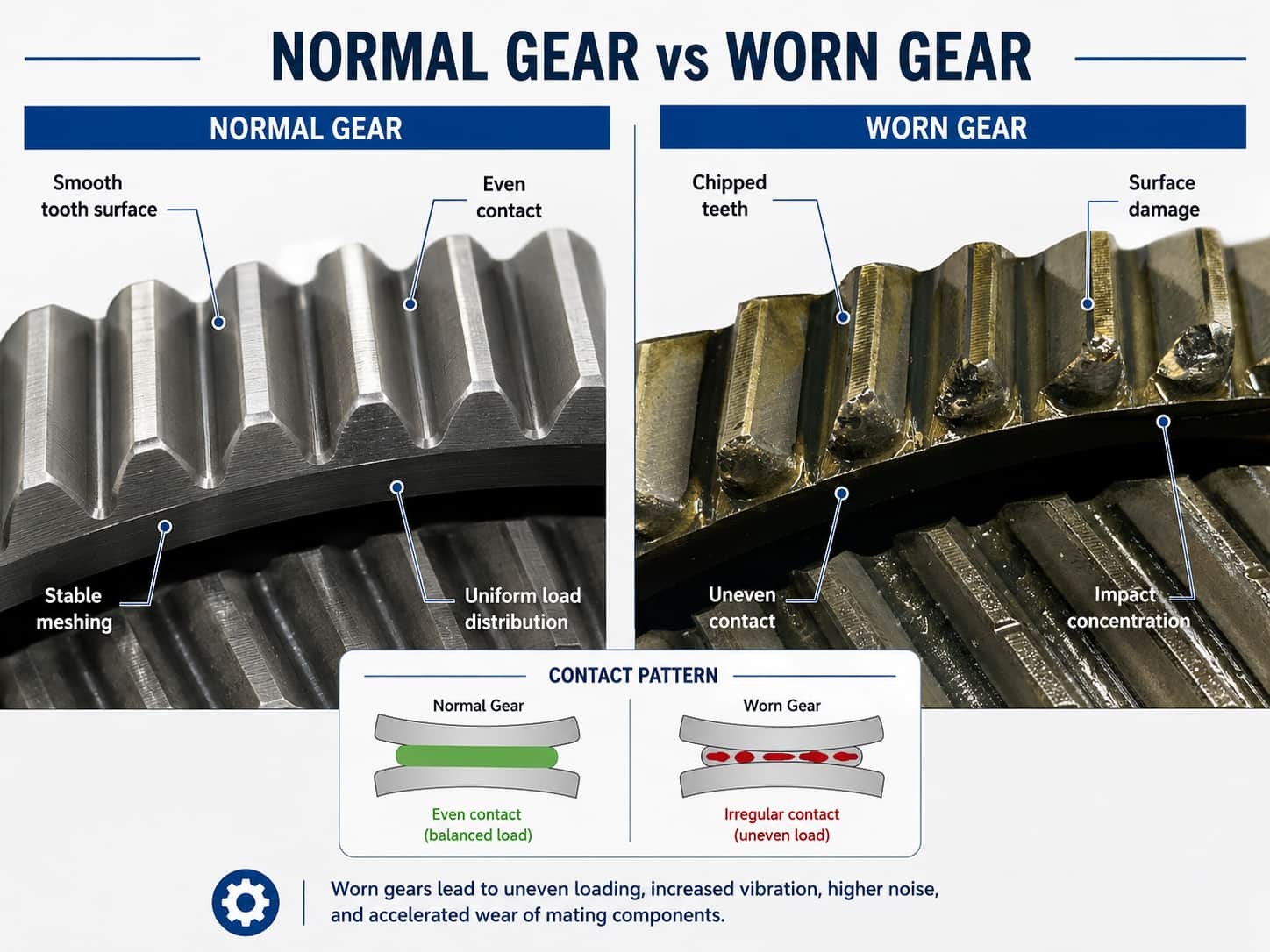
Common signs include polished tooth surfaces, small pits, scratches, chipped teeth, loose shaft fit, larger backlash, noise, vibration or higher operating temperature. A worn gear may still run for a period of time, but its contact condition may no longer be stable.
For replacement projects, this matters because a badly worn sample may not show the original design clearly. If buyers only copy the damaged part without checking tooth data, mating gears, material and application, the new replacement gear may not fit or perform correctly.
Why a Worn Gear Should Not Be Ignored
Gear wear often starts slowly. At first, the machine may only sound different. Later, the same issue may lead to stronger vibration, heat, poor meshing, damaged mating gears or sudden tooth failure.
This is especially important for heavy-duty applications. Farm equipment may work under dust, shock load and long operating hours. Heavy-duty trucks may carry high torque for long distances. Construction equipment often works under impact and uneven load. In these conditions, a worn gear can create more than a simple maintenance issue.
If the machine is still running, buyers may delay replacement. But once the gear breaks completely, sourcing becomes more urgent and more difficult. Preparing photos, OEM numbers, machine models, tooth count and basic dimensions in advance can make the replacement gear review much faster.
How a Worn Gear Affects Machine Performance
1. A Worn Gear Can Increase Noise
A healthy gear set should mesh smoothly. When the tooth surface becomes worn, rough, chipped or uneven, the teeth may no longer contact in a stable way. This can create whining, grinding, clicking or knocking sounds, especially under load. Gear noise may also come from bearings, lubrication or alignment, but if the sound becomes worse after long use, tooth wear should be checked carefully.
2. A Worn Gear Can Create Vibration
A worn gear can make the machine vibrate because the tooth contact is no longer even. Some teeth may carry more load, while other areas may create impact during rotation. This vibration can spread to shafts, bearings, housings and connected parts. If the machine vibrates more when the load changes, buyers should check the gear, mating gear, shaft fit and bearing condition together.
3. A Worn Gear Can Reduce Efficiency
The main job of a gear is to transfer power smoothly. When a gear wears, friction may increase and the contact area may become less efficient. The machine may need more energy to do the same work. This may appear as higher temperature, unstable output, lower pulling force or reduced drive performance. In heavy-duty machines, small efficiency loss can also increase downtime and operating cost.
4. A Worn Gear Can Change Backlash and Fit
Backlash is the small clearance between mating gear teeth. Some backlash is normal, but too much clearance can cause knocking, lost motion and unstable transmission. When tooth thickness is reduced by wear, backlash may increase. Bore or keyway wear can also make the gear fit loosely on the shaft. For replacement projects, buyers should not only copy a worn sample, because its current size may not represent the original design.
5. A Worn Gear Can Damage Mating Parts
Gears usually work as a set. If one gear is worn, it may create uneven contact and damage the mating gear. The mating gear may then show polishing, pitting, scratches, chipped edges or abnormal wear. Bearings and shafts may also carry extra load. That is why buyers should send photos of both the damaged gear and the mating gear before ordering a replacement gear.
6. A Worn Gear Can Lead to Sudden Failure
Some worn gears keep running even after visible damage appears, but hidden cracks or fatigue may already exist near the tooth root or tooth surface. Under heavy load, the gear may suddenly break. A broken tooth can damage other gears, enter the transmission system, or stop the machine immediately. If the gear already has heavy wear, cracks, chipped teeth, abnormal noise or strong vibration, it is better to start the replacement review early.
Common Signs of a Worn Gear
| Sign | What It May Mean | What Buyers Should Check |
| More noise | Uneven tooth contact or surface damage | Tooth surface, lubrication, mating gear |
| Vibration | Poor meshing, bearing issue or fit problem | Shaft, bearing, bore, mounting position |
| Shiny tooth surface | Polishing or abnormal friction | Lubrication, load, surface finish |
Small pits | Contact fatigue or overload | Hardness, load, contact pattern |
Chipped teeth | Shock load or fatigue | Tooth root, mating gear, application |
Loose fit | Bore or keyway wear | Bore size, keyway, shaft condition |
Higher heat | More friction or poor lubrication | Oil condition, load, tooth contact |
This table is only a first check. A proper review should also consider the application, working load, material, heat treatment, mating gear and machine condition.
What Buyers Should Send Before Ordering a Replacement Gear
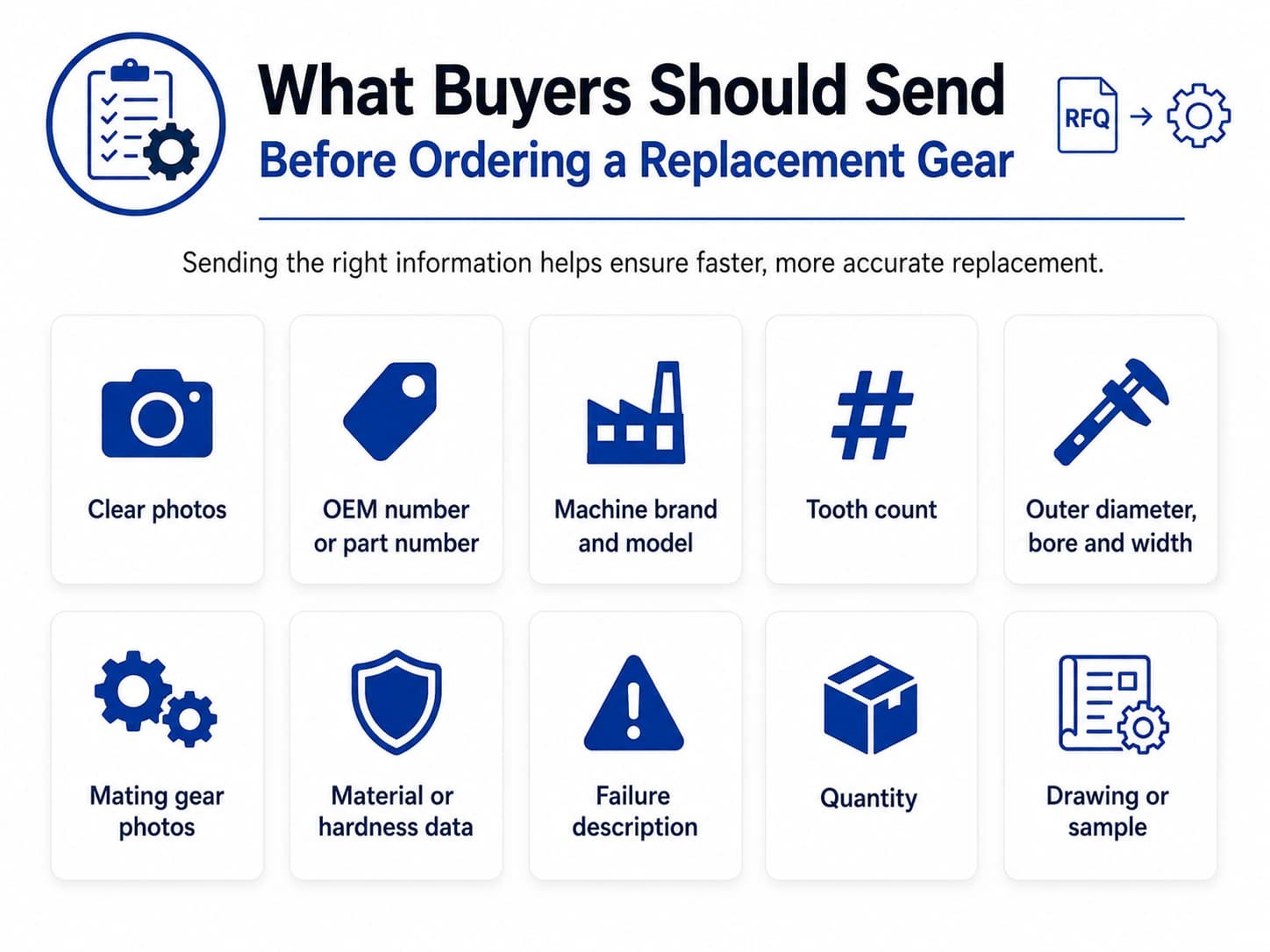
A clear RFQ helps suppliers review a worn gear project faster and with fewer wrong assumptions. If the gear is worn or damaged, buyers should send more than one photo and include the basic information below so the replacement review can move forward more efficiently.
| Information | Why It Helps |
| Clear photos | Show tooth shape, damage, bore, keyway and surface condition |
| OEM number or part number | Helps identify the part or similar replacement history |
| Machine brand and model | Shows the application and working load |
Tooth count | Basic data for gear matching |
Outer diameter, bore and width | Helps with size review |
Mating gear photos | Reduces mismatch risk |
Material or hardness data | Helps confirm wear resistance and heat treatment |
Failure description | Shows whether wear is normal, sudden or load-related |
Quantity | Affects process, cost and lead time |
Drawing or sample | Improves production accuracy when available |
Mistakes Buyers Should Avoid
◆Sending only one unclear photo
A blurry photo cannot show tooth details, bore size, keyway condition or damage position. Buyers should take photos from the front, side, bore, tooth area and damaged section.
◆Ignoring the mating gear
If the mating gear is also worn, replacing only one part may not solve the problem. It may cause noise, poor contact or fast wear on the new gear.
◆Copying a badly worn sample directly
A worn sample is useful, but it may not show the original design clearly. Some dimensions may need to be checked against the mating gear, machine model or drawing.
◆Choosing only by price
A replacement gear is not only a metal part. Material, heat treatment, machining accuracy, inspection and packaging all affect performance. A very low price may lead to poor fit or short service life.
◆Waiting until the machine stops
When the gear fails completely, buyers have less time to compare options. Early review gives more time for measurement, engineering checks and production planning.
How PairGears Reviews Worn Gear Projects
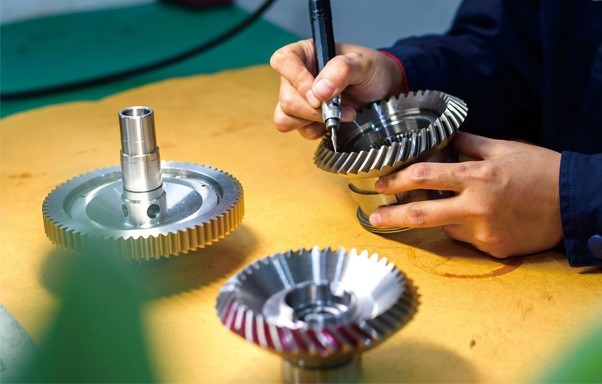
For worn gear projects, PairGears can start the review from drawings, samples, OEM numbers, photos, machine models or application details. The goal is to confirm whether the replacement can be matched and produced correctly, not to copy a damaged part without checking the working conditions.
If the buyer has no drawing, clear photos and basic dimensions can still help with the first review. For complex parts, a sample and mating gear information may be needed. This helps check whether the part can be made, what material and heat treatment may be suitable, and what inspection requirements should be confirmed before production.
The goal is not to copy a damaged part blindly. The goal is to understand how the gear works in the machine and reduce the risk of mismatch.
FAQ
Q1: Can a worn gear still be used?
Sometimes, yes. But if the gear has heavy wear, noise, vibration, pitting, chipped teeth or loose fit, it should be reviewed. Continued use may damage mating parts.
Q2: What photos should I send for a worn gear review?
Send front, side, tooth surface, bore, keyway, damaged area and mating gear photos. If there is an OEM number or machine nameplate, send that too.
Q3: Can PairGears quote a replacement gear without a drawing?
In many cases, the first review can start from photos, OEM numbers, machine model, tooth count and basic dimensions. A sample or drawing is better for accurate production.
Q4: Why should the mating gear be checked?
Because gears work together. If the mating gear is worn, a new gear may not mesh correctly and may wear out faster.
Q5: What helps speed up a replacement gear quote?
Drawings, sample photos, OEM number, tooth count, dimensions, material, hardness, quantity and application details all help.
Conclusion
A worn gear can affect much more than one part. It may increase noise, vibration, heat, backlash and power loss, while also putting extra stress on mating gears, shafts, bearings and other connected components. In heavy-duty applications, these small changes can slowly reduce machine reliability and increase downtime risk.
Before a worn or damaged gear fails completely, collect clear photos, OEM numbers, machine models, tooth count, basic dimensions and failure details. Send the information to PairGears , so the replacement route can be reviewed quickly.