Gear vs Pinion What Is the Difference
- Share
- publisher
- Jessica
- Issue Time
- Apr 20,2026
Summary
Gear and pinion are different roles in one gear pair. This guide explains their meaning, working differences, wear risks, and key sourcing checks.
Introduction
In many gear projects, people use "gear" and "pinion" as if they were just two ways to say the same thing. In basic language, that is understandable, because both parts are gears. In real engineering work, however, the difference matters. Once a gear pair is put into service, the larger gear and the smaller pinion do not live under exactly the same conditions, and they do not carry the same design risk.
At PairGears, we manufacture custom precision gears and gear sets for agricultural machinery, heavy-duty trucks, construction equipment, and EV drivetrains. In factory practice, early wear, noise, and service-life issues often appear first on the pinion side because it usually runs faster, meshes more often, and sees more stress cycles per tooth. This guide explains what gear and pinion mean, how they differ, and what buyers should check before sourcing a gear pair.
What is the difference between a gear and a pinion?
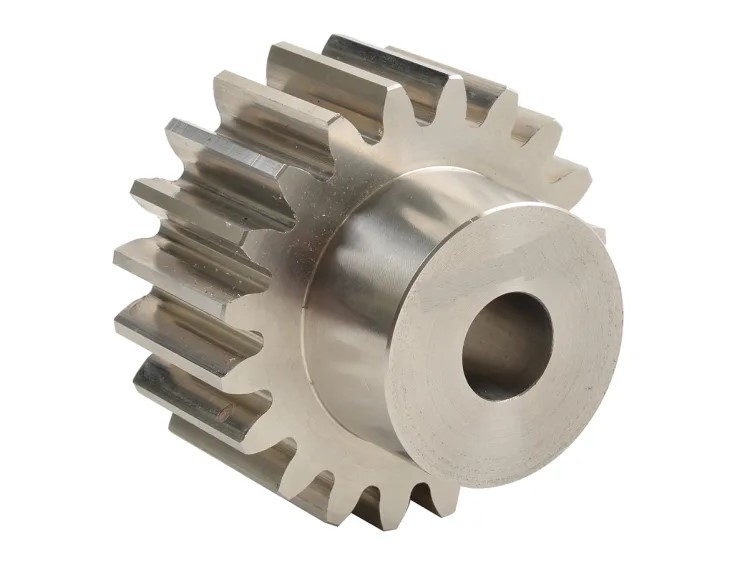
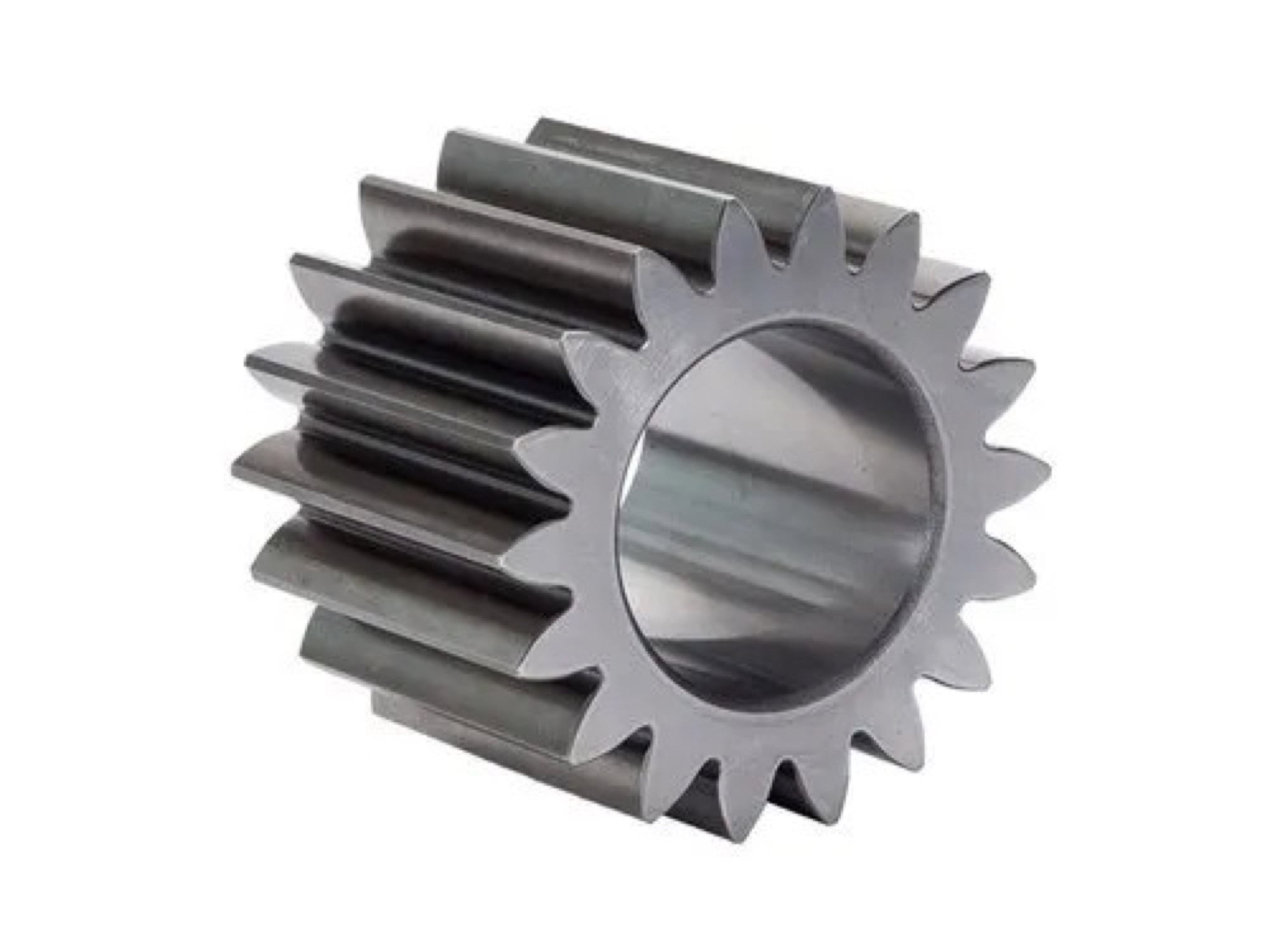
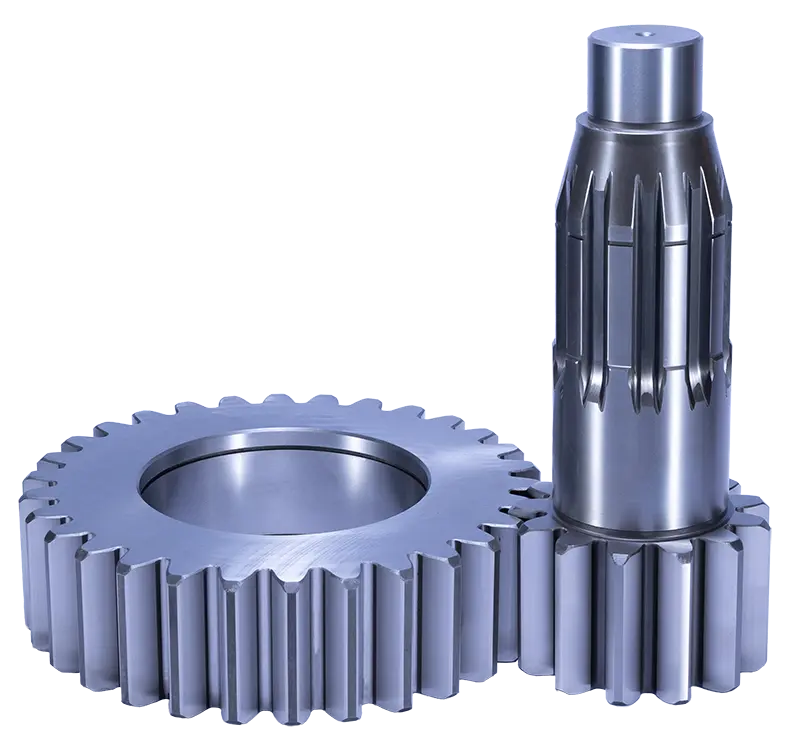
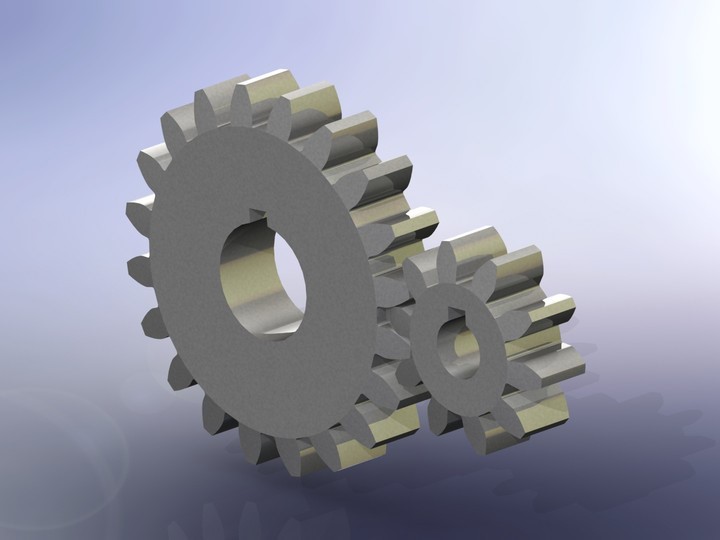
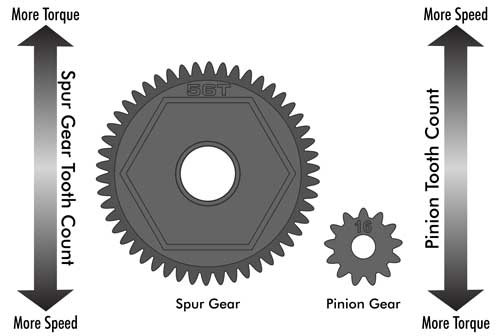
A pinion is the smaller gear in a mating pair, while the gear is the larger mating member; the terms describe their relative role in the pair, not two unrelated gear types.
Why this distinction matters in real applications
At first glance, the difference looks simple: one gear is larger, the other is smaller. But in real transmission work, that size difference changes much more than appearance. It changes rotational speed, load cycles, local contact conditions, wear behavior, and sometimes even the material and heat-treatment route.
This is why a pinion often becomes the more sensitive part in a gear set. In many applications, the pinion rotates faster and engages more often per unit time. That means its teeth experience more repeated loading. Even when the gear pair looks balanced on a drawing, the pinion may become the earlier wear point if geometry, hardness, lubrication, and alignment are not controlled well.
The distinction also matters in RFQs and replacement work. A buyer may say "we need this gear," but what they actually need is a matched gear and pinion set, or a pinion with a specific shaft interface, or a larger driven gear with different material logic. If those roles are not clear at the start, quoting and manufacturing can drift away from the real application need.
In other words, understanding gear vs pinion is not about vocabulary only. It is about understanding which part is likely to become the limiting factor in the transmission system.
How gear and pinion are defined in a gear pair
| Item | Gear | Pinion | Why it matters |
Relative size | Usually larger | Usually smaller | Drives ratio and packaging logic |
Usually more teeth | Usually fewer teeth | Affects speed relationship and contact cycle count | |
| Common role | Often driven/output side | Often driving/input side | Influences working conditions, though not always fixed |
| Rotational speed | Usually lower | Usually higher | The pinion often accumulates more load cycles |
| Contact stress sensitivity | More distributed over a larger diameter | Often more concentrated | The pinion is frequently the earlier wear-risk side |
Common design concern | Overall load capacity and long-term fatigue | Wear resistance, tooth root safety, and geometry control | Leads to different engineering focus |
This table does not mean the larger gear is unimportant. It means the pinion often deserves special attention because it sees harsher local conditions in many real applications.
Where the gear vs pinion distinction matters most
●Agricultural Machinery
Mixed loads, dirt, shock input, and long service intervals make it important to know which member in the pair is more likely to wear first.
●Heavy-Duty Trucks
High torque density and long-life targets mean the pinion side often needs tighter attention to material, heat treatment, and geometry control.
●Construction Equipment
Repeated start-stop duty and impact loading make the smaller, faster member more sensitive to early tooth-root and surface damage.
●EV Drivetrains
Higher speeds and stricter NVH targets make pinion geometry, runout, and surface quality especially important for smooth performance.
What engineers and buyers should check in a gear-pinion pair
| Check item | What to confirm | Why it matters |
| Ratio and tooth count relationship | Which member is the gear and which is the pinion | Prevents wrong interpretation of pair function |
| Input/output role | Which side drives and which side is driven | Helps define stress cycle and wear logic |
| Module or DP system | Common tooth size system for both members | Correct meshing starts here |
Pressure angle and tooth form | Must match as a system | Prevents geometry mismatch |
Material and heat treatment | Whether both sides use the same or different route | The pinion often needs more wear-focused logic |
Shaft interface | Whether the pinion is integral with a shaft or spline | Pinion manufacturing is often more complex |
Accuracy and runout | Tooth quality plus relation to mounting datums | Critical for smooth running and contact stability |
Pairing and inspection logic | Whether supplied as a matched set or as individual parts | Important for repeatability and service replacement |
Practical factory note
What becomes clearer when you separate gear from pinion
| Benefit | What improves | Practical result |
Better failure analysis | The more sensitive member is identified earlier | Faster root-cause review |
Better material planning | Different service risks can be managed more realistically | More suitable hardness and toughness balance |
| Better manufacturing decisions | The pinion's shaft, spline, and runout issues are reviewed properly | Lower production risk |
| Better sourcing accuracy | RFQs describe the pair more clearly | Fewer quoting and sampling errors |
| Better service logic | Replacement planning can focus on the true wear-limiting side | Lower maintenance confusion |
In practical terms, distinguishing gear from pinion helps turn a vague gear request into a clearer engineering conversation. That usually saves time, cost, and rework.
Practical review points when sourcing a gear and pinion set
●Identify the pair roles clearly.
State which member is the pinion, which is the larger gear, and whether the pair is supplied together or separately.
●Do not assume both sides need the same engineering focus.
The pinion often needs more attention in wear resistance, geometry stability, and shaft-related machining.
●Review material and heat treatment as a pair decision.
In many applications, gear and pinion should not be treated as identical parts with identical risk.
●Check interface complexity early.
A pinion may include a shaft, spline, keyway, or bearing seat, which makes manufacturing and inspection more demanding than the larger gear.
●Ask how the supplier controls pair consistency.
Good gear-set supply is not only about cutting teeth. It is also about pairing logic, datum control, and inspection that supports real meshing behavior.
Why Choose Us
At PairGears, we do not treat gear and pinion as a simple size comparison. We review them as two members of one working transmission pair, each with its own risk focus.
We focus on:
● application-fit review for Agricultural Machinery, Heavy-Duty Trucks, Construction Equipment, and EV drivetrains
● identifying which side of the pair is more sensitive to wear, fatigue, and alignment issues
● practical balance of material, heat treatment, and geometry based on the real duty cycle
● manufacturable process planning for pinion shafts, splines, and mating gears
● inspection logic that supports pair performance, not just single-part dimensions
For many projects, the key is not only whether the gear can be made. It is whether the gear and pinion will work together consistently in the real transmission system.
FAQ
Q1: Is A Pinion A Different Type Of Gear?
A: No. A pinion is not a separate gear family. It is the smaller gear in a mating pair.
Q2: Is The Pinion Always The Driving Gear?
A: Usually, but not always. In many systems the pinion is the input member, but the role depends on the actual layout.
Q3: Why Does The Pinion Often Wear Faster?
A: Because it usually rotates faster, meshes more often, and carries more stress cycles per tooth.
Q4: Do Gear And Pinion Always Use Different Materials?
A: Not always. But in demanding applications, the pinion often needs more careful control of hardness, wear resistance, and geometry stability.
Q5: Is It Enough To Confirm Tooth Count And Outside Diameter When Replacing A Pinion?
A: No. Module or DP, pressure angle, tooth form, interface details, material, heat treatment, and pairing logic also matter.
Conclusion
Gear and pinion belong to the same transmission language, but they do not carry the same engineering risk in service. The pinion is often smaller, faster, and more sensitive, which means it can become the earlier limit on wear, noise, and life if the pair is not designed and manufactured correctly.
If you are preparing an RFQ, checking a replacement set, or trying to understand which side of the pair needs more attention, you are welcome to Contact Us with your drawings, tooth count, module or DP, material requirements, and operating conditions so we can help align the gear and pinion with a practical manufacturing and inspection plan.