Gear Shaft Materials, Heat Treatment and Inspection
- Share
- publisher
- Jessica
- Issue Time
- May 12,2026
Summary
Learn how gear shaft materials, heat treatment, and inspection affect strength, wear resistance, accuracy, and service life in custom projects.
Introduction
While gear shafts may appear simple, in actual transmission systems, they often determine whether the entire component can operate smoothly and maintain stable long-term performance. Material selection, heat treatment, and inspection do not function independently but work together to control strength, wear resistance, fit, runout, and long-term performance.
At PairGears, we manufacture custom precision gears and gear shafts for Agriculture,Truck, Construction, and EV. This guide explains how materials, heat treatment, and inspection affect gear shaft performance, and what buyers should check before sending a drawing, sample, or OEM number for review.
What Is a Gear Shaft?
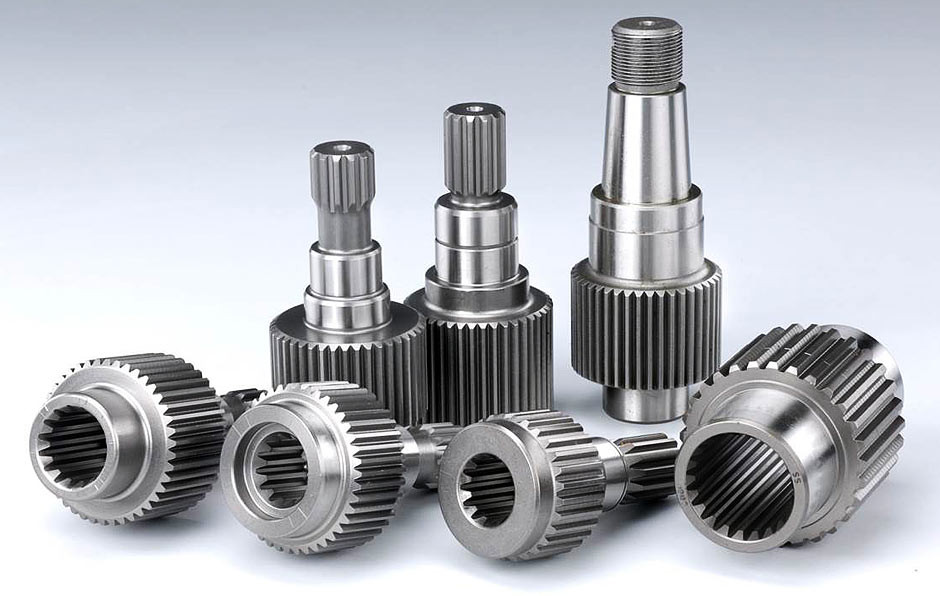
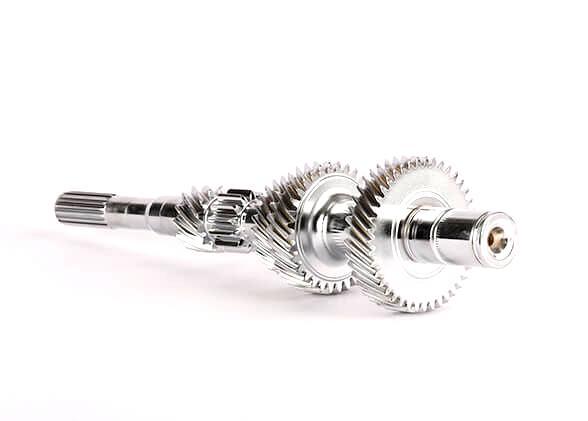
A gear shaft is a rotating transmission part that supports gears or splines while transferring torque through a mechanical system.
Why Gear Shaft Materials, Heat Treatment and Inspection Matter
Material decides the basic strength of the shaft. If the steel is not suitable for the load, the shaft may bend, crack, wear too fast, or fail after repeated torque. A shaft used in a heavy-duty truck transmission does not face the same working condition as one used in a light industrial drive.
Heat treatment decides how the surface and core behave. Many gear shafts need a hard surface and a tough core. The surface has to resist wear on splines, teeth, and bearing areas. The core needs enough toughness to handle shock load without becoming too brittle.
Inspection helps catch problems before assembly. A gear shaft can look fine but still have excessive runout, poor spline fit, wrong hardness, or surface cracks. These problems are much easier to solve before the part is installed.
In practice, these three factors work together. A good material with unstable heat treatment can still give weak spline wear resistance. A well-heat-treated shaft with poor runout control can still create vibration and bearing trouble. That is why gear shaft quality should be judged as a full process result, not as one isolated number.
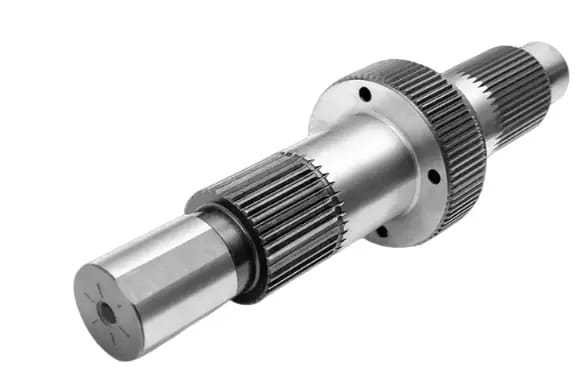
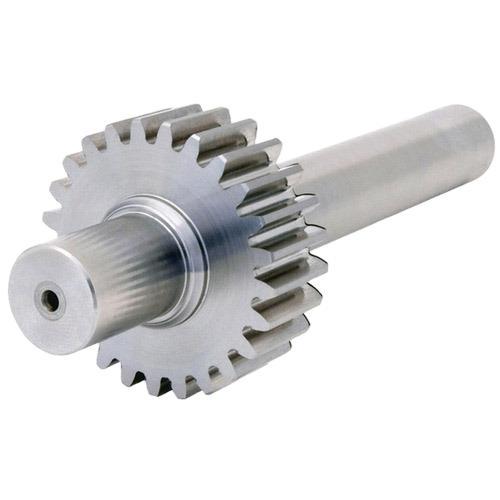
Types of Gear Shafts
| Gear Shaft Type | Typical Use | Key Control Point |
| Integral gear shaft | Reducers and transmission assemblies | Tooth accuracy, runout, heat treatment distortion |
| Truck, agricultural, and industrial transmission systems | Spline fit, hardness, wear resistance | |
Pinion shaft | Differential and right-angle drive systems | Tooth contact, bearing seat accuracy, case depth |
| Input or output shaft | Multi-stage drive systems and powertrain assemblies | Bearing journals, straightness, torsional strength |
Who Uses Gear Shafts?
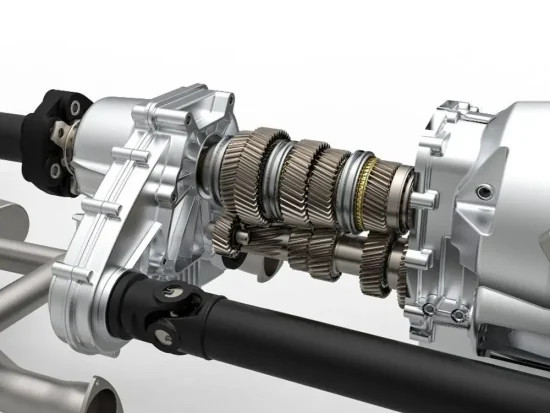
Gear shafts are used across PairGears'four main sectors, but the priority is not exactly the same in each one. The shaft has to match the real working condition, not just the drawing size. Load, speed, lubrication, bearing layout, and mating gears all matter.
● Agricultural Machinery
Gear shafts in tractors, harvesters, and field equipment must work through mixed loads, dirt, moisture, and long duty cycles. Wear resistance and practical service life are often more important than chasing unnecessary precision.
● Heavy-Duty Trucks
Transmission shafts, spline shafts, and output shafts face high torque and long service expectations. Stable fit, controlled runout, and correct heat treatment matter because small errors can grow into vibration, noise, or early wear.
● Construction Equipment
Gear shafts in reducers and travel systems often see shock load, contamination, and repeated start-stop operation. Material and core toughness become especially important when the shaft must survive impact rather than only steady torque.
● EV Drivetrains
Compact e-drive systems need controlled bearing seats, stable geometry, and repeatable batch quality. In these projects, a gear shaft often sits in a tighter tolerance chain, so runout and datum control become more sensitive.
Key Features of a Reliable Gear Shaft
A good gear shaft is not made by one step. It depends on material, machining, heat treatment, finishing, and inspection working together. A shaft with good steel but poor runout can still cause noise. A shaft with accurate size but poor heat treatment can still wear too quickly. This is why the whole process needs to be checked, not just one number on the drawing.
| Feature | What It Means | Why It Matters |
| Suitable material | Steel grade matches the load and use | Helps prevent bending, cracking, and early wear |
Proper heat treatment | Hardness and toughness are controlled | Improves wear resistance and service life |
Accurate bearing journals | Bearing seats meet size and finish needs | Helps reduce heat, vibration, and bearing damage |
Controlled runout | Rotating surfaces stay aligned | Supports smoother motion and lower noise |
| Correct spline or tooth geometry | Splines or teeth match the mating parts | Keeps torque transfer stable |
| Good surface finish | Critical areas are machined and finished correctly | Improves fit, lubrication, and fatigue life |
Reliable inspection records | Key checks are documented and traceable | Makes sample approval and repeat production easier |
For custom projects, it is also useful to separate cosmetic dimensions from functional dimensions. A supplier may hold the overall length, but the real performance often depends more on journal size, face squareness, spline fit, and how those features relate to the shaft centerline.
Benefits of Proper Material, Heat Treatment and Inspection Control
When these points are controlled well, the benefit is not only a better-looking part. The real value shows up during assembly and long-term operation.
| Control Area | Benefit for the Buyer | Risk if Ignored |
| Material selection | Better strength and fatigue resistance | Bending, cracking, or early wear |
| Heat treatment | Harder surface and longer service life | Soft splines, brittle fracture, uneven hardness |
| Runout inspection | Smoother rotation and better contact | Noise, vibration, uneven wear |
Spline inspection | Reliable torque transfer and fit | Fretting, looseness, assembly failure |
Bearing seat control | Better bearing alignment | Bearing overheating or early damage |
Traceable checks | Clearer approval and repeat ordering | Inconsistent batches and harder root-cause review |
In other words, the correct process route usually saves money indirectly. It reduces sorting, reduces field complaints, and improves the chance that repeat orders will behave like the first approved samples.
How to Choose a Gear Shaft Supplier
A gear shaft supplier should understand the application, not only the drawing.
● Check whether the supplier asks about working conditions.
Torque, speed, load, lubrication, mating parts, and service environment all affect material and heat treatment choices. If these points are not discussed, the project may start with the wrong assumptions.
● Confirm material options and equivalent standards.
Common options may include 20CrMnTi, 20MnCr5, 18CrNiMo7-6, 40Cr, 42CrMo, 40CrNiMo, SAE1045, 8620, 4140, SCM415, or drawing-specified materials. The final choice should follow the real duty cycle, not habit.
● Review heat treatment capability.
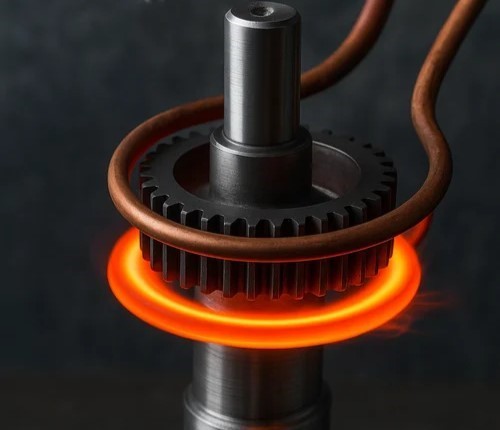
Carburizing, induction hardening, nitriding, quenching and tempering, or stress relieving should be selected according to the shaft function. Surface hardness, core toughness, case depth, and distortion risk should be discussed together.
● Check inspection capability.
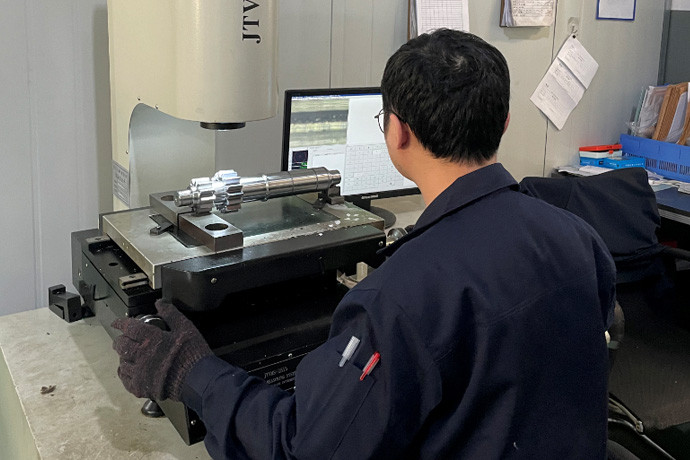
Important items may include dimensions, runout, concentricity, spline fit, bearing journal size, hardness, surface defects, and crack inspection where required.
● Use sample approval for custom projects.
A first sample helps confirm whether the drawing, process route, heat treatment, and fit assumptions are actually practical before batch production starts.
Why Choose PairGears
PairGears manufactures custom precision gears and gear shafts for Agriculture,Truck, Construction, and EV. For shaft projects, we do not look at the part as a simple machined component. We look at how it will work in the real transmission system.
What we focus on:
● Application fit first
We review the working conditions, not just the drawing. Torque, speed, load, lubrication, and mating parts all affect the right material and heat treatment choice.
● Matching parts together
Many gear shafts must work with existing gears, splines, bearings, and housings. We pay attention to those interfaces early, so the shaft is easier to fit and use in the actual assembly.
● Process planning that makes sense
Material, heat treatment, machining, and inspection are considered together, because a good shaft depends on the full process, not one step alone.
● Support for custom and repeat orders
Whether the project starts from a drawing, sample, OEM number, or an old replacement part, we work toward a practical route that can also stay stable in repeat production.
FAQ
Q1: What Material Is Best For Gear Shafts?
There is no single best material for every gear shaft. The right choice depends on torque, speed, impact load, heat treatment route, and service environment.
Q2: Why Is Heat Treatment Important For Gear Shafts?
Heat treatment helps improve surface hardness, wear resistance, strength, and fatigue performance. It can reduce spline wear and improve service life if matched correctly to the application.
Q3: What Should Be Inspected On A Gear Shaft?
Common inspection points include dimensions, runout, concentricity, spline or tooth accuracy, bearing journal size, hardness, and surface condition. The exact list depends on the part function.
Q4: What Causes Gear Shaft Failure?
Common causes include unsuitable material, insufficient heat treatment, excessive runout, poor spline fit, bearing misalignment, overload, lubrication issues, or unrecognized cracks.
Q5: Can Gear Shafts Be Customized From Samples Or OEM Numbers?
Yes. Custom gear shaft projects can start from drawings, samples, OEM numbers, photos, dimensions, and application information, provided the technical assumptions can be verified.
Conclusion
Gear shaft quality is not decided by one process alone. Material selection, heat treatment, machining accuracy, runout control, and inspection all influence whether the shaft will assemble correctly and perform consistently in service.
If you are preparing an RFQ, comparing material options, or checking whether a shaft design is practical for production, you are welcome to Contact Us with your drawings, samples, OEM numbers, and operating conditions, PairGears can help match materials, heat treatment, and inspection plans with feasible manufacturing routes.