Gear Failure Causes and How to Prevent Them
- Share
- publisher
- Jessica
- Issue Time
- Jan 26,2026
Summary
Gear failure often comes from mismatched material, heat treatment, and duty cycle. This guide shows symptoms, root causes, and checks to prevent rework.
1. Introduction
As a precision gear manufacturer and custom gear supplier, PairGears often hears the same message first—not "What grade can you hold?" but:"The gear failed again. The material isn't the cheapest. Why is the life still so short?".
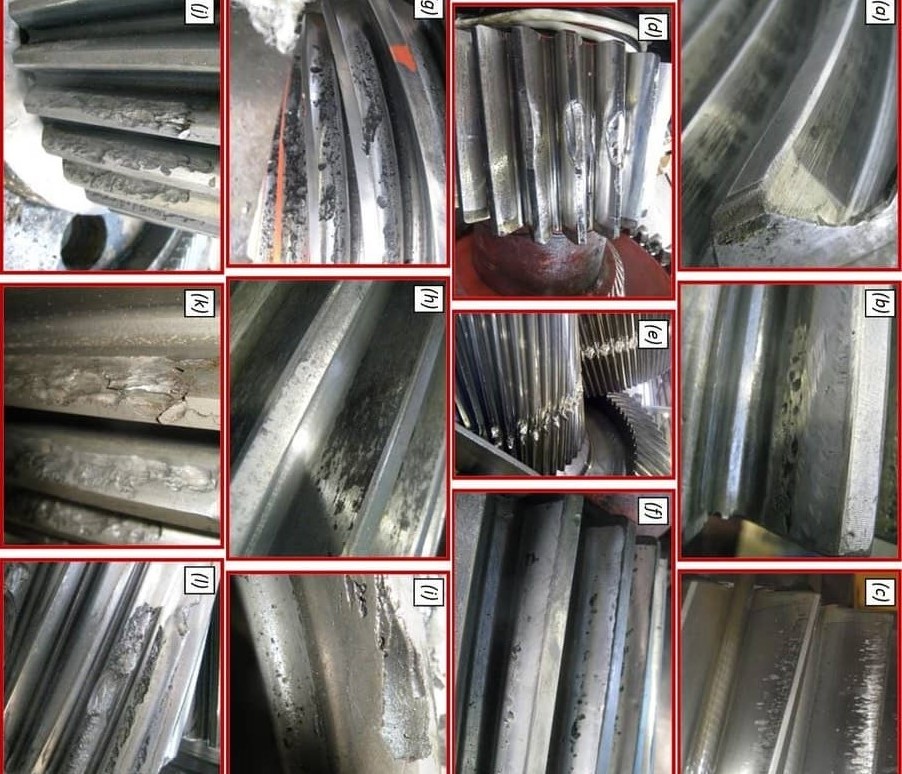
If you see problems like fast pitting, broken teeth, rapid wear, rising noise, or large heat-treat distortion, the issue is often not "bad machining". More often, the material + heat treatment simply did not match the real duty cycle. These headaches show up again and again across Agricultural Machinery, Heavy-Duty Truck, Construction Equipment, and EV drivetrain.
2. What gear failure is about
Gear failure is usually a mismatch between material, heat treatment, and operating conditions.
3. Is it really "bad quality"? And why does it happen?
3.1 First ask "Is it?"
A gear mainly faces two stresses in service:
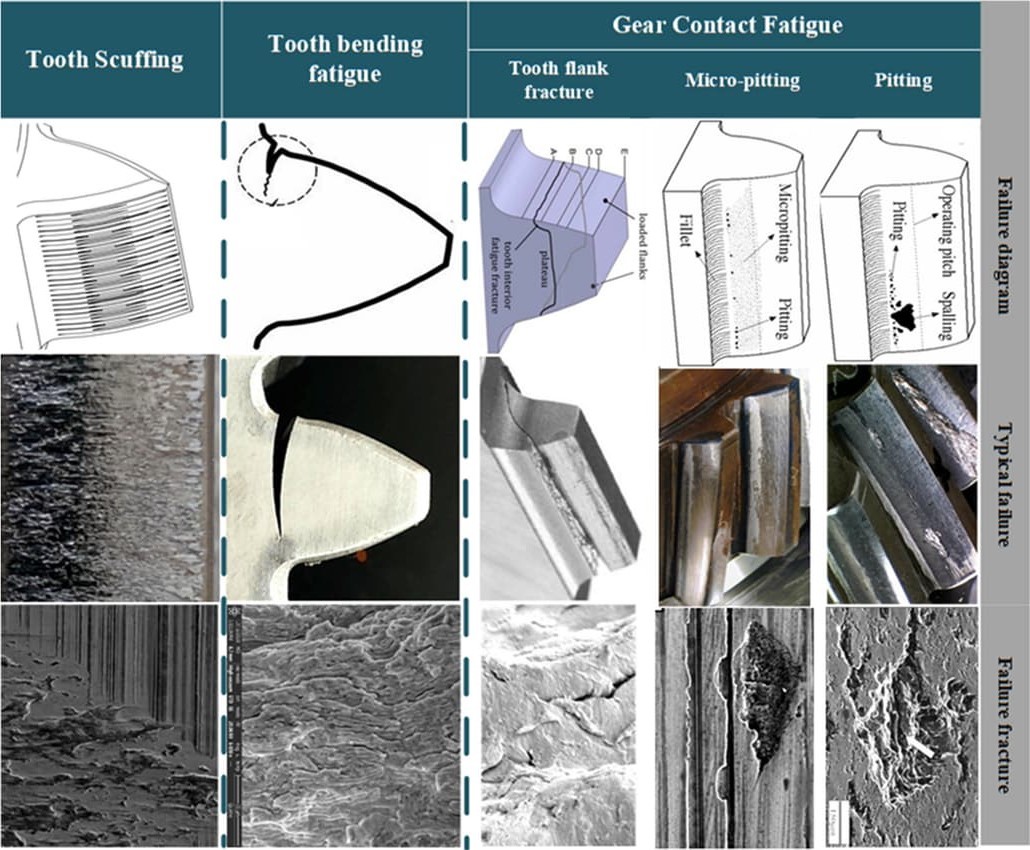
Tooth surface contact stress (drives pitting, spalling, wear)
Tooth root bending fatigue (drives cracks and tooth breakage)
3.2 What a gear needs to last:
Hard surface for wear and pitting resistance
Tough core for impact and crack resistance
Right case depth (too shallow can peel; too deep can make distortion harder to control)
3.3 Then ask "why?"
Because different duty cycles push different failure modes. If you only chase one indicator (like "higher hardness"), you can easily create a new weakness (like brittle chipping under shock). A good plan starts from the failure mode and works backward.
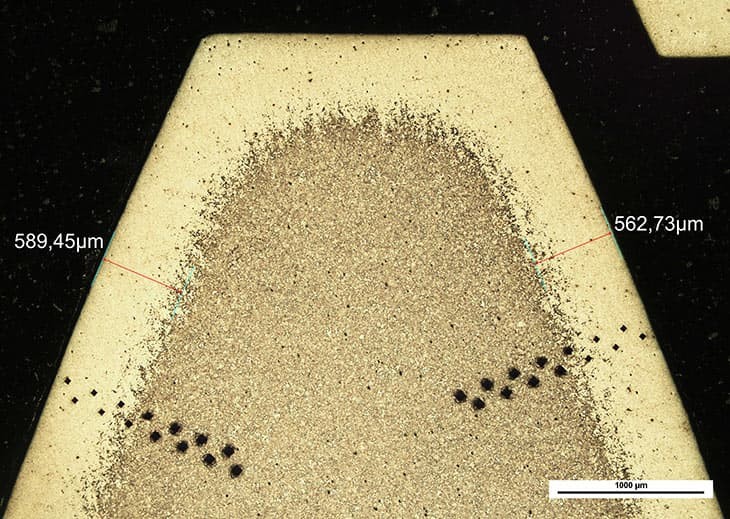
When you review a failed gear, avoid focusing on one number. A useful check is to look at the "surface-core-case depth" set together. A hard surface supports wear and pitting resistance, while a tough core helps survive shock and prevents brittle cracking. Case depth should be matched to load and life target, and it should be verified with the right test method for your program.
4. The most common "failure types" you are seeing
| Failure type (what you see) | Typical symptom | Common root causes | What to check first |
Pitting / spalling | "Pepper dots" on tooth surface that grow | Surface fatigue, poor contact pattern, insufficient surface strength, lubrication issues | Contact pattern, surface hardness, case depth, alignment |
Tooth breakage | Sudden break, corner chip, root crack | Shock load + low core toughness, stress concentration, wrong heat-treat balance | Core hardness/toughness, root fillet, load profile |
| Rapid wear / scuffing | Backlash grows, efficiency drops | Surface not wear-resistant enough, poor lubrication, contamination | Surface hardness, surface finish, lubrication condition |
| Noise rising over time | Gets louder with use | Wear, unstable contact pattern, assembly variation | Contact pattern stability, runout, mounting datums |
| Large heat-treat distortion | Hard to assemble, contact shifts, lots of rework | Distortion control not planned, allowance/fixturing not matched | Process route, allowance plan, fixturing, inspection data |
A quick way to narrow the root cause is to link the symptom to what changed in contact or geometry. If pitting grows fast, check contact pattern stability under load and whether the surface strength and lubrication are adequate. If teeth break suddenly, look for shock load, core toughness, and stress concentration at the root. If backlash increases quickly, focus on wear resistance and contamination control.
If assemblies vary unit-to-unit, the issue is often distortion, allowance, or mounting datum control rather than the steel grade itself. This "symptom to check" logic keeps troubleshooting practical and helps prevent repeats in the next batch.
Standards reference: ISO/TR 15144-1 (micropitting load capacity) can be useful when pitting/micropitting is your dominant field issue.
Related reading: 4 Types of Gear Failure to Watch Out For
5. Who runs into these issues
● Agricultural machinery: long hours, changing loads, dusty/wet environments; stable life matters more than "lab-perfect numbers".
● Heavy-duty trucks: high torque and long-life targets; durability + consistency across batches reduces warranty risk.
● Construction equipment: shock loads and frequent start/stop; toughness and stable contact under load are key.
● EV drivetrains: higher speed and efficiency focus; stable geometry and consistent assembly help performance stay repeatable.
Explore sector solutions: Agricultural Machinery · Heavy-Duty Truck · Construction Equipment · EV Drivetrain
6. What "good material + heat treatment" looks like
| Feature | What it means in practice | Why it matters |
Hard surface | Targeted surface hardness for wear/pitting resistance | Slows wear and surface fatigue |
Tough core | Core strength + toughness balanced for shock | Prevents brittle chipping and root cracking |
| Right case depth | Depth chosen for load and life target | Too shallow: early peeling; too deep: distortion risk |
| Distortion control plan | Allowance, fixturing, process control as a package | Keeps contact pattern and assembly stable |
| Project-based inspection | Records for key dimensions and heat-treat results (as required) | Helps trace issues and keep repeats consistent |
7. What you gain when it matches the duty cycle
| Benefit | What you will notice | Why it matters to you |
Fewer returns and rework | Less assembly trouble, fewer surprises | Lowers total cost, saves time |
More stable contact behavior | Less "one unit good, one unit bad" | Batch consistency improves |
| Longer service life | Slower pitting/wear, fewer cracks | Better uptime in the field |
| Predictable delivery | Fewer re-makes and rework loops | Improves project schedules |
| Clearer supplier accountability | Requirements and checks are aligned | Easier communication and follow-up |
8. How to choose the right route with your supplier
● Start from the failure mode: Is your main pain wear/pitting, tooth breakage, distortion, or assembly variation?
● Ask for a balanced target, not one number: “Hard surface + tough core + correct case depth” beats “just higher hardness.”
● Treat distortion control as part of the project: material, heat treatment, allowance, fixturing, and inspection should be planned together.
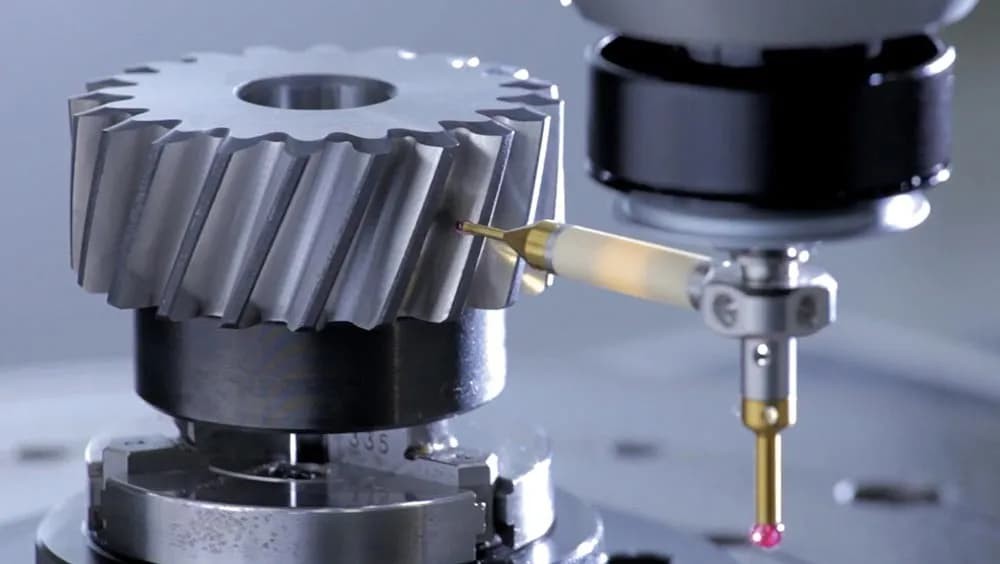
● Make requirements measurable: define what will be checked (hardness range, key geometry, critical datums) based on the application.
● Share duty-cycle info early: torque/speed range, shock load, and life target often matter more than long email threads.
9. What to share for a reliable recommendation
To help a supplier recommend the right route, you don't need a long report—just share the essentials: the application (transmission, differential, reducer), approximate torque and speed, and whether the load is steady or includes shocks and frequent start/stop. Describe the main issue (wear, pitting, broken teeth, distortion, rising noise, heat), plus any target standard or life goal.
Finally, note key assembly conditions such as paired parts, mounting limits, and critical fits. With this input, material and heat-treat suggestions become more accurate and repeatable.
Fast RFQ template (copy/paste):
Hello, we need a gear / gear shaft.
Application: ____ (transmission / differential / reducer, etc.)
Duty cycle: torque about ____, speed ____, shock load: yes / no
Current issue: ____ (wear / pitting / broken teeth / noise / distortion)
Drawing / sample / OEM No.: ____ (sanitized is OK)
Target: life ____ hours/km, standard ____ (ISO/DIN/AGMA if any)
Please suggest material + heat-treat route and provide a quotation. Thank you.
10. Why Choose PairGears
● Failure-mode driven thinking: we start with what you fear most (pitting, breakage, wear, distortion) and work backward.
● Material and heat treatment planned together: not "pick a steel and hope" but matching surface and core performance to duty cycle.
● Traceable process outputs (as required): key checks, heat-treat records, and project-focused inspection planning.
● Four-sector experience: agriculture, heavy truck, construction, EV drivetrain—different duty cycles, different priorities.
● Practical support: we focus on reducing rework and keeping repeat orders consistent.
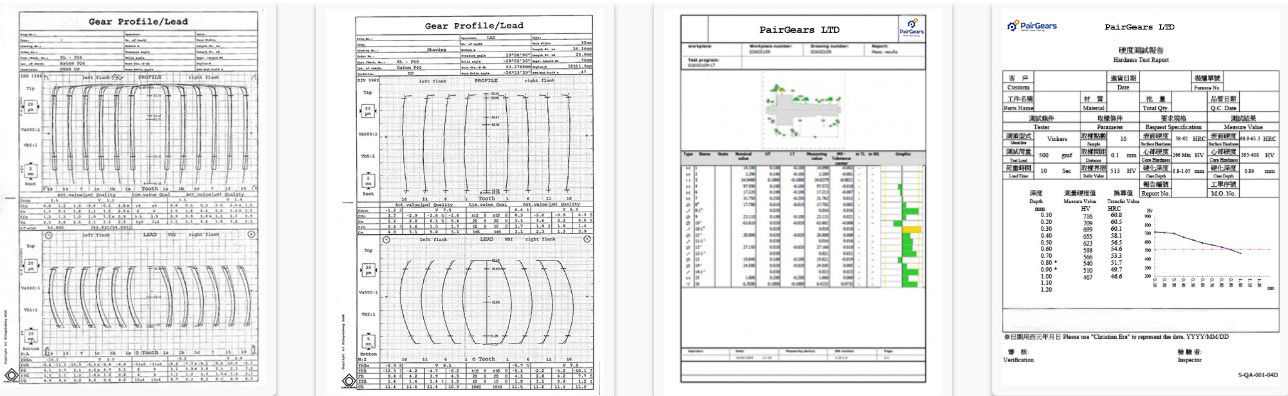
●Inspection reports (as required): we can provide sanitized gear profile/lead charts and heat-treat/hardness records with batch traceability for quick verification.
11. FAQ
Q1: Is Higher Hardness Always Better?
Not always. If your duty cycle has shock or impact, "very hard but not tough" can chip or crack. Balance matters.
Q2: Why do the same materials have different properties?
Heat-treat route and process control can change surface hardness, core properties, and distortion behavior a lot.
Q3: How Do I Know If Case Depth Is Wrong?
Too shallow can lead to early surface peeling; too deep can increase distortion risk. The right depth depends on load and life target.
Q4: Why Do Problems Appear After Assembly?
Small drift in distortion, allowance, or mounting datums can shift the contact zone after assembly and load, then problems appear in testing or service.
Q5: What Should I Send To Get A Useful Recommendation Fast?
A drawing/sample/OEM number plus torque/speed range, shock load info, failure symptom, and life target.
12. Conclusion
Gear failure is often not because you "didn't buy expensive steel" but because material, heat treatment, and duty cycle did not match. When you describe the duty cycle clearly and name the failure symptom, the solution becomes much more predictable—and many returns and downtime can be prevented from the start.
If you want a quick check of your failure cause and a practical material/heat-treat suggestion, Contact Us with your drawing/sample photos and duty-cycle notes. We will review feasibility and provide a workable recommendation and quote range for your project.