Diametral Pitch DP Formula and Module Conversion
- Share
- publisher
- Jessica
- Issue Time
- Feb 25,2026
Summary
Diametral Pitch (DP) defines tooth size for inch-based gears. Learn how to calculate, estimate from OD, convert to module, and verify matching before build.
1. Introduction
Diametral Pitch (DP) is a common reason gears fail to mesh in cross-border projects—especially when drawings come from inch-based systems. You can have the right tooth count and still end up with the wrong tooth size if DP is misunderstood or converted incorrectly.
At PairGears, we support custom precision gears and gear sets for Agricultural Machinery, Heavy-Duty Trucks, Construction Equipment, and EV drivetrains. This guide explains what DP means, how to calculate and measure it quickly, how to convert DP to module, and how to verify matching before production.
2. Diametral Pitch definition
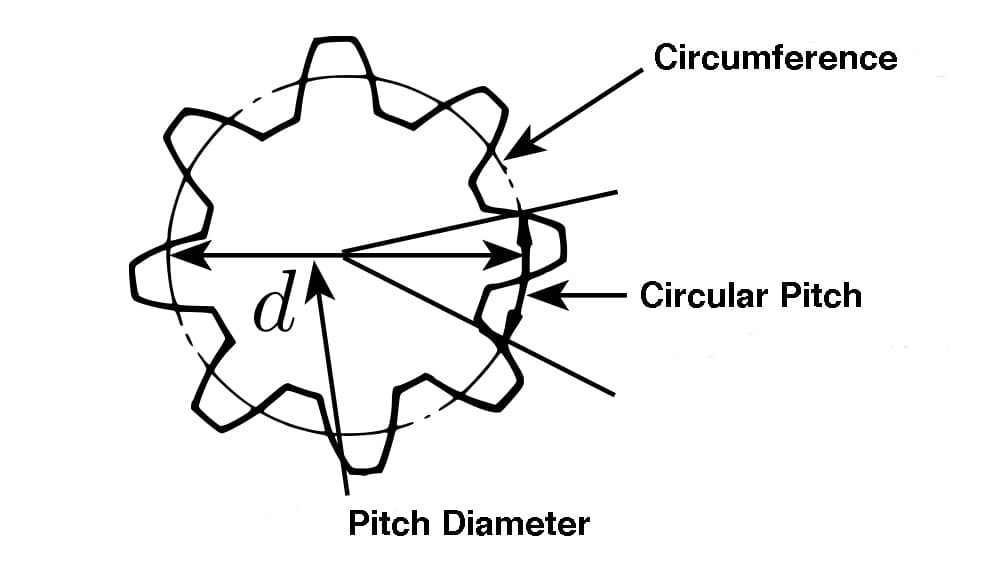
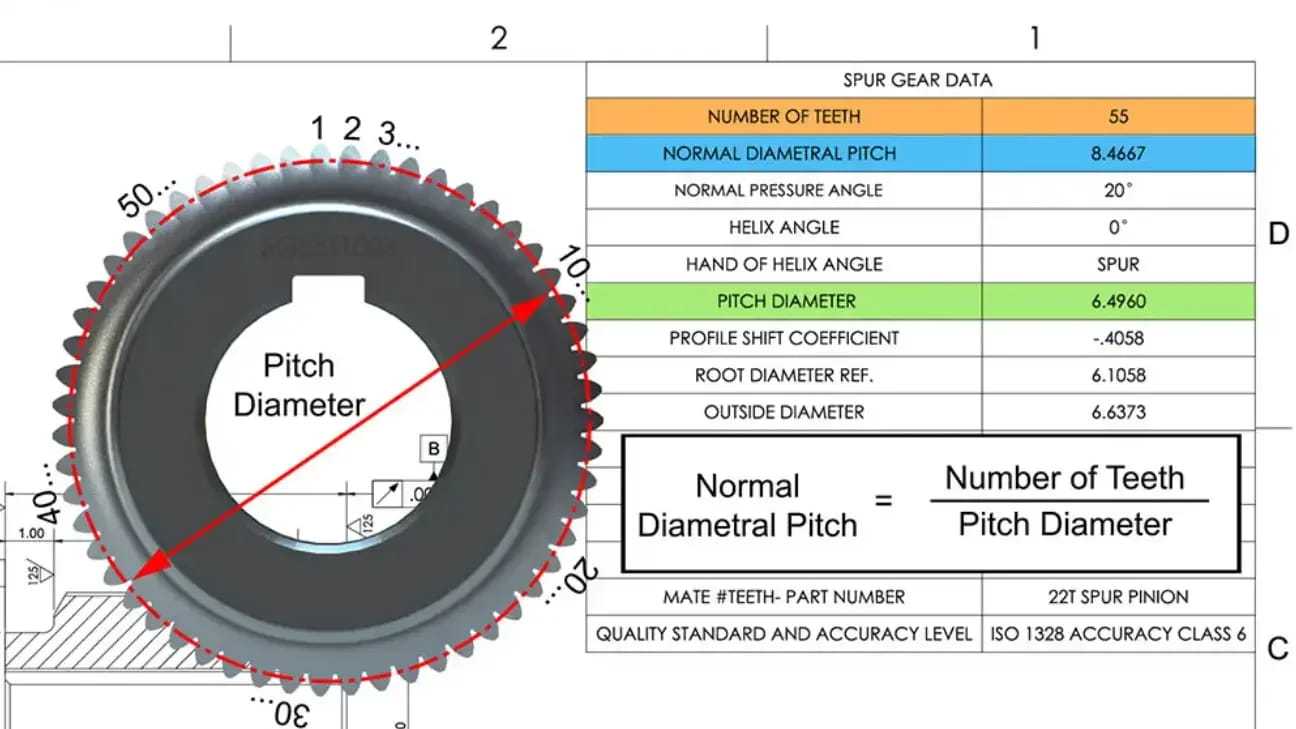
Diametral Pitch (DP) is the number of teeth per inch of a gear's pitch diameter.
3. Why DP matters in real projects
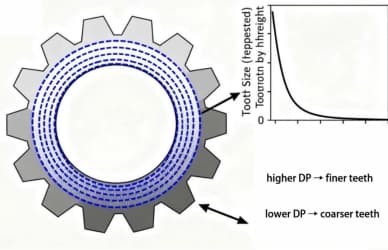
DP is a quick way to describe how fine or coarse the teeth are in inch-based gear designs. Higher DP means smaller, denser teeth; lower DP means larger, coarser teeth. Tooth size affects strength margin, smoothness, and how sensitive the gear set is to assembly variation.
Most DP mistakes happen because pitch diameter is not easy to measure directly. Teams measure outer diameter (OD) and assume it is the pitch diameter, or they copy a number from a drawing without confirming the unit system (DP vs module). In global supply chains, this can lead to gears that cannot mesh at all.
A reliable DP check is simple and fast: confirm the unit system, compute DP from tooth count and pitch diameter when available, and use OD-based estimation for quick screening. For critical programs, verify DP together with pressure angle and tooth form so the mating gears are truly compatible.
4. How DP is used in practice
| DP context | What it means | Typical goal | Watch-outs |
| High DP (fine teeth) | More teeth per inch of pitch diameter | Smoother running, compact tooth size | Lower root thickness; avoid shock-duty misuse |
| Low DP (coarse teeth) | Fewer teeth per inch of pitch diameter | Higher torque robustness | Larger gear size; fewer contact points |
| DP-only programs | Whole gear train designed in DP | Interchangeability in inch-system markets | Confirm pressure angle and tooth form too |
DP↔Module projects | Metric designs sourced to DP markets (or reverse) | Global sourcing and retrofit work | Unit labeling and conversion errors |
● High DP gears use smaller, denser teeth, which can run smoother at higher speeds—but their thinner tooth roots make them less ideal for shock-heavy duty unless strength margin is built in.
● Low DP gears use larger, coarser teeth with thicker roots, making them a common choice for high torque and impact loads—but they usually require more space and may run less smoothly at the same speed.
5. Where DP shows up in PairGears sectors
● Agricultural machinery: mixed loads and long duty cycles; tooth size impacts durability and service life.
● Heavy-duty trucks: differentials and driveline stages need consistent meshing; DP mistakes cause immediate fit failures.
● Construction equipment: shock loads and harsh environments; coarse tooth systems often improve robustness when packaging allows.
● EV drivetrains: compact layouts and efficiency; DP choice affects gear size, stiffness, and repeatability across batches.
6. Formulas and measurement methods
| Item | Formula / method | Notes |
Core definition | DP = z ÷ d | z = tooth count; d = pitch diameter (inches) |
OD-based estimate | DP ≈ (z + 2) ÷ OD | Practical when pitch diameter is not available |
| DP–module conversion | m=25.4 ÷ DP; DP=25.4 ÷ m | m in mm; DP in 1/in |
| Quick shop check | Count teeth + measure OD with calipers | Fast screening for incoming parts |
| Gauge method | Match tooth space using a DP gauge | Common for maintenance and early inspections |
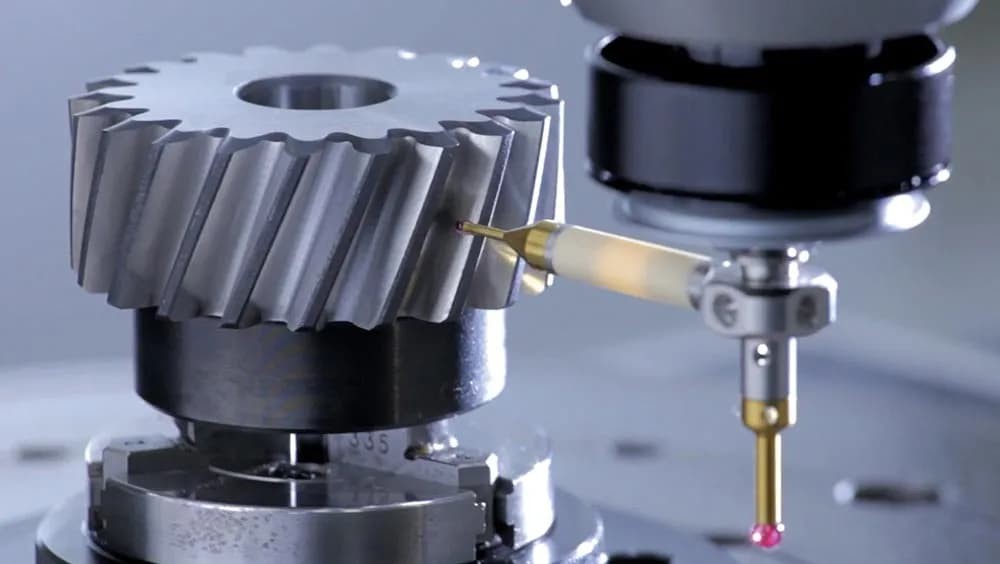
High-precision verification | Optical projector or CMM | Used for high-end or high-risk programs |
Before measuring DP, confirm what "pitch diameter" means. The pitch circle is an imaginary circle where two gears would roll together without slipping—it is not the visible outside edge. That's why OD is only an estimate: OD includes tooth tips, while pitch diameter represents the working geometry.
In workshops, the most practical check is tooth count plus OD measurement: count teeth (z), measure OD with calipers, and compute DP ≈ (z + 2) ÷ OD to screen meshing compatibility. For higher confidence, use a DP gauge to match the tooth space; for high-precision or high-risk programs, use an optical comparator/projector or CMM to confirm DP and related geometry.
As a quick example, z=40 and OD=4.20 in gives DP ≈ 10.0. When verifying a mating pair, always check DP (or module), pressure angle, and basic tooth form together—trial meshing can help for samples but shouldn't replace dimensional verification in critical applications.
7. Benefits of checking DP early
| Benefit | What improves | What you avoid |
Faster RFQ clarity | Less back-and-forth on tooth size system | Wrong-tooling quotes and delays |
Lower mismatch risk | Correct tooth size confirmed early | Gears that cannot mesh |
| Better global coordination | Clear DP↔module conversion | Cross-border unit misunderstandings |
| Faster reverse engineering | Practical OD-based estimation | Guessing tooth size and rework |
| More stable repeat orders | Consistent parameters across lots | Assembly variation and scrap |
DP content works best when it answers real shop questions: how to estimate DP quickly, how to convert DP to module correctly, and what must match for gears to mesh. Keeping these steps practical helps prevent mismatches and supports faster inspection, quoting, and assembly decisions.
8. Supplier selection tips
● Confirm the unit system on every drawing: DP vs module must be explicit—do not assume.
● Verify DP together with pressure angle and tooth form; DP matching alone is not enough for correct meshing.
● Ask for a DP verification method: OD-based estimation for screening, and gauge/metrology checks for critical parts.
● For conversions, require a written cross-check (DP↔m) in the process plan so it cannot be skipped.
● Request clear documentation/marking where appropriate (DP or module, pressure angle, and key notes for mating gears).
Quick RFQ checklist:
DP or module (unit clearly stated), tooth count (z), OD or pitch diameter, pressure angle, gear type (spur/helical/bevel), material/heat treatment if known, and whether the gear must mate with an existing part (send mating gear data if possible).9. Why Choose PairGears
PairGears supports custom precision gears and gear sets for heavy-duty and high-reliability applications. We focus on making specifications unambiguous and production repeatable—especially when DP/module units and global sourcing are involved.
● DFM-minded review: we help confirm DP/module, pressure angle, and basic meshing compatibility early.
● Practical verification: we prioritize checks that prevent the most expensive mistakes—mismatch, rework, and assembly failure.
● Heavy-duty experience across agricultural, truck, construction, and EV drivetrains with different load and packaging priorities.
● Stable manufacturing execution with inspection aligned to the risks of the project (as specified).
● Clear communication and documentation so repeat orders stay consistent across batches.
10. FAQ
Q1: Is DP The Same As Outer Diameter (OD)?
No. DP is defined using pitch diameter. OD can be used to estimate DP, but OD is not pitch diameter. For reverse engineering, OD-based estimation is a fast screening step, not a final specification.
Q2: What Is The Fastest Way To Estimate DP In The Field?
Count teeth and measure OD, then use DP ≈ (z + 2) ÷ OD for a quick approximation. If you also know pressure angle from markings or drawings, confirm it at the same time.
Q3: Why Can't Two Gears Mesh If DP Is Different?
Different DP means different tooth size and spacing on the pitch circle, so tooth geometry will not match. Even a small mismatch will prevent proper tooth spacing and cause interference.
Q4: How Does DP Relate To Module?
They express the same concept in different units. Convert using m = 25.4 ÷ DP (m in mm). Always label units on drawings to avoid suppliers reading DP as module (or the reverse).
Q5: Besides DP, What Must Match For Correct Meshing?
At minimum: DP (or module), pressure angle, and a compatible tooth form. For bevel or special gears, more geometry factors apply. For matched sets and special gears, confirm any additional geometry notes from the drawing.
11. Conclusion
Diametral Pitch is a simple parameter with big consequences: it defines tooth size in inch-based gear design and often determines whether gears can mesh correctly. Most DP problems are preventable by confirming the unit system early and checking DP/module together with pressure angle.
If you have a drawing, sample, or OEM reference, Contact Us and Share tooth count plus OD (or drawing data), and we can help you confirm DP/module and reduce mismatch risk before production.